

Key Takeaways
Choosing accessories starts with your exact vehicle details and the way you use it. A little checking before you order can save time, money and fitment trouble.
- Confirm your Haval’s model, year and trim before comparing products.
- Prioritize accessories that solve a real everyday or travel need.
- Check specifications, installation requirements and vehicle feature compatibility.
- Verify applicable Australian rules, load limits, insurance and warranty terms.
- Include fitting, delivery and ongoing care in your budget.
1. Identify your Haval model and accessory needs
The right accessory depends on more than the name on the tailgate. Model, build year and trim can all affect fitment, while your routine determines whether an upgrade will be genuinely useful. Before browsing aftermarket Haval accessories Australia, take a moment to record those details and think about the jobs you want an accessory to do. That small step makes comparisons clearer and helps avoid buying on appearance alone.
Check your model, year and trim level
Start with the vehicle identification details in your owner documents or registration records, then check the trim designation and build or model year. Similar-looking vehicles may have differences in fittings, dimensions or equipment, so a general “fits Haval” label is not enough to establish compatibility. Keep a note or photo of the relevant details beside you when shopping, and confirm any uncertainty with the supplier before ordering.
Decide how you use your Haval day to day
Think about the situations that shape your driving: school runs, commuting, pets, weekend sports or longer trips. The best purchases are usually the ones that make a recurring task easier, rather than gear that only sounds useful in theory. If you regularly carry muddy shoes or sports equipment, for example, cabin and cargo protection may matter more than an exterior styling change.
A simple use-case list can keep priorities grounded:
- Note what you carry most often and where it travels.
- Identify mess, wear or storage problems that recur.
- Consider whether accessories need to come off between trips.
- Separate frequent needs from occasional “nice to have” ideas.
Once you can describe the problem, it becomes easier to compare products on practical grounds. You can also spot when an accessory would solve a real inconvenience rather than add another item to maintain.
Separate practical upgrades from cosmetic additions
Practical accessories help protect, organize or support the way you use the vehicle; cosmetic additions are mainly about appearance. Either can be a reasonable choice, but it helps to be honest about which role matters most to you. For instance, a bonnet protector is presented as an exterior accessory, while a 3D floor mat is a cabin-protection option; check the exact product details rather than assuming every version has the same purpose or fit.
A useful distinction is whether you would still want the accessory if nobody else noticed it. If the answer is yes because it addresses a clear need, it may deserve earlier consideration. Styling can come later, once the essential fit and use questions are settled.
Set a budget before you compare options
Set a spending range before browsing, and include more than the product price. Delivery, fitting, extra mounting parts and any follow-up adjustment can change the real cost. A weather-resistant outdoor furniture comparison may be a different kind of purchase, but the same basic habit applies: compare the complete cost and the conditions the item is meant to handle.
Here is a simple way to organize an early shortlist without pretending that every accessory serves the same purpose:
| Accessory type | Question to ask | Cost detail to check |
|---|---|---|
| Cabin protection | Which surfaces need protection? | Set contents and delivery |
| Cargo organization | Will it suit the items you carry? | Fitting or mounting parts |
| Roof accessories | Is the vehicle and accessory combination suitable? | Installation and any additional components |
| Styling item | Is the change worth the ongoing care? | Finish, fitment and return terms |
Use the table as a prompt for questions, not as a substitute for product specifications. A realistic budget makes it easier to choose one well-matched accessory instead of several uncertain purchases.
2. Explore popular aftermarket accessory categories
Accessory categories overlap, so start with the task you want to improve rather than the product label. Cabin protection, storage, touring equipment and styling additions can all be useful, but their value depends on the vehicle and your routines. In this section, focus on the likely benefit and the details you will need to verify before buying.
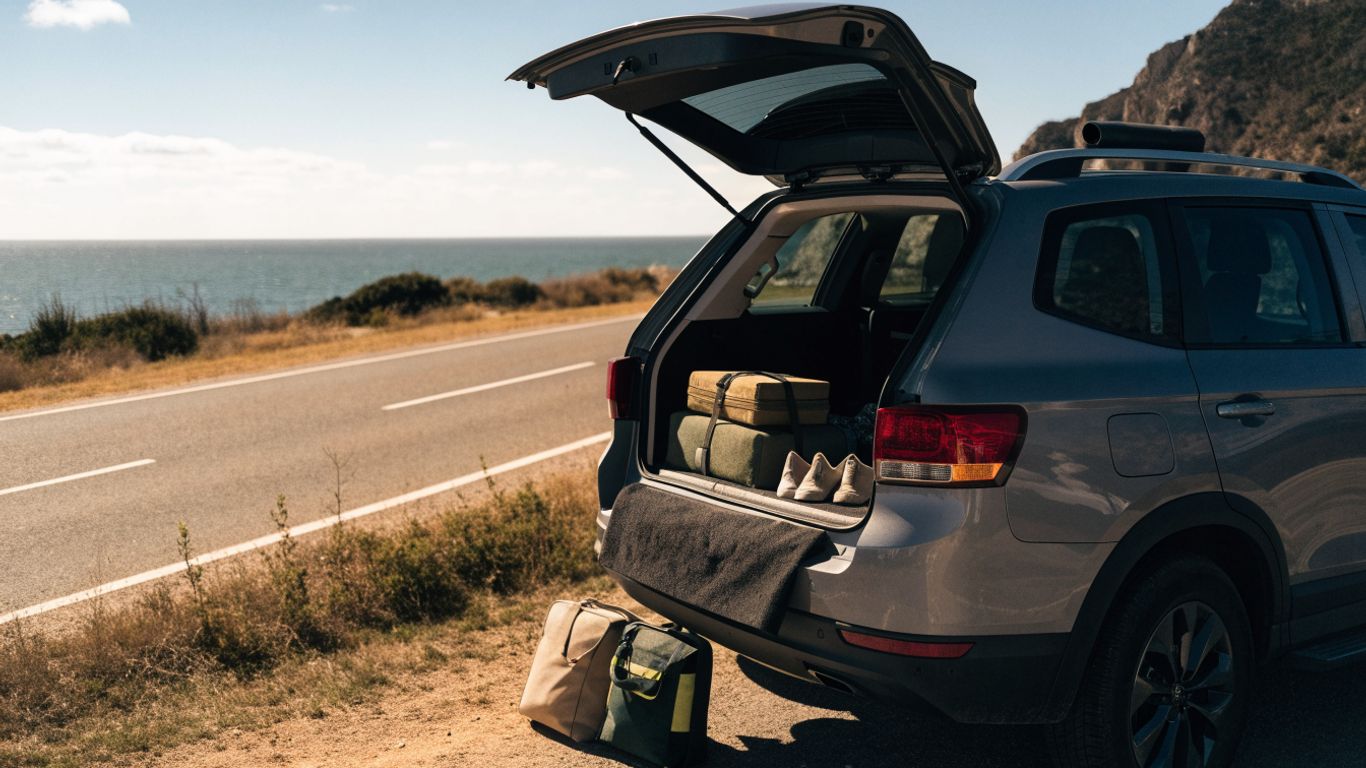
Add protection with mats, seat covers and boot liners
Floor mats, seat covers and boot liners can help guard frequently used areas from dirt and everyday wear. Check which rows, seats or cargo areas a set covers, and whether it is designed for your specific interior layout. A product photograph may show only one configuration, so read the listed contents and confirm any exclusions before placing an order.
Improve storage with cargo organisers and roof accessories
Cargo organisers can make smaller items easier to manage, while roof accessories may provide another way to carry selected equipment. Consider how often you would use the extra space and whether loading or unloading it fits your routine. Roof-mounted gear also raises questions about compatibility, installation and vehicle load limits, which should be resolved before purchase rather than at the driveway.
Consider touring gear for longer trips
Touring accessories can help make a long journey more comfortable or organized, but it is worth checking how each item fits into the overall setup. A roof rack cross bars page, for example, is a place to investigate a named accessory category; confirm the specific vehicle fitment, any required components and the applicable loading information for the product you are considering. Avoid assuming that accessories can be combined simply because each is listed for a similar vehicle.
The practical test is whether the gear supports your actual travel plans without creating new hassles. If installation, storage at home or maintenance would be difficult, that belongs in the decision too.
Personalise the exterior with styling accessories
Exterior styling products can change the look of a vehicle, but finish, attachment method and care requirements still deserve attention. Look closely at product photographs and written specifications, and ask how the item attaches if that information is unclear. For examples of accessory categories, you might browse Haval Jolion accessories or Haval H6 accessories, then treat each listing as a starting point for checking its own fitment and terms.
A visual match in a listing does not guarantee that an item will suit your exact vehicle. Compare the stated model and year, and consider whether the product’s finish and shape work with the rest of your vehicle before committing.
3. Check fitment and vehicle compatibility
Compatibility is a combination of the vehicle, the accessory and sometimes other equipment already fitted. Product names and broad model labels can help you find a starting point, but the final check should come from specific fitment information. Take time to compare the listing with your vehicle records and ask the supplier to resolve gaps in the description. Confirm before checkout whenever a detail could affect fit, operation or installation.
Match accessories to your specific Haval model
Look for the exact model designation in the fitment notes, rather than relying on a broad brand match. A Haval accessory listing may cover one model but not another, even when the products appear similar. If the listing names a vehicle family or series without specifying your version, ask the seller for a clear confirmation in writing before ordering.
Confirm fitment for the vehicle’s year and trim
Year and trim can matter as much as the model name. Check whether the accessory is listed for your vehicle’s year range and equipment level, and whether the seller distinguishes between versions. Where a product page gives only partial information, do not fill in the gaps from a photo or a guess; request the exact fitment details.
Look for clear product specifications and installation notes
Useful listings explain what is included, how the product is fitted and whether extra parts or tools are needed. They should also make clear when installation is not included in the purchase price. If a retailer’s site discusses unrelated topics such as forum search visibility, that material does not replace the product-specific specifications you need for a vehicle accessory.
A clear product page should help you answer a few basic questions without guesswork. Check whether it identifies the intended model and year, lists included components and explains any installation conditions. If important information is missing, the safest next step is to ask before paying.
Ask whether accessories affect existing vehicle features
An accessory can interact with features already on the vehicle, including access points, sensors, controls or storage areas. Ask the supplier whether installation could interfere with anything you rely on, and request guidance specific to the product and your trim. If the answer is uncertain, a qualified installer may be able to assess the setup before the accessory is fitted.
4. Consider Australian regulations and safety
Australian requirements can depend on the accessory, the vehicle and where it is used. Do not assume that an item is suitable for road use simply because it is sold locally or shown on a similar vehicle. Check current requirements with the relevant authority or a qualified professional when a modification may affect roadworthiness, visibility or load carrying. That extra check is especially worthwhile for externally fitted or vehicle-mounted equipment.

Check requirements for externally fitted accessories
Before adding an external accessory, check whether its position, attachment or dimensions are subject to rules in your state or territory. Requirements can vary with the type of equipment and how it is installed, so use current official guidance rather than relying on a general online summary. Where the product or installation raises a roadworthiness question, ask a qualified installer or the relevant transport authority.
Confirm roof load limits before carrying extra equipment
Do not treat the accessory’s stated capacity as the only limit. The vehicle, mounting system and accessory may each have their own instructions, and the permitted setup depends on the applicable specifications. Check the owner information and the accessory documentation together, then confirm any uncertainty with the manufacturer, supplier or a qualified installer before loading equipment.
Understand visibility and lighting requirements
Accessories should not obstruct the driver’s view, required lights, registration plates or other vehicle features. Check the position of the item from the driver’s seat and from outside the vehicle, and confirm that any added lighting is appropriate for its intended use. If the installation changes what can be seen or how the vehicle is identified, seek advice before using it on public roads.
Verify whether modifications could affect insurance or warranty cover
Before installing a modification, ask your insurer how it may affect cover and keep a record of the response. For warranty questions, consult the relevant warranty terms or the provider rather than assuming that every accessory has the same effect. A privacy and cookie policy concerns website data rather than vehicle cover, so it is not a substitute for the policy documents or advice that apply to your purchase.
5. Compare product quality, suppliers and installation
A useful comparison considers more than appearance and price. Materials, construction, written warranty terms, stock status and access to support can all affect the experience after checkout. Look for information you can verify, and be cautious when a listing makes broad claims without explaining what they mean. The goal is not to find the most elaborate accessory, but one that is clearly described and suitable for your vehicle.
Review materials, construction and product testing
Read the material and construction details, and look for an explanation of how the product is intended to be used. If testing or certification is mentioned, check exactly what was tested and whether the information applies to the product version you are buying. Avoid treating polished photographs or general quality language as proof of performance; the specification and supporting documentation matter more.
Compare warranty terms and return policies
Check the warranty period, what it covers and how a claim is handled. Read return conditions before ordering, including any requirements for unused products, original packaging or proof of purchase. If you are comparing advice on unrelated subjects, such as California SIJS guidance, keep that information separate from the terms that govern an automotive purchase.
Check supplier support and local availability
A supplier should be able to answer practical questions about fitment, stock and delivery. Ask whether the item is available now, whether delivery is included and who to contact if the product does not match the listing. A page about alternative investments is unrelated to accessory selection, so prioritize vehicle-specific support and documentation when evaluating a seller.
Decide whether professional installation is worthwhile
Some accessories may be straightforward to install, while others can require tools, adjustment or knowledge of vehicle systems. Review the supplied instructions and be honest about your comfort level before deciding to fit something yourself. For an installation that could affect safety, vehicle features or compliance, seek help from a qualified professional and keep the installation details for your records.
6. Plan your purchase and ongoing care
A good purchase plan reduces avoidable costs and makes it easier to maintain what you buy. Compare the total amount payable, prioritize items that answer a clear need and keep the paperwork together. Once installed, follow the product’s care instructions and inspect it periodically. These simple habits help you notice wear or looseness before it becomes a bigger inconvenience.
Compare the total cost, including fitting and delivery
Add up the product price, delivery charge, installation and any required extras. Check whether the quoted amount includes all components and whether fitting is offered separately. If a seller’s other content includes unrelated topics, such as outdoor furniture in New Zealand, it should not distract from the itemized costs and terms for the accessory you plan to purchase.
Prioritise accessories that suit your intended use
Rank your shortlist by how often each item would help and how directly it addresses a problem. A modest accessory that solves a daily annoyance may be more useful than an elaborate option used only once. If two products serve a similar purpose, compare fitment, care needs and complete cost before choosing between them.
Keep receipts and installation records
Save the receipt, product details, fitment confirmation and any installation paperwork together. Those records can make it easier to identify the item later, ask the supplier a follow-up question or review applicable warranty terms. If an installer provides instructions or a record of the work, keep that with the accessory documentation as well.
Clean and inspect accessories regularly
Follow the product’s care guidance and check for damage, movement or wear as part of ordinary vehicle upkeep. Clean protective accessories with methods suitable for their materials, and avoid harsh products unless the manufacturer says they are appropriate. For mounted equipment, inspect the attachment points as directed and stop using it if you notice a problem that could affect safe operation.
Conclusion
Choosing aftermarket Haval accessories is easier when you start with the exact vehicle, focus on genuine needs and verify the details before purchase. Compare fitment, safety considerations, supplier terms and the full cost, then keep records and care for the accessories you install. A deliberate choice is more likely to suit both your vehicle and the way you use it.
Frequently Asked Questions
How do I know whether an accessory fits my Haval?
Check the listing for the exact model, year and trim, then confirm any missing details with the supplier before ordering. Do not rely on appearance alone.
Should I choose genuine or aftermarket accessories?
Compare each option on fitment, specifications, cost, warranty terms and the needs it addresses. The right choice depends on the particular product and your priorities.
What should I check before buying roof accessories?
Confirm vehicle compatibility, installation requirements and all applicable load limits. Review the vehicle and accessory instructions together before carrying equipment.
Can I install accessories myself?
That depends on the accessory, the instructions and your experience. If fitting could affect vehicle systems, safety or compliance, consult a qualified professional.
Could an accessory affect my vehicle warranty or insurance?
It may depend on the modification and the terms that apply to your vehicle or policy. Ask the relevant provider and keep a record of its guidance.
What costs should I include in my budget?
Consider the item price, delivery, fitting and any additional components. Also check return conditions and whether ongoing care or replacement parts could add costs.
How should I care for vehicle accessories?
Follow the product’s care instructions, clean it with suitable methods and inspect it for wear or movement regularly. Stop using an item if a problem could affect safe operation.