

Key Takeaways
Braking system parts work as a chain: pedal input becomes hydraulic pressure, pressure moves friction components, and electronic controls help manage the result. Understanding that chain makes routine inspections and early diagnosis much easier.
- Brake pads or shoes create friction against rotors or drums.
- The master cylinder and brake fluid transfer pedal force.
- ABS and stability systems adjust braking when grip changes.
- Noise, vibration, pulling, and pedal changes can signal wear.
- Correct part matching and careful post-repair testing are essential.
How braking system parts work together
A vehicle stops when the braking system converts the driver’s pedal movement into friction at the wheels. That process involves mechanical linkages, hydraulic pressure, and, on many modern vehicles, electronic control. The braking system guide offers another useful overview of how these major components fit together.
From pedal input to stopping force
Pressing the pedal moves a pushrod into the brake booster and master cylinder. The booster reduces the effort required, while the master cylinder pressurises brake fluid and sends it through the system. At each wheel, that pressure moves a caliper piston or wheel-cylinder piston, pressing friction material against a rotating surface.
The resulting friction slows the wheels, and the tyres transfer that force to the road. Good brake response depends on the whole chain, not on one component alone. A worn pad, contaminated fluid, damaged hose, or sticking caliper can change how that chain feels from the driver’s seat.
Mechanical, hydraulic, and electronic interactions
Mechanical parts begin and finish the process: the pedal, pushrod, caliper, pads, shoes, drums, and parking-brake hardware. Hydraulic components carry force through fluid, while electronic systems monitor wheel speed and vehicle motion. These layers work together but do not replace one another; an electronic warning cannot compensate for severely worn friction material.
A useful way to think about the system is as a sequence of decisions and actions. The driver requests deceleration, hydraulics deliver pressure, friction parts create resistance, and electronic controls fine-tune pressure when wheel slip or vehicle instability is detected.
Differences between disc and drum brake designs
Disc brakes use a rotor and caliper, with pads clamping the rotor from both sides. They are generally easy to inspect because much of the friction hardware is visible through the wheel. Drum brakes place shoes inside a drum, where wheel-cylinder pressure pushes the shoes outward against the drum’s inner surface.
Drums can package a parking-brake mechanism conveniently, while discs often shed heat more readily. A vehicle may use discs at all four wheels or combine front discs with rear drums, depending on its design and operating requirements.
How vehicle size and driving conditions affect brake systems
A heavier vehicle carries more kinetic energy and therefore asks more from its braking hardware. Towing, steep roads, frequent stop-start traffic, high temperatures, and heavy loads can increase heat and wear. Wet or dirty conditions may also change initial friction until the surfaces clear.
Drivers should consider use, not just mileage, when judging brake condition. A lightly driven vehicle can still develop fluid or rubber-component problems, while a frequently loaded vehicle may wear pads and rotors much sooner.
Friction components that create stopping power
Friction components are where motion is finally converted into heat. Pads, shoes, rotors, drums, calipers, and wheel cylinders must maintain controlled contact without dragging when the pedal is released. Their materials, dimensions, and condition strongly influence stopping feel and service life.
Brake pads and their friction materials
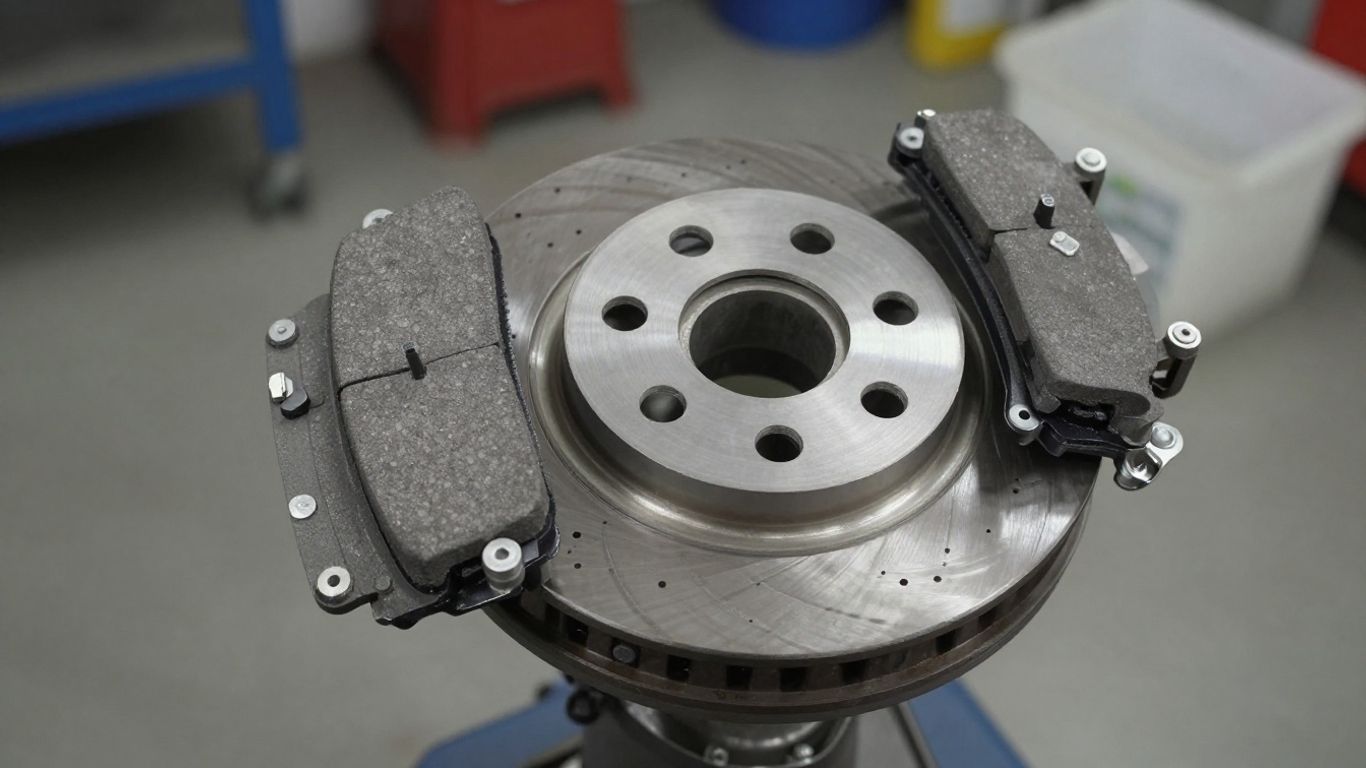
Brake pads contain a friction compound bonded to a backing plate. Common formulations include semi-metallic, ceramic, and other blended materials, each balancing noise, dust, temperature tolerance, wear, and cost differently. The correct choice depends on the vehicle and its normal use rather than on a single material being best for everyone.
Pads wear gradually, but uneven wear can point to a seized slide, restricted hose, or caliper problem. When the friction layer becomes too thin, the backing plate can damage the rotor and stopping performance may deteriorate quickly.
Brake rotors, discs, and heat management
The rotor provides the rotating surface that the pads clamp. It must remain within its service thickness and have a reasonably even surface; deep scoring, cracks, blue heat marks, or excessive runout warrant closer inspection. Ventilated rotors use internal channels to help move heat away from the braking surface.
Heat is normal, but repeated high-temperature braking can cause fade, distortion, or accelerated pad wear. Allowing appropriate airflow and avoiding prolonged pedal application on long descents can reduce unnecessary thermal stress.
Brake shoes and drum assemblies
Brake shoes carry friction linings that press outward against the inside of a drum. Springs, adjusters, backing plates, and wheel cylinders all contribute to correct movement. Because much of this assembly is enclosed, inspection usually requires drum removal and careful cleaning with suitable brake-service practices.
A drum that is scored, excessively worn, or out of specification can prevent new shoes from bedding correctly. Adjuster condition also matters: excessive clearance can increase pedal travel, while binding hardware can cause drag.
Calipers, wheel cylinders, and contact pressure
Calipers guide pads into the rotor, while wheel cylinders push drum shoes outward. Slides, seals, pistons, and mounting points must move smoothly enough to apply and release pressure consistently. A sticking piston may leave one pad dragging, creating heat and uneven wear.
When diagnosing a friction problem, compare wear across both sides of an axle. A difference between inner and outer pads, or between left and right wheels, often provides more information than overall thickness alone.
Hydraulic components that transfer brake force
Hydraulics allow a moderate pedal movement to create strong clamping or expanding force at the wheels. The system depends on an incompressible, clean fluid column and components that remain sealed under pressure. Small leaks or trapped air can produce a noticeable change in pedal behaviour.
Master cylinders and fluid reservoirs
The master cylinder contains pistons that generate hydraulic pressure for separate brake circuits. Its reservoir supplies fluid as needed and allows technicians to check the level and general condition. A low level may reflect pad wear, a leak, or incorrect servicing, so topping it up without finding the cause is not a complete repair.
Internal master-cylinder wear can allow pressure to bypass the seals. In that case, the pedal may slowly sink while steady pressure is applied, although other faults can produce similar symptoms.
Brake lines, hoses, and fittings
Rigid lines carry fluid along the vehicle, while flexible hoses accommodate suspension and steering movement near the wheels. Corrosion, swelling, chafing, loose fittings, and physical damage can restrict flow or allow fluid to escape. Hoses should be checked for cracks and bulges, not only for visible leaks.
Line routing matters after repairs. A hose twisted during installation may restrict braking or rub against a wheel, tyre, or suspension component as the vehicle moves.
Brake fluid types and contamination risks
Brake fluid must meet the specification set by the vehicle manufacturer. Different fluid families are not automatically interchangeable, and fluid can absorb moisture over time. Water contamination lowers the fluid’s boiling point and may contribute to corrosion inside hydraulic components.
Keep the reservoir closed and use fluid from a clean, sealed container. Oil, dirt, incorrect fluid, and air can all compromise hydraulic operation, so bleeding procedures should follow the vehicle’s service instructions.
Proportioning valves and pressure distribution
During braking, weight transfers toward the front axle. Pressure-distribution hardware helps balance front and rear braking so the rear wheels are less likely to lock before the fronts. Some vehicles use a mechanical proportioning valve, while others manage distribution electronically through the ABS system.
A change in ride height, suspension work, or a damaged valve can affect this balance. Uneven rear braking or premature rear lock-up should be investigated rather than treated as a simple pad replacement.
Electronic braking and driver-assistance components
Electronic systems add sensors and control logic to the basic hydraulic brakes. They monitor wheel speed and, in some vehicles, steering input, yaw, and acceleration. Their purpose is to help preserve control during hard braking or changing traction, while the underlying friction hardware still performs the physical work.
Anti-lock braking system sensors and control modules
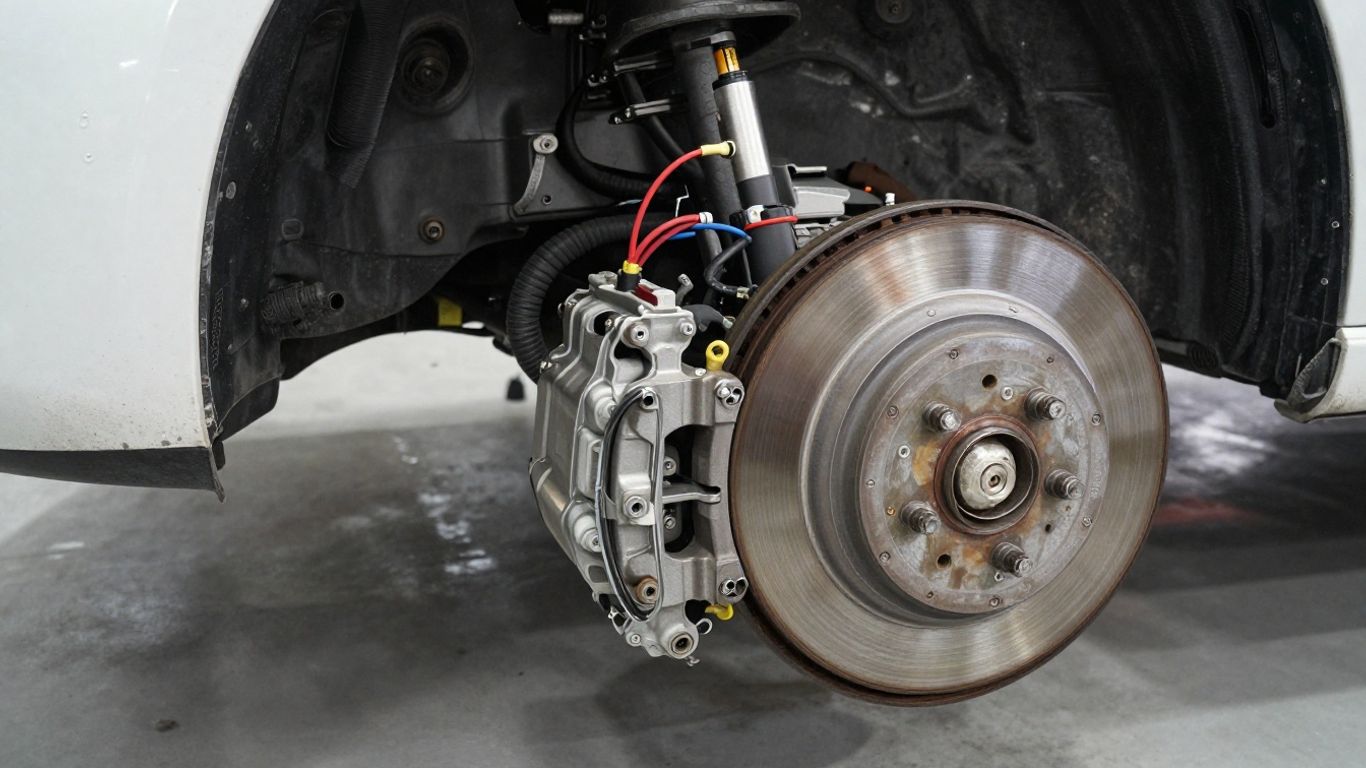
Wheel-speed sensors report how quickly each wheel is turning. The ABS control module compares those signals and can reduce and restore hydraulic pressure at an individual wheel when it detects impending lock-up. Drivers may feel pedal pulsing during an ABS event; that sensation is different from ordinary pedal vibration.
A damaged sensor, wiring fault, tone ring, or control module can illuminate the ABS warning lamp. Diagnostic testing is usually needed because the warning may identify a circuit problem rather than a failed hydraulic component.
Electronic stability control and traction control
Stability control uses information from wheel-speed, steering-angle, yaw, and acceleration sensors where fitted. It can apply individual brakes and reduce engine torque to help the vehicle follow the driver’s intended path. Traction control uses related information to limit wheel spin during acceleration.
These systems are most useful when grip differs between tyres or changes across the road surface. They cannot overcome excessively worn tyres, unsafe speed, or brake hardware that has not been maintained.
Electronic parking brakes and actuators
An electronic parking brake uses a switch, control unit, and electric actuators to apply the parking brake. Depending on the design, the actuator may operate a mechanism at the rear caliper or work through separate drum hardware. Service mode may be required before rear brake components are removed.
Because the system is electronically controlled, forcing a mechanism or disconnecting parts without the prescribed procedure can cause damage or leave the parking brake partially applied.
Brake wear sensors and dashboard warnings
Some vehicles use a wear sensor embedded in a pad, while others estimate wear through inspection or electronic service data. A warning lamp may indicate low pad material, low fluid, ABS trouble, or a general brake-system fault. The symbol and wording in the owner’s manual should guide the first response.
A warning should not be ignored simply because the pedal still feels normal. Some faults are detected before they create an obvious change in braking performance.
Common brake problems and diagnostic clues
Brake symptoms are useful clues, but they are not diagnoses by themselves. The same noise or pedal change can come from several parts, and a proper inspection should confirm the cause. Note when the symptom occurs, whether the vehicle is hot or cold, and whether it changes during light or hard braking.
Squealing, grinding, and unusual brake noises
A brief squeal can result from pad vibration, surface contamination, or normal material characteristics. Persistent squealing may indicate worn hardware, glazing, or a pad that is not moving correctly. Grinding is more urgent because it can mean the friction material has worn away and metal is contacting the rotor or drum.
Do not mask a new noise with lubricant or unrelated parts. The wheel, friction surfaces, mounting hardware, and dust shields should be examined together.
Pulling, vibration, and uneven braking
Pulling to one side may result from unequal friction, a sticking caliper, tyre differences, suspension faults, or hydraulic restriction. Vibration felt through the pedal or steering wheel can be related to rotor runout, uneven deposits, wheel condition, or suspension movement.
The speed and timing of the vibration help narrow the possibilities. A symptom only under braking points in a different direction from a vibration that remains while coasting.
Soft, spongy, or sinking brake pedals
A spongy pedal often suggests air in the hydraulic system, flexible-hose expansion, or fluid trouble. A pedal that sinks under steady pressure can indicate an internal master-cylinder bypass or an external leak. If the pedal suddenly travels much farther than usual, the vehicle should not be driven until the cause is checked.
Bleeding the system may help when air is confirmed, but it will not repair a leaking line, worn master cylinder, or damaged caliper seal. Finding the source comes first.
Brake fluid leaks and warning lights
Brake fluid may appear around a caliper, wheel cylinder, hose, line, master cylinder, or connection. It can damage painted surfaces and should be cleaned safely, but cleaning does not resolve the underlying loss of pressure. A red brake warning lamp, low reservoir, or fluid on the ground deserves immediate attention.
If the warning appears with an ABS lamp, both hydraulic and electronic diagnostics may be required. The vehicle’s manual can clarify whether the warning indicates the parking brake, fluid level, or a broader fault.
Reduced performance from overheating or brake fade
Brake fade occurs when heat temporarily reduces the friction or hydraulic performance available from the system. It may appear after repeated hard stops, towing, mountain driving, or prolonged pedal application. A hot-brake smell, smoke, or a pedal that feels different calls for a safe stop and cooling period.
Once the vehicle is cool, the brakes still need inspection for glazing, fluid damage, rotor discoloration, and seized components. Cooling alone may restore feel without correcting the cause of excessive heat.
Brake part inspection, replacement, and selection
Good maintenance combines scheduled checks with attention to changes in sound, feel, and warning lights. Inspection should cover the visible friction material and the less obvious hydraulic, mechanical, and electronic components. Replacement parts must match the vehicle’s exact braking configuration, not merely its broad make and model.
Recommended inspection points and service intervals
Inspection timing varies with vehicle design, mileage, driving conditions, and manufacturer guidance. At service visits, technicians commonly check pad or shoe thickness, rotor or drum condition, fluid level, leaks, hoses, caliper movement, wheel-cylinder condition, parking-brake operation, and warning lights.
A practical inspection record can keep small changes from being missed. These are useful points to record:
- Remaining pad or shoe thickness on each wheel.
- Rotor or drum measurements against service limits.
- Fluid condition, level, and evidence of leakage.
- Tyre, hose, caliper, and wheel-cylinder observations.
This information helps distinguish normal wear from a developing imbalance. It also makes future service decisions more precise than relying on a general statement that the brakes “look fine.”
How to identify worn or damaged components
Look for thin or uneven friction material, deep grooves, cracks, heat spots, leaking seals, torn boots, corroded lines, and seized hardware. Compare the left and right sides of the same axle, since unevenness often exposes a mechanical or hydraulic restriction.
Electronic scan results should be considered alongside physical inspection. A fault code can identify a circuit or sensor concern, but it does not measure pad thickness or confirm that a caliper is moving freely.
Choosing OEM, aftermarket, and performance parts
Original-equipment and aftermarket parts can both be suitable when they meet the vehicle’s required specifications and quality standards. Performance-oriented parts may be appropriate for repeated high-load use, but they can bring different noise, dust, bedding, or temperature characteristics.
Price alone is a poor selection method. Consider the vehicle’s weight, normal route, load, climate, and braking demands, then compare the part’s specification and warranty terms.
Matching replacement parts to the vehicle
Use the vehicle identification number, build details, engine and brake configuration, axle position, and service measurements when ordering. Similar models can use different rotor sizes, pad shapes, sensors, calipers, or drum assemblies. A reliable parts supplier can help confirm compatibility before the order is placed.
For heavy vehicles that use compressed air rather than hydraulic fluid, the component chain is different; an air brake system overview explains compressors, reservoirs, foot valves, brake chambers, slack adjusters, and friction hardware. That distinction prevents a hydraulic-brake checklist from being applied to the wrong vehicle.
Safe installation and post-repair testing
Installation should follow the service procedure, including correct torque, clean friction surfaces, secure hose routing, and any required electronic service mode. New pads and rotors may need a controlled bedding process, while hydraulic work generally requires bleeding and a leak check.
Before normal driving, confirm a firm pedal, correct fluid level, released parking brake, and absence of warning lights. Begin with a slow controlled test in a safe area, then check for pulling, noise, vibration, or dragging. A repair is not complete until the system operates consistently under realistic conditions.
Conclusion
Braking system parts form one safety chain, from the pedal and fluid to the friction surfaces and electronic controls. Learning what each part does makes symptoms easier to describe, inspections more useful, and replacement decisions more careful. When a warning or change in brake feel appears, timely professional diagnosis is the safest next step.
Frequently Asked Questions
What are the main braking system parts?
The main parts include the pedal and booster, master cylinder, fluid reservoir, lines and hoses, calipers or wheel cylinders, pads or shoes, rotors or drums, parking-brake hardware, and electronic sensors and control modules where fitted.
How often should brakes be inspected?
Inspect them according to the vehicle manufacturer’s service schedule and whenever symptoms appear. Heavy loads, towing, steep roads, and frequent urban driving may justify more frequent checks.
What causes brake squealing?
Squealing can come from pad vibration, friction-material characteristics, contamination, glazing, worn hardware, or uneven contact. Persistent or worsening noise needs an inspection rather than an assumption about the cause.
Why does a brake pedal feel soft?
Air in the hydraulic system, a fluid leak, hose expansion, contaminated fluid, or a master-cylinder problem can make the pedal soft or spongy. A sudden change should be treated as a safety concern.
Can brake pads be replaced without replacing rotors?
Sometimes, if the rotors remain within specification and have a suitable surface. Deep scoring, cracks, excessive wear, or significant runout may require rotor replacement or further machining where permitted.
What does an ABS warning light mean?
It may indicate a wheel-speed sensor, wiring, tone ring, control-module, or related fault. The basic brakes may still operate, but the anti-lock function may be unavailable until the problem is repaired.
Why is correct brake-fluid type important?
Brake fluid specifications differ in chemical properties and operating performance. Using the wrong fluid or allowing moisture and dirt into the system can damage components and reduce braking reliability.