

Key Takeaways
A sound suspension helps the Haval Jolion stay composed, comfortable, and predictable on the road. The right replacement process starts with accurate diagnosis and ends with alignment and follow-up checks.
- Identify the worn component before ordering replacement parts.
- Confirm model year, drivetrain, VIN, and part number compatibility.
- Inspect related components when one suspension part has failed.
- Use correct removal, installation, and torque procedures.
- Schedule an alignment check and monitor tire wear after repairs.
Understanding the Haval Jolion suspension system
The Haval Jolion suspension connects the body to the wheels while managing bumps, cornering forces, braking movement, and tire contact. Its components work as a system rather than as isolated pieces, so a worn bushing can affect alignment just as a tired shock absorber can affect ride control. Understanding that relationship makes diagnosis and parts selection much less guesswork.
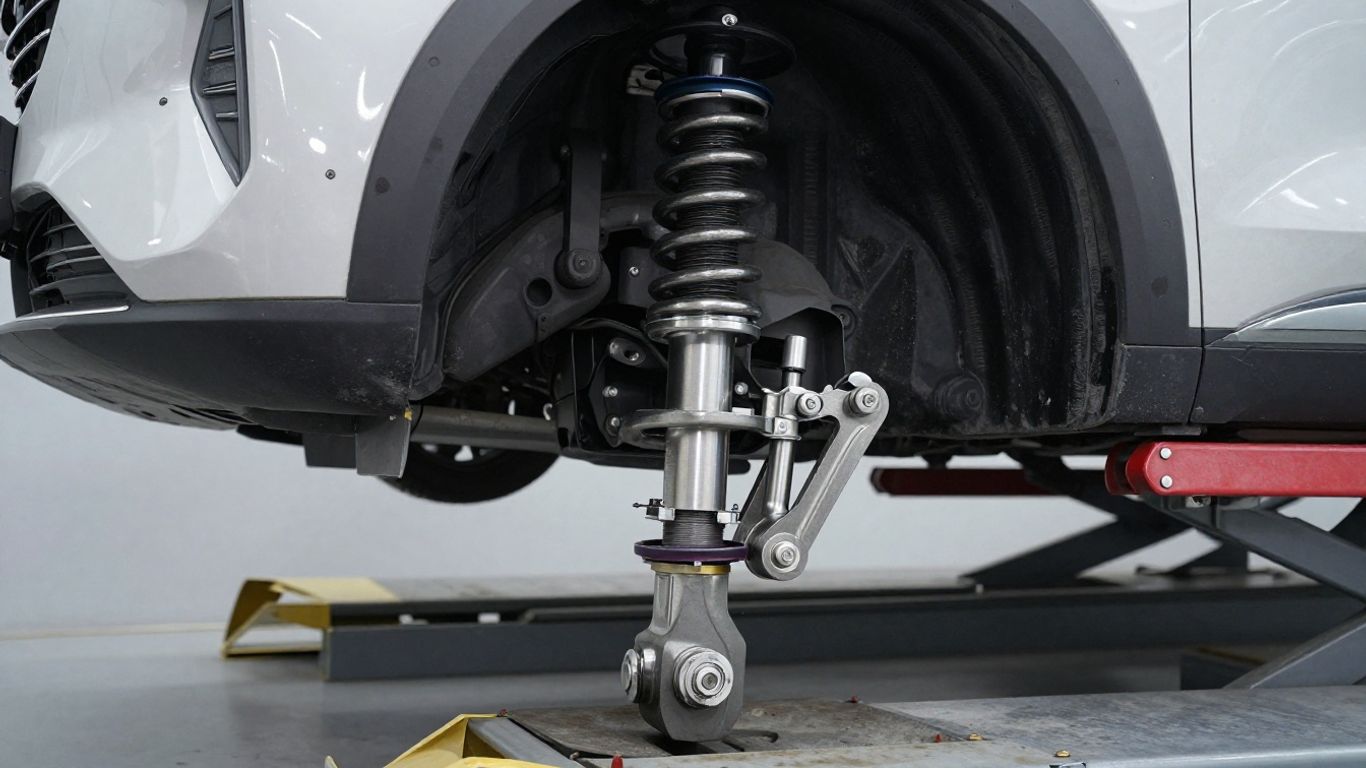
How the front suspension is structured
At the front, suspension components guide the wheel through its movement while allowing steering inputs to reach the road cleanly. Control arms, bushings, ball joints, the steering knuckle, spring and damper assembly, and stabilizer hardware all share the work. The exact arrangement can vary by model specification, which is why visual similarity alone is not enough when ordering a part.
A worn front component may show up as wandering, steering vibration, or an alignment that will not stay consistent. The problem may be subtle at first, especially if the vehicle is driven mostly on smooth streets.
How the rear suspension supports ride control
The rear suspension helps keep the back tires planted while the vehicle passes over uneven surfaces or carries passengers and luggage. Springs support the vehicle’s weight, while dampers control how quickly the body rises and settles. Bushings and mounting points absorb movement and help prevent harsh transfer of road forces into the cabin.
Rear suspension wear is sometimes mistaken for a tire problem because the first clue can be cupping, uneven tread wear, or a floating sensation on faster roads. A complete inspection should include the rear dampers, spring seats, bushings, and mounting hardware.
The role of shocks, struts, springs, and control arms
Springs carry the static load of the vehicle and allow the wheels to move over bumps. Shocks or struts limit excess movement after that compression, while control arms locate the wheel and permit controlled suspension travel. Bushings soften the movement at each mounting point, but they can crack, deform, or separate with age and road exposure.
These parts influence one another. A leaking damper can leave a spring working without enough control, while a damaged control-arm bushing can change wheel position under braking or acceleration. Accurate diagnosis saves money because it avoids replacing a sound component while the actual fault remains.
How suspension components affect handling and comfort
Comfort depends on how effectively the suspension absorbs road irregularities without allowing repeated body movement. Handling depends on stable wheel contact, predictable steering response, and geometry that remains within its intended range. A vehicle can therefore feel harsh, loose, noisy, or unstable when only one or two components are worn.
The best assessment compares the driver’s symptoms with a physical inspection and, where needed, an alignment reading. Ride quality by itself is not a reliable way to identify a particular failed part.
Common Haval Jolion suspension parts and their functions
Haval Jolion suspension parts come in several forms, and each has a different job in the wheel-control system. Some carry load, some locate the wheel, and others manage movement or absorb vibration. Knowing the function of each part helps you ask better questions before buying and helps a technician explain what has actually failed.
The front suspension lower control arms are one example of a component that can influence both wheel location and alignment. They should be assessed alongside their bushings and ball-joint connections rather than treated as a completely separate repair.
Lower control arms and bushings
Lower control arms connect the wheel-end assembly to the vehicle structure. Their bushings allow controlled movement while reducing vibration, but worn rubber can permit unwanted fore-and-aft or lateral movement. Damage may be caused by age, repeated impacts, corrosion, or a severe pothole strike.
When a control arm is replaced, the condition of the opposite side and nearby fasteners deserves attention. Replacing only a visibly damaged bushing may not be the best option if the arm itself is bent or the ball joint is also worn.
Stabilizer links and sway bar components
The stabilizer bar helps moderate differences in suspension movement from side to side, especially while cornering. Stabilizer links connect the bar to the suspension, and their small joints can develop looseness that produces a sharp knock over broken pavement. The bar bushes can also harden or allow movement at their mounting points.
A stabilizer-link fault does not always mean the vehicle has a serious alignment problem. Still, the noise should be investigated rather than ignored, because similar sounds can come from control arms, mounts, or loose hardware.
Shock absorbers and strut assemblies
Shock absorbers and strut assemblies control spring movement after a bump or compression. Fluid leakage, repeated bouncing, nose dive under braking, or a less settled feel through bends can point toward reduced damping. These symptoms can overlap with tire, spring, or alignment issues, so inspection is essential.
When comparing parts, check whether the replacement is a complete assembly or only a damper. A complete assembly may include additional hardware, while a bare damper may require the original spring and mount to be transferred using suitable equipment.
Coil springs, mounts, and suspension bearings
Coil springs support the vehicle and establish much of its ride height. A broken or sagging spring can alter clearance, handling balance, and alignment. Upper mounts and suspension bearings allow the assembly to move as the steering turns and can create noise or stiffness when worn.
Springs should be replaced with attention to their seating position and orientation. If one spring has failed through fatigue, the technician may recommend assessing or replacing the matching spring on the other side so the axle remains balanced.
Ball joints, knuckles, and related hardware
Ball joints allow the suspension and steering components to move through changing angles while remaining connected. The steering knuckle carries the wheel-end assembly, and its associated hardware must remain secure and correctly fitted. Excess play in a ball joint can affect steering precision and tire wear.
A visual check is not always enough to judge a joint. Load, movement, and manufacturer-specific inspection methods may be required, particularly when the symptom is intermittent. The part number and vehicle identification should be confirmed before ordering.
Signs that suspension parts need replacement
Suspension wear tends to develop gradually, although a pothole or collision can create an immediate fault. Drivers may first notice a new sound, a change in steering feel, or tires wearing differently from before. These clues are useful, but none should be treated as a final diagnosis without an inspection.
The most helpful approach is to record when the symptom appears: during braking, turning, acceleration, low-speed bumps, or highway driving. That context gives a technician a much clearer starting point.
Symptoms you may notice while driving
A Jolion with suspension wear may pull, drift, bounce excessively, or feel unsettled after a bump. Steering may seem less precise, and the vehicle may require more correction on a straight road. A clunk over one type of bump can also point toward looseness in a link, bushing, mount, or joint.
Do not assume that every vibration comes from the suspension. Wheel balance, tire damage, brake components, and drivetrain issues can create similar sensations. A road test followed by a workshop inspection is usually more useful than replacing parts based on one symptom.
Uneven tire wear and alignment changes
Suspension components influence the angles at which the tires meet the road. When a bushing bends or a control arm shifts, alignment can change and produce feathering, shoulder wear, or a difference between left and right tires. The wear pattern may continue even after alignment if the underlying component remains loose.
Record tire condition before and after repairs, and ask for alignment readings when appropriate. A related suspension parts fitment check can also help confirm the correct component before an order is placed, especially when more than one variation exists.
Clunking, squeaking, and knocking noises
Noise location and timing matter. A knock while crossing a small bump may suggest a link or bushing, while a groan during steering can involve a mount or bearing. A squeak may come from rubber contact, dirt, or a component under stress, but sound alone rarely identifies the failed part with certainty.
Try to describe whether the sound comes from one corner, both sides, the front, or the rear. Avoid spraying lubricants onto suspension joints as a substitute for diagnosis; the temporary change can hide the symptom without correcting the wear.
Visual signs of damage or wear
During an inspection, look for leaking damper fluid, torn bushings, cracked springs, damaged dust boots, bent arms, and missing or displaced hardware. A tire sitting at an unusual angle or a vehicle corner sitting lower than the other side is also worth investigating. Some failures, however, occur internally and leave little visible evidence.
A clean-looking component can still have play or weakened rubber. That is why a proper inspection combines visual checks with movement tests and, when needed, alignment measurements.
When a suspension inspection is urgent
Arrange an urgent inspection if steering becomes difficult, a wheel appears misaligned, the vehicle pulls sharply, a spring has broken, or a tire is rubbing against the body. A loud new knock after an impact also deserves prompt attention. Continued driving can worsen damage and may reduce control of the vehicle.
If the vehicle is unstable or a component is visibly broken, do not rely on a slow trip to a workshop. Use appropriate recovery assistance and explain the symptoms clearly.
How to choose replacement suspension parts
Choosing replacement parts is more than finding a listing that looks correct. The model year, drivetrain, engine specification, market, production variation, and exact position on the vehicle can all matter. A careful order starts with the vehicle details and the failed part, not just a generic search term.
There is also a practical decision between replacing one component and refreshing several related parts. The right choice depends on condition, labor access, mileage, budget, and the technician’s findings.
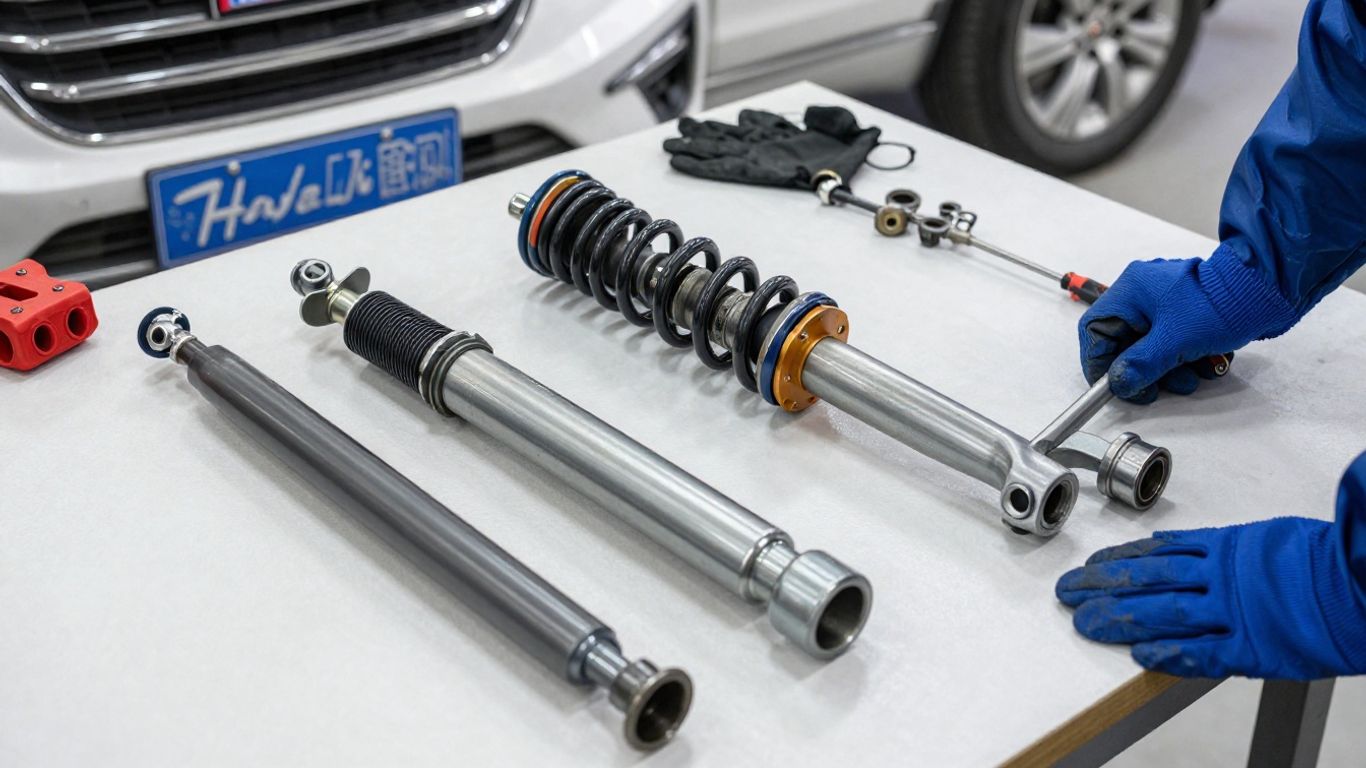
OEM versus aftermarket components
OEM parts are made to the vehicle manufacturer’s specification, while aftermarket parts come from independent producers and can vary in design, material, and warranty terms. Neither label removes the need to verify fitment. A reputable supplier should be able to provide clear part information rather than relying on a photograph alone.
For buyers comparing options, the original quality suspension components listing is a useful reminder to check what is actually included, which vehicle applications are stated, and whether the seller can verify the match. Avoid choosing solely by the lowest price when a poor fit could create additional labor or alignment costs.
Matching parts to the model year and drivetrain
A part listed for a Jolion may not fit every model year or drivetrain. Petrol and hybrid versions, regional specifications, and changes made during production can affect suspension dimensions and mounting details. Confirm the vehicle identification number, engine or powertrain information, production year, and the side or axle position required.
The vehicle’s existing part can provide useful clues, but do not copy a number that is damaged or difficult to read without checking it against reliable vehicle data. When in doubt, pause the order until the application is confirmed.
Checking part numbers and vehicle compatibility
Part numbers are more dependable than broad descriptions such as “front suspension” or “Jolion shock.” Compare the number on the original component with the supplier’s listing and confirm whether the part is sold individually, as a pair, or in a complete assembly. Photographs can support identification, but they should not replace the written application details.
A VIN or clear part photograph can be especially useful for a supplier that offers fitment verification. Asiautos.net describes fitment verification through VIN or part pictures, which is a practical step when the available catalog information leaves more than one possible match.
Balancing price, quality, and warranty coverage
Price should be considered alongside construction, supplier support, warranty conditions, shipping, and return requirements. A cheaper part may not be economical if it requires another installation soon afterward. Conversely, a more expensive option is not automatically appropriate unless its specification and coverage are clear.
Read the warranty before buying, including exclusions for incorrect installation, wear items, or mismatched applications. Keep the invoice, part number, and vehicle details together in case a question arises later.
When to replace related parts at the same time
Replacing related components can make sense when they share labor, have similar mileage, or show comparable wear. For example, a worn mount may be inspected while a strut is removed, and a damaged bushing may be considered when replacing a control arm. The decision should follow inspection rather than a blanket rule.
Before approving extra work, ask which part is defective, what evidence supports replacement, and whether the additional labor is already included. That keeps the repair focused while avoiding the cost of returning to the same area unnecessarily.
Haval Jolion suspension parts replacement process
Suspension replacement should follow a measured sequence: confirm the fault, secure the vehicle, remove the worn component, install the correct replacement, and check the vehicle afterward. The process differs depending on whether the job involves a link, arm, spring, damper, or complete strut. Good preparation prevents many avoidable errors.
Because suspension components can carry stored spring force and support the vehicle’s weight, safety is central throughout the job. A repair manual or qualified technician should guide the exact procedure for the vehicle specification.
Preparing the vehicle and confirming the fault
The vehicle should be inspected on a suitable level surface, with the fault recorded before dismantling. Confirm the replacement part, compare its mounting points with the old component, and check whether additional hardware is supplied. Photographing the original arrangement can help with orientation during reassembly.
The inspection should also identify related wear. Replacing a noisy link will not solve a damaged control-arm bushing, and replacing a damper will not correct a bent wheel or failed spring.
Safe removal of worn suspension components
The vehicle must be supported securely at approved lifting points, with the wheel and surrounding area stabilized before components are loosened. Some assemblies require support to prevent sudden movement when a fastener is removed. Coil springs and strut assemblies can store substantial energy and should not be dismantled without the correct equipment.
Rust, seized fasteners, and damaged threads may complicate removal. Forcing a fastener or using an unsuitable tool can damage the knuckle, subframe, brake hose, or replacement component.
Installing new parts with correct alignment
New parts should be installed in the same orientation as the originals unless the service procedure specifies otherwise. Bushings may have alignment marks, and arms may need to be tightened at a particular suspension position so the rubber is not preloaded incorrectly. A component that fits physically can still be installed wrongly.
After assembly, check that brake lines, wheel-speed sensor wiring, dust shields, and other nearby items are routed safely. The wheel should turn freely without contact before the vehicle is lowered.
Torque specifications and fastener checks
Suspension fasteners should be tightened to the specified torque using a calibrated torque wrench. Some fasteners are designed for one-time use, while others require a particular tightening sequence or final torque at normal ride height. Guessing by feel is not a reliable substitute.
Make a final check for loose tools, missing clips, damaged threads, and correct wheel-nut tightening. After the vehicle is lowered, recheck the relevant fasteners according to the service procedure and listen for anything unusual during the initial drive.
Why professional installation may be necessary
Professional installation is appropriate when the repair involves spring compression, pressed-in joints, complex alignment geometry, or uncertain diagnosis. A workshop can combine inspection equipment, lifting equipment, torque tools, and alignment measurements. That is particularly valuable when the vehicle has more than one symptom.
If you source parts yourself, provide the technician with the exact part number and vehicle information. Asiautos.net presents itself as a one-stop source for GWM and other Chinese auto parts, but the installer still needs to confirm that the supplied item matches the vehicle before fitting it.
Suspension maintenance after installing new parts
New components need a short period of observation after installation. The vehicle may feel different because wheel geometry and damping have changed, but unusual noise, pulling, or rapid tire wear should not be dismissed as normal. A careful follow-up protects the repair and helps catch an installation issue early.
Maintenance is mostly about regular checks and sensible driving. There is no universal replacement interval for every suspension component because road conditions, load, mileage, and part quality all affect service life.
Scheduling wheel alignment checks
Alignment should be checked whenever a component that affects wheel position is replaced, after a substantial impact, or when the vehicle pulls or the tires wear unevenly. The alignment report can show whether the settings are within specification and whether further suspension wear is present.
A good alignment cannot compensate for a loose joint or bent arm. If readings cannot be brought into range, the underlying suspension and steering components should be inspected again.
Inspecting tires and suspension components
Tire inspections provide an early warning of changes in wheel control. Look for shoulder wear, feathering, cupping, cracks, and pressure loss, and compare the wear across the axle. During routine servicing, inspect dampers, bushings, springs, mounts, links, and visible hardware for leaks or damage.
It is useful to keep a simple record of tread condition and repair dates. Patterns become easier to spot when the same checks are repeated rather than performed only after a serious symptom appears.
Driving habits that reduce suspension wear
Smooth driving reduces the shock loads that reach suspension components. Slow down before potholes rather than braking heavily while crossing them, avoid mounting curbs at speed, and keep tire pressures at the recommended level. These habits cannot prevent every failure, but they can reduce unnecessary impact and heat.
Avoid carrying more weight than the vehicle is designed to handle. Repeated overloading changes how the springs and dampers work and can accelerate wear in bushings and mounts.
Preparing the suspension for rough roads and heavy loads
Before a long trip on rough roads, inspect tire condition, spare-wheel equipment, underbody clearance, and visible suspension components. Heavy luggage should be distributed evenly and secured so it does not shift. If the vehicle will regularly carry substantial loads, discuss the intended use with a qualified technician rather than fitting random spring or damper changes.
After a demanding journey, check for new noises, fluid leakage, altered ride height, and changes in steering feel. Early attention is usually simpler than waiting for a visible failure.
Tracking service records and replacement intervals
Keep the date, mileage, replaced part, supplier, part number, and workshop details in one record. Note whether the part was installed on the left or right side and whether an alignment was completed. This information makes future diagnosis and ordering faster.
Replacement intervals should be guided by condition and vehicle use rather than an arbitrary deadline. A Jolion driven on smooth roads may wear differently from one regularly used on rough surfaces, short trips, or heavily loaded journeys.
Conclusion
Choosing and maintaining Haval Jolion suspension parts is a process of matching symptoms, inspection findings, vehicle details, and installation quality. Confirm compatibility before ordering, use safe repair methods, and follow the work with alignment and tire checks. A little record-keeping and prompt attention to new noises can preserve ride comfort and predictable handling for longer.
Frequently Asked Questions
How long do suspension parts usually last?
Service life varies with road quality, vehicle load, driving style, climate, and component quality. Inspect parts based on symptoms and condition rather than relying on one fixed mileage figure.
Can worn suspension parts affect tire wear?
Yes. Loose or damaged components can change wheel alignment or allow unwanted movement, causing feathering, shoulder wear, cupping, or uneven wear across an axle.
Should suspension parts be replaced in pairs?
Replacing parts in pairs can help maintain balanced performance when both sides have similar age or wear. The correct choice depends on the component, inspection results, and vehicle condition.
Is a wheel alignment needed after suspension repairs?
An alignment check is advisable after repairs that affect wheel position or steering geometry. It is also useful when the vehicle pulls or the tires begin wearing unevenly.
What causes suspension knocking noises?
Possible causes include worn stabilizer links, bushings, ball joints, mounts, loose hardware, or damaged springs. A physical inspection is needed because several faults can produce similar sounds.
Can I replace suspension parts at home?
Some simpler components may be suitable for an experienced home mechanic with the correct tools and procedures. Jobs involving springs, pressed joints, or uncertain diagnosis are safer for a qualified workshop.
What information is needed to order the correct part?
Provide the model year, drivetrain or engine details, VIN, axle and side position, existing part number, and clear photographs when available. These details reduce the chance of ordering an incompatible component.