
Key Takeaways
Control-arm faults can affect ride comfort, steering stability, tire wear, and alignment. A careful inspection is the best way to confirm the cause before buying parts or approving repairs.
- Control arms connect the wheel assembly to the vehicle structure and help manage suspension movement.
- Bushings and ball joints can wear separately, so diagnosis should identify the failed component.
- Clunks, steering changes, uneven tire wear, and visible damage all deserve attention.
- Replacement-part compatibility depends on model year, drivetrain, side, and vehicle configuration.
- A clear quote should separate parts, labor, alignment, and any related suspension work.
Understanding the control arms on your Haval H6
The control arms are structural links within the front suspension. They help guide the wheel as the suspension moves while allowing the vehicle to respond to steering and road inputs. When researching Haval H6 control arms Melbourne drivers should consider, the vehicle’s exact year and configuration matter as much as the visible symptoms.
What control arms do in the front suspension
A control arm joins the suspension upright or knuckle to a fixed mounting point on the vehicle. It pivots through its bushings as the wheel travels over bumps, helping maintain the intended relationship between the wheel, steering, and body. It is not a spring or shock absorber, but its condition affects how those parts work together.
The arm also helps keep suspension geometry within its designed range. If it bends after an impact, or moves excessively because a mounting point has deteriorated, the wheel can sit differently on the road. That change may be subtle at first, particularly during ordinary low-speed driving.
How bushings and ball joints work together
Bushings are flexible rubber or composite mounts that isolate vibration and permit controlled movement. A ball joint provides a swivelling connection, allowing the steering knuckle to move as the wheel turns and the suspension rises or falls. Both need to move freely without excessive looseness.
A cracked bushing does not automatically mean the ball joint has failed, and the reverse is also true. A technician should assess each connection rather than replacing parts solely because one component looks old. Accurate fault identification can prevent an unnecessary repair while still addressing a genuine safety concern.
Common differences between front lower and upper control arms
Lower control arms generally sit beneath the steering knuckle and often carry substantial braking, cornering, and road-load forces. Where an upper arm is fitted, it occupies a higher position and contributes to the upper part of the suspension geometry. The design and number of arms vary by suspension layout, so assumptions based on another SUV can be misleading.
The replacement part must also match the side of the vehicle. A right-hand component is not automatically interchangeable with a left-hand component, even when the two look similar. Part numbers, mounting shape, ball-joint arrangement, and dimensions should all be checked.
Why control arm condition affects handling and tire wear
Worn bushings can allow the wheel to shift under acceleration, braking, or cornering. A loose ball joint can affect steering precision and may create movement that is felt through the wheel. Neither symptom proves a control-arm fault on its own, but both justify an inspection.
Changes in suspension geometry can alter alignment angles and place more load on part of a tire’s tread. That is why a vehicle may feel slightly vague before the driver notices obvious tire damage. If handling has changed, avoid treating a new alignment reading as the whole diagnosis; the underlying movement still needs to be found.
Signs your Haval H6 control arms need attention
Suspension noises and steering changes are easy to dismiss because they can come and go with road conditions. Melbourne’s uneven surfaces, potholes, tram tracks, and frequent stop-start driving can make symptoms more noticeable, but they do not identify the failed component by themselves. Record when the noise occurs and whether it happens during braking, turning, or bump travel.
Clunking or knocking over bumps
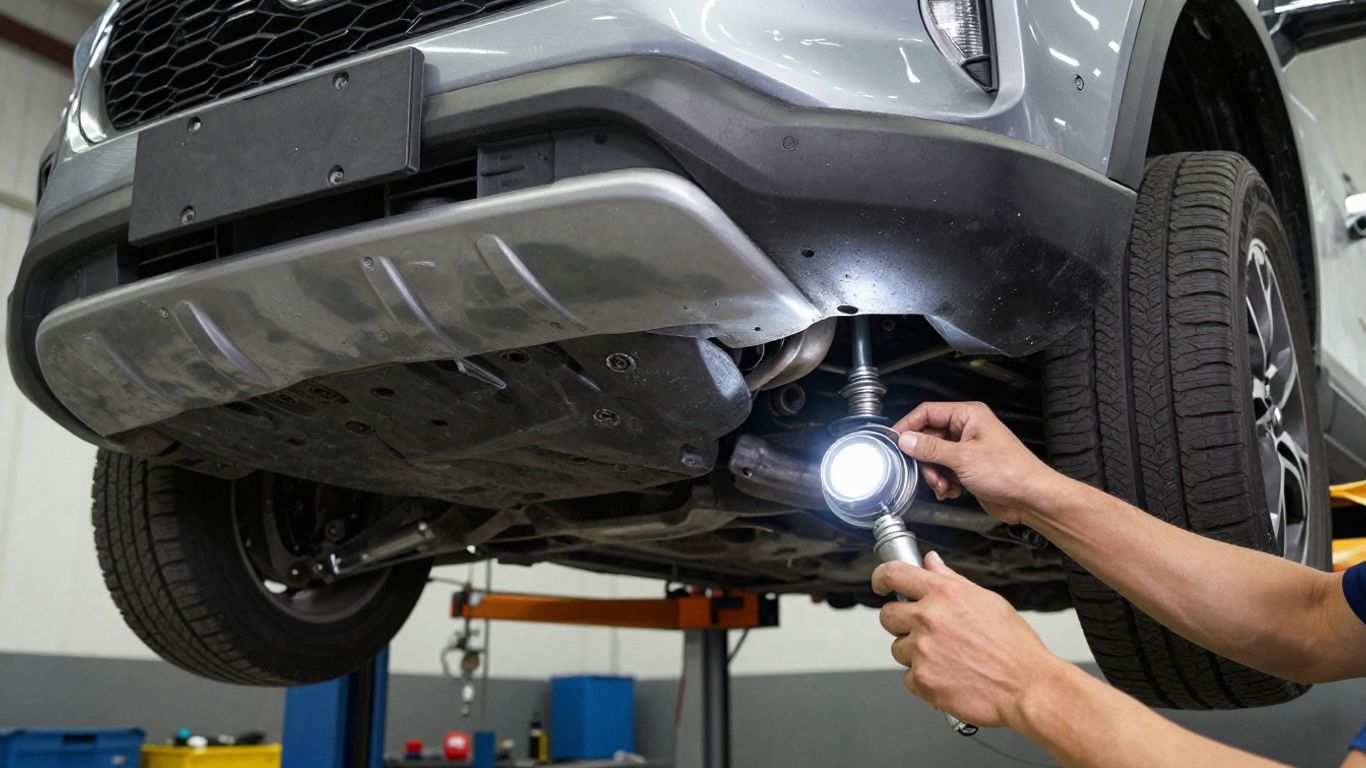
A single clunk over a speed hump may come from a control-arm bushing, ball joint, stabiliser link, strut mount, or another loose connection. Repeated knocking on small bumps can suggest unwanted play in the suspension. A noise that changes when the brakes are applied provides another useful clue, although it still requires hands-on testing.
Do not rely on sound alone. Some worn bushings remain quiet, while a loose fastener elsewhere can imitate a control-arm problem. A repairer should reproduce the symptom where safe and then inspect the relevant joints and mounts.
Steering pull, vibration, or unstable handling
A vehicle that drifts, wanders, or feels unsettled may have a suspension or alignment issue. Steering-wheel vibration can also arise from wheel balance, tire condition, brake components, or bent wheels. Control-arm movement becomes more suspicious when the handling change is paired with a knock or visible bushing damage.
The timing matters. If the symptom began after a pothole or kerb strike, mention that when booking. Impact history can help the technician check for a bent arm or altered mounting point rather than focusing only on normal wear.
Uneven tire wear and alignment changes
Uneven wear along an inner or outer shoulder may indicate changed alignment, incorrect tire pressure, worn suspension, or a combination of these. Compare the tread across the axle and check whether the vehicle has recently had alignment work. A new pattern appearing soon after an alignment may point to movement that was not corrected.
A useful record for the inspection includes:
- The tire position and location of unusual wear.
- The date and result of the last wheel alignment.
- Any recent pothole, kerb, or collision impact.
- Whether the vehicle pulls during braking or normal driving.
This information does not replace testing, but it gives the technician a clearer starting point. It can also make the eventual quote easier to understand.
Visual signs of worn bushings or damaged components
Look for torn rubber, separated bushing material, fluid contamination, a bent arm, damaged dust boots, or corrosion around mounting hardware. Visual inspection should be performed safely with the vehicle properly supported; do not place any part of your body beneath an unsupported car.
A cracked surface is not always proof that replacement is required, and a bushing can have internal deterioration without an obvious external split. Visual evidence is one part of the diagnosis, alongside movement tests and a road assessment.
Diagnosing control arm problems in Melbourne
A sound diagnosis separates the symptom from the failed part. A suspension specialist should inspect the vehicle on suitable equipment, ask about its history, and explain what was found in plain language. This matters when comparing Haval H6 control arms Melbourne repair quotes, because two quotes may address different underlying problems.
What a professional suspension inspection includes
An inspection commonly begins with a road test, a visual check, and an examination of wheel and suspension movement. The technician may assess tire condition, steering response, ride height, fasteners, bushings, ball joints, stabiliser components, and shock absorbers. The exact process depends on the reported symptom and the vehicle’s condition.
The outcome should identify the suspected failed component, the urgency of repair, and any secondary issue that could affect the result. Ask for photographs or measurements when practical. Clear evidence is especially helpful if the recommendation involves replacing more than one part.
How technicians test bushings and ball joints
With the vehicle safely supported, a technician can use appropriate levers and movement checks to look for excessive play, separation, or abnormal resistance. Ball joints may be checked for looseness in more than one direction, while bushings are assessed for tearing, displacement, and movement under load.
Some faults only appear when the suspension is loaded in its normal driving position. That is why a quick visual look, or shaking one wheel without context, may not be enough. The technician’s method should suit the suspension design and the suspected failure.
Separating control arm faults from related suspension issues
A clunk can originate from a sway-bar link, strut mount, steering tie-rod, subframe mount, or brake hardware. Pulling can relate to tire pressure, tire construction, alignment, or a brake that is dragging. Vibration may begin at the wheel or tire rather than in the control arm.
The following comparison can help frame a discussion with the repairer, although it is not a substitute for inspection:
| Symptom or finding | Possible area to check | Why confirmation matters |
|---|---|---|
| Knock over small bumps | Bushings, links, or mounts | Several joints can make a similar noise |
| Steering looseness | Ball joint or steering linkage | Play may affect safety and alignment |
| Shoulder tire wear | Alignment or suspension movement | Correcting angles alone may not last |
| Vibration at speed | Tire, wheel, brake, or suspension | Balancing and runout checks may be needed |
The table is a starting point, not a diagnosis. A good report connects the observed movement or damage to the proposed repair and explains what should be rechecked afterward.
When a wheel alignment check is necessary
Alignment is usually worth checking after control-arm replacement because changing a suspension link can alter wheel angles. It is also sensible when the vehicle pulls, the steering wheel is off-centre, or tire wear has developed. The technician should explain whether alignment is included in the quote or charged separately.
Alignment cannot repair a loose joint or a bent arm. If the readings cannot be brought within specification, the workshop should investigate the remaining mechanical cause before presenting the job as complete.
Choosing replacement control arms for your Haval H6
Replacement decisions should balance fitment, condition, warranty, and total installed cost. The cheapest listed part is not necessarily the least expensive outcome if it requires extra bushings, has uncertain history, or does not match the vehicle. Give the supplier the registration or VIN details whenever possible.
Genuine, aftermarket, and used parts compared
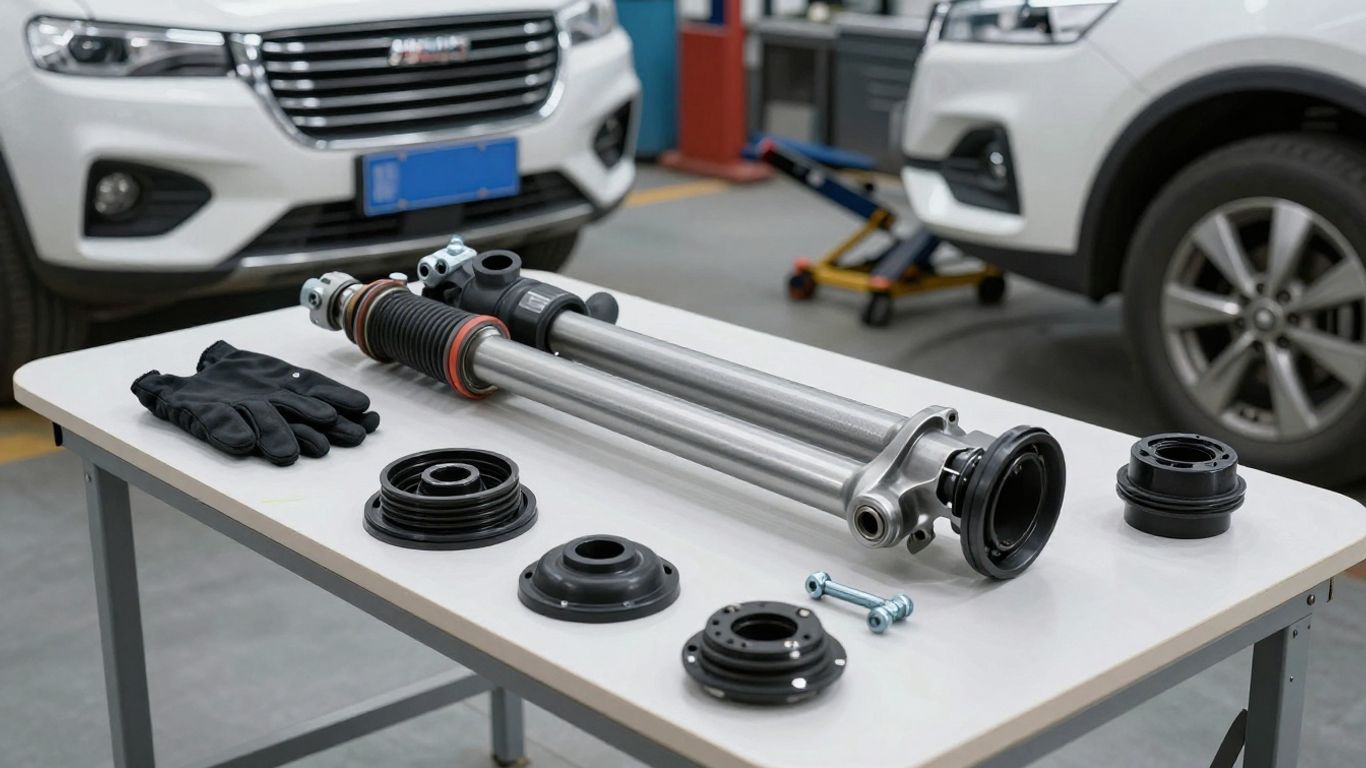
A new genuine part is supplied for the vehicle’s original parts network, while an aftermarket part comes from another manufacturer and may vary in design and warranty. A used part can be practical when its condition and fitment are verified, but its previous service history may be limited.
For a used-part option, City Wreckers Melbourne lists a recycled right front lower control arm for a 2022 H6, with stock, returns, and warranty details stated on the listing. Treat those details as listing-specific and confirm availability before arranging work.
Matching parts to your H6 model year and drivetrain
Model year, engine, drivetrain, trim, and suspension design can affect the correct control arm. Hybrid and non-hybrid versions may not share every suspension component, and a part for one generation should not be assumed to fit another. The side and position—front lower, front upper where applicable, left, or right—must also be confirmed.
A supplier that asks for full vehicle details is taking the right first step. Haval wreckers Melbourne can be a useful place to check availability of used parts, but fitment should still be verified against the vehicle before purchase.
Checking compatibility for right-hand-drive vehicles
Right-hand-drive operation does not by itself make every suspension part unique, but steering layout, local specifications, and market variations can affect compatibility. Confirm the vehicle’s VIN, build details, and the part number where one is available. Photos alone are useful for comparison but should not be the final authority.
Ask whether the quoted part is for the correct side and whether it includes the ball joint, bushings, nuts, and other required hardware. Those details can change both the price and the installation time.
When replacing the complete assembly makes sense
Some control arms are supplied as an assembly with bushings and a ball joint already installed. This can reduce press work and make the repair more predictable when several components are worn. If only one replaceable bushing has failed and the arm and ball joint are sound, a component-level repair may still be appropriate.
The decision should reflect the part’s design, labor access, warranty terms, and the condition of the remaining joint. Replacing both sides is not automatically necessary, but similar age and mileage can make a paired recommendation reasonable when supported by inspection findings.
Understanding Haval H6 control arm replacement costs
There is no single reliable price for this repair without knowing the failed side, part type, vehicle variant, and workshop labor rate. A quote for a complete assembly is not directly comparable with one for a bushing-only repair. The most useful comparison is the total cost to return the suspension to a safe, correctly aligned condition.
Factors that influence parts and labor prices
Parts pricing changes with whether the component is new, aftermarket, genuine, or used. Labor depends on access, seized fasteners, pressing requirements, and whether extra hardware is needed. A post-repair alignment and a follow-up inspection may also be separate line items.
A quote should make those variables visible. In the same way that a hair treatment cost guide separates treatment type, location, and service factors, a suspension quote is easier to assess when parts and labor are not bundled into one unexplained figure.
Comparing single-side and both-side replacement
Replacing one side may be appropriate when inspection shows one damaged arm and the opposite side remains within acceptable condition. Replacing both can make sense when both bushings have similar deterioration, the vehicle has high mileage, or labor access makes a paired repair more efficient.
Ask what evidence supports the recommendation. “Both sides” should not be an automatic upsell, but neither should it be rejected when the second side is clearly close to failure or the parts share a similar service history.
Additional costs for alignment and related repairs
Potential additions include wheel alignment, replacement fasteners, seized-bolt extraction, damaged dust boots, ball joints, stabiliser links, tires, or other suspension components found during inspection. These should be discussed before work expands beyond the original authorization.
Request a written breakdown that shows the part price, labor, tax where applicable, alignment, and any recommended but non-urgent work. That format makes it easier to approve the essential repair while planning later maintenance.
How warranty coverage may affect the repair
Warranty terms depend on the vehicle, the part, the supplier, and the type of use. Read what is covered, how long it lasts, whether labor is included, and what evidence is needed if the part fails. If the vehicle is still within a manufacturer warranty period, ask an authorized service outlet whether the suspension concern is covered before authorizing independent work.
The GWM warranty information describes warranty coverage for new GWM and HAVAL vehicles sold through authorized dealers, with specific terms applying. It should be checked directly for the relevant vehicle and component rather than treated as a blanket promise for every control-arm repair.
Finding a reliable Haval H6 suspension specialist in Melbourne
A reliable workshop does more than replace the part named by the customer. It confirms the fault, checks related components, uses suitable installation procedures, and explains what the final road test or alignment showed. When contacting a Melbourne repairer, describe the symptom, vehicle details, and any previous suspension work.
Questions to ask a repair shop before booking
Ask whether the inspection fee is separate, what parts are being proposed, and whether the shop will check alignment after installation. It is also reasonable to ask how the technician will confirm the failed joint and whether the warranty covers both parts and labor.
You can also ask these practical questions before committing:
- Is the quote for one side or both sides?
- Does the assembly include bushings and the ball joint?
- Will replacement hardware be supplied if existing bolts are damaged?
- Is a wheel alignment included in the stated price?
The answers reveal whether the workshop has considered the complete repair rather than only the headline part. They also reduce surprises when the vehicle is collected.
What to look for in quotes and inspection reports
A useful document names the vehicle, failed component, side, part type, labor, alignment, tax, warranty, and any exclusions. Inspection photographs or a concise description of measured play are helpful. Recommendations should distinguish safety-critical work from items that can be monitored.
Avoid comparing quotes by the control-arm price alone. A lower parts figure may exclude alignment, hardware, or labor needed to press in a bushing. A slightly higher total can be better value when the scope is complete and clearly warranted.
Why correct torque and alignment procedures matter
Suspension fasteners need to be tightened according to the vehicle and component requirements. Some bushing fasteners should be finalized with the suspension at an appropriate ride position so the rubber is not preloaded unnecessarily. Alignment checks then confirm whether the wheel angles and steering position are acceptable.
The exact procedure belongs in the workshop’s repair information and should not be guessed from a generic online instruction. After the repair, pay attention to new noises, steering changes, or tire contact and report them promptly.
How wreckers and specialist suppliers can help source parts
Wreckers may provide a lower-cost option or help locate a part that is temporarily difficult to source new. Their stock changes, so the supplier should confirm the part number, side, condition, mileage if known, return period, and warranty. A mechanic can also inspect the used component before installation if the arrangement allows.
The ShortMind terms are unrelated to vehicle repair, but they illustrate a broader point about checking terms before using a service: understand responsibilities, limitations, and dispute conditions rather than relying on an informal promise. Similarly, seasonal home exchange planning and the Ron Clark Academy House System concern entirely different subjects, so neither should be treated as automotive advice; the links are included only as examples of why context matters when evaluating information.
Conclusion
Control-arm problems are best handled through symptom tracking, a proper suspension inspection, compatible parts, and a quote that explains the full job. With those steps, Melbourne H6 owners can make a calmer decision about repair timing, replacement options, alignment, and cost without guessing from a noise or a parts listing alone.
Frequently Asked Questions
What is a control arm?
A control arm is a suspension link that connects the wheel assembly to the vehicle structure and guides wheel movement as the suspension travels.
How long can a worn control arm be driven on?
It depends on the failed component and the amount of movement. A loose ball joint or severely damaged bushing can be unsafe, so a technician should assess it promptly rather than estimating a safe distance.
Can a bad control arm cause uneven tire wear?
Yes, excessive movement can change suspension geometry and contribute to uneven wear. Tire pressure, alignment, wheels, and other suspension parts can cause similar patterns.
Should both control arms be replaced together?
Not always. Both sides should be inspected, and paired replacement is most sensible when both show comparable wear or the repair design and labor make it practical.
Is a wheel alignment needed after control-arm replacement?
Often, yes. The repair can change wheel angles, so an alignment check helps confirm that the vehicle tracks correctly and the tires are protected from avoidable wear.
Are used control arms a reasonable choice?
They can be, provided the side, model, fitment, condition, return terms, and warranty are confirmed. A technician should assess the component before installation when possible.
What should a control-arm repair quote include?
It should identify the failed part and side, specify whether the assembly is complete, separate parts and labor, state alignment charges, list extra work, and explain warranty coverage.