

Key Takeaways
Buying used Haval struts and shocks can make sense when fitment and condition are verified carefully. The right part is only a bargain if it is safe, compatible, and economical to install.
- Confirm the Haval model, generation, axle, side, and part number before ordering.
- Inspect used components for leaks, corrosion, dents, worn mounts, and damaged springs.
- Compare the purchase price with labor, alignment, hardware, and possible follow-up costs.
- Use a seller that provides clear photos, accurate inventory details, and fair returns.
- Recheck ride quality, tire wear, noises, and stability after installation.
Understanding the role of Haval struts and shocks
Suspension components keep the tires in contact with the road while controlling spring movement and unwanted body motion. Although struts and shocks are often discussed together, they do not perform exactly the same structural job. Knowing the difference helps you diagnose symptoms and choose a sensible replacement. A useful general explanation of their role appears in this suspension struts and shocks guide.
How struts differ from shocks
A shock absorber manages the compression and rebound of a spring, helping limit bouncing after a bump. A strut combines damping with structural elements of the suspension and may also provide a mounting point for steering or other components, depending on the vehicle design. That distinction matters because a complete strut assembly can involve more parts than a separate shock absorber.
When shopping for used Haval struts and shocks, ask whether the listing is for the damper alone, a complete strut assembly, or a package that includes a spring and mount. The wording can otherwise make two apparently similar listings difficult to compare.
Signs of worn suspension components
A vehicle that continues to bounce after a dip, dives noticeably under braking, or feels loose through a bend deserves an inspection. Fluid around the damper body, uneven ride height, clunking sounds, and a steering wheel that no longer feels settled are also useful clues. None of these symptoms proves that the strut or shock alone has failed, since bushings, springs, mounts, and tires can create similar behavior.
A practical diagnosis starts with the symptom, then checks the entire corner of the vehicle. This avoids replacing an expensive assembly when a related component is the real source of the problem.
Effects on handling, braking, and ride comfort
Weak damping allows the body to move more than intended, especially over repeated bumps. That movement can make the vehicle feel less precise, reduce comfort, and allow the tire to lose consistent contact with the road surface. During braking or an evasive maneuver, excessive pitch or roll can make the car feel unpredictable.
The change is often gradual, so drivers may adapt to it without realizing how much ride quality has deteriorated. Comparing the vehicle with its previous behavior, or having a technician inspect it, is more reliable than waiting for a dramatic failure.
When replacement is more practical than repair
Most conventional struts and shocks are replaced rather than rebuilt in ordinary repair work. Replacement is usually the clearer choice when the damper is leaking, the rod is bent, the casing is badly corroded, or the mounting hardware is damaged. A sound used component can be reasonable when its history and fitment are known.
The decision should include labor and setup costs, not just the price on the listing. If removal reveals worn mounts or springs, replacing everything in the same area may prevent paying for the same labor twice.
Matching used Haval suspension parts to your vehicle
Fitment is the first serious filter when reviewing a used suspension listing. The same model name may cover different generations, engines, drivetrains, body styles, or regional specifications. Before comparing prices, gather the vehicle identification number, build year, axle position, and any part number visible on the original component.
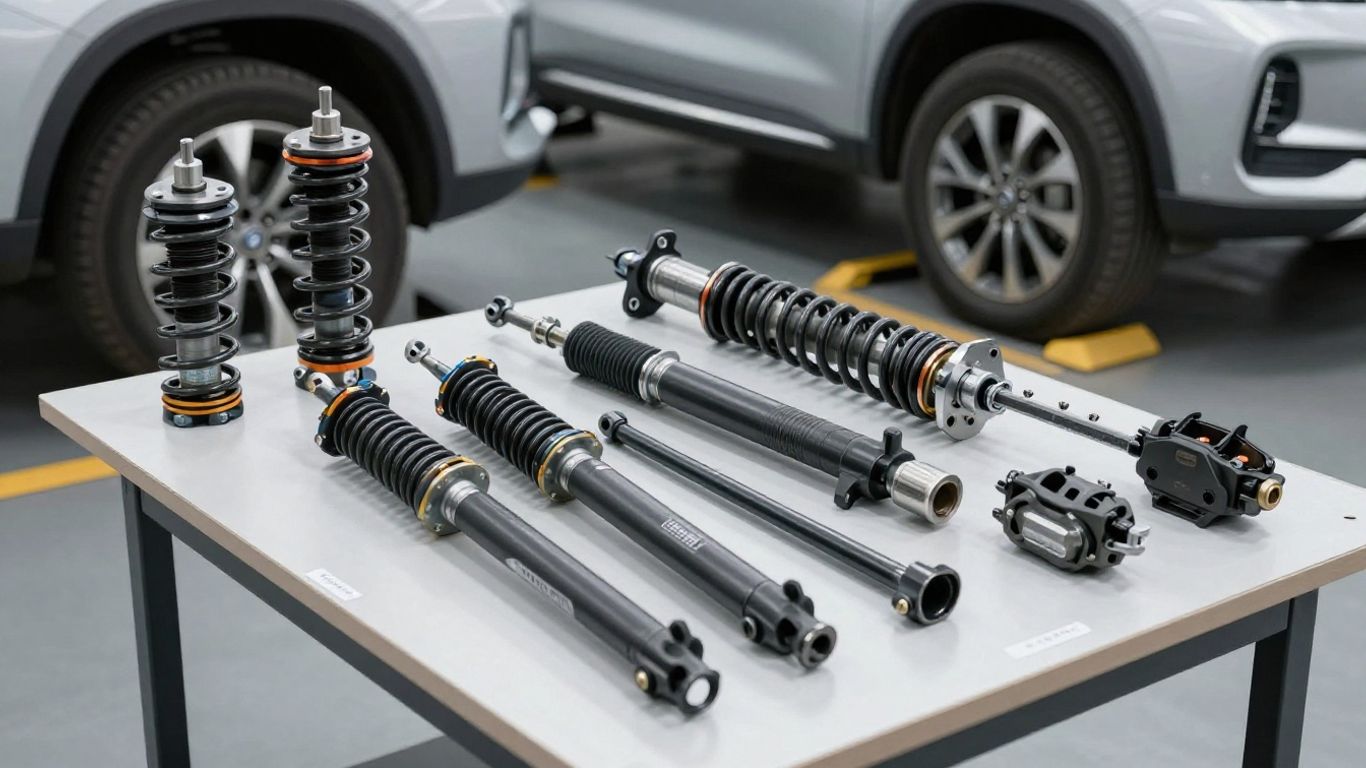
A supplier search can be useful only when those details are entered accurately. For example, used Haval H9 suspension parts can be compared through a vehicle-details search rather than by relying on a broad model name alone.
Identifying the correct Haval model and generation
Start with the exact model designation and production year, then check whether a mid-cycle update changed the suspension. A badge or registration description may not reveal every distinction that affects mounting points. The VIN and the original part label are stronger references than a photograph that merely looks similar.
Also record whether the vehicle is front-wheel drive or all-wheel drive where relevant, and note any special trim or ride-height package. Keep these details with the order confirmation so the seller has a clear reference.
Checking front and rear suspension compatibility
Front and rear components usually have different dimensions, duties, and attachment points. Even within one vehicle, left and right assemblies may differ because of brake lines, steering hardware, or the orientation of a mount. Never assume that a rear shock can substitute for a front unit simply because its length appears close.
Ask the seller to identify the axle position in writing. A listing that says only “Haval suspension” is not specific enough for a safe purchase.
Confirming part numbers and mounting points
Compare the stamped or printed number with the number in the vehicle’s parts documentation, while allowing for superseded numbers that a manufacturer may have replaced. Measure the mounting eyelets, studs, bolt spacing, and overall length if the seller supplies those details. The spring seat and mount shape can be just as important as the damper number.
A number match is valuable, but it is not the whole check. Confirm the physical mounting points and connector or bracket placement before approving the order.
Comparing left-hand and right-hand components
Some suspension assemblies are handed, while others are identical on both sides. A left-hand unit may have a bracket or mount positioned differently from its right-hand counterpart, even when the main damper looks the same. Ask for a clear view of both ends and any attached brackets.
If replacing a pair, matching condition is also worthwhile. Two parts with very different wear histories can leave the vehicle with uneven damping from side to side.
Assessing the condition of used struts and shocks
Used suspension parts should be treated as inspected mechanical components, not interchangeable appearance pieces. A clean exterior is encouraging, but it does not prove that the internal damping remains effective. Request condition information before purchase and compare it with what the vehicle actually needs.
Inspecting for leaks, dents, and corrosion
Look for fresh or dried oil around the shaft seal and body, dents that could interfere with movement, and deep corrosion on the rod or casing. Surface dirt is usually less concerning than pitting, distorted metal, or a rod that does not move smoothly. The seller should be able to explain whether the component was tested, cleaned, or removed from a running vehicle.
Photographs should show the full assembly and close views of vulnerable areas. If the only image is a generic stock photo, treat the condition as unverified rather than assuming the pictured part is the one being sold.
Evaluating bushings, mounts, and springs
A strut assembly may include a top mount, bearing, spring seat, insulator, and coil spring. Inspect rubber for cracking or separation, check the bearing for roughness, and look for a spring with broken coils or obvious sagging. A worn accessory can undermine the benefit of an otherwise usable damper.
Ask whether the price includes these related pieces or the damper only. That distinction changes both the value and the installation plan.
Checking mileage, storage, and vehicle history
Mileage gives useful context, but it is not a guarantee of remaining life. A lower-mileage part from a heavily damaged vehicle may be less desirable than a higher-mileage component removed during a routine repair. Storage conditions matter too: prolonged exposure to moisture can accelerate corrosion and degrade rubber parts.
Request the donor vehicle’s mileage, removal reason, storage conditions, and any available inspection notes. The more complete the history, the easier it is to judge uncertainty honestly.
Recognizing parts that should not be reused
Reject components with bent rods, severe pitting, active leaks, cracked springs, distorted mounting points, or mounts that have separated from their rubber. Parts involved in a hard collision require particular caution because damage may not be obvious from one angle. Safety-related uncertainty is a poor place to chase the lowest price.
A seller who cannot answer basic condition questions may still have usable inventory, but the risk belongs to the buyer. When evidence is thin, a new component or a different used part may be the more responsible choice.
Weighing used suspension parts against new alternatives
The cheapest listing is not automatically the lowest-cost repair. Labor, shipping, alignment, replacement hardware, and the possibility of removing a poor part again all affect the final figure. Compare the complete repair path rather than the part price in isolation.
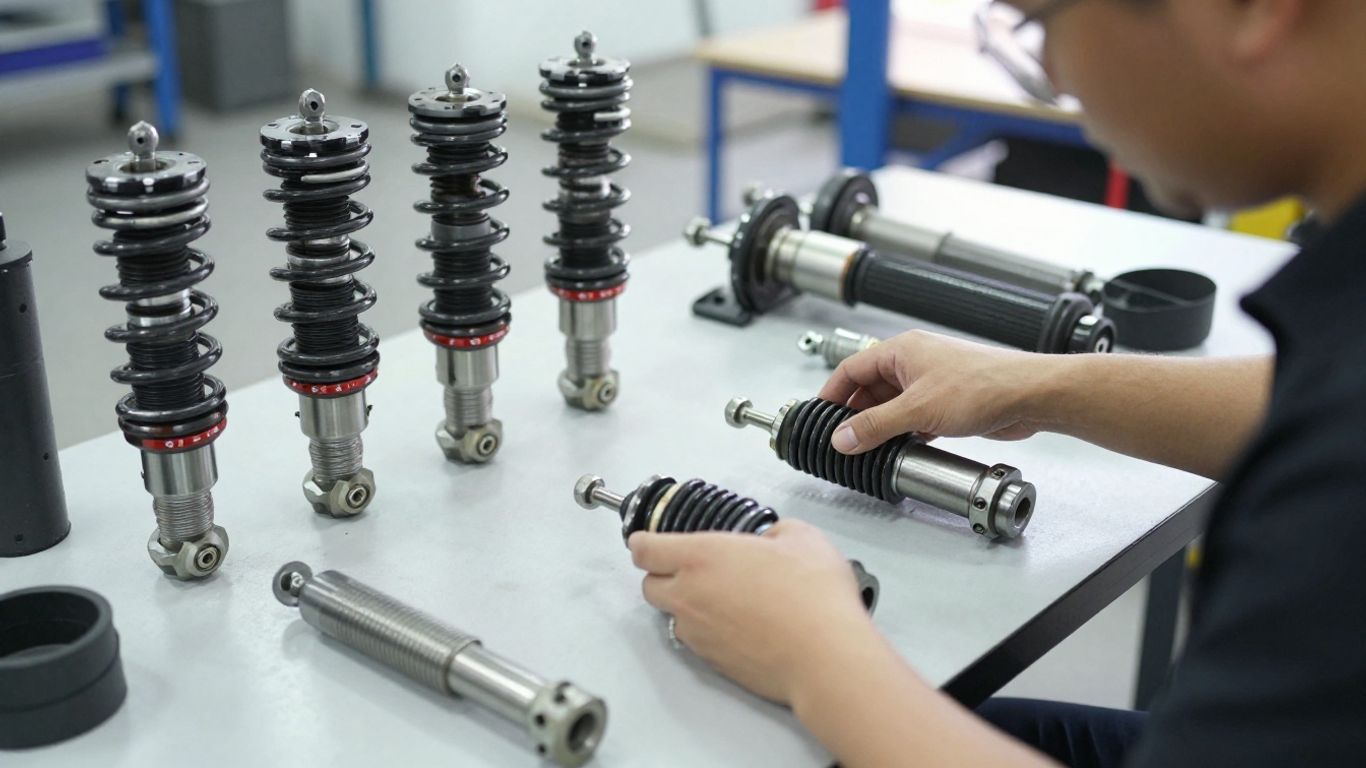
There is also a tradeoff between known history and upfront savings. Used parts may suit an older vehicle or a tight budget, while new parts can offer a clearer baseline for expected service life.
Comparing purchase price and total installation cost
A simple comparison helps keep the decision grounded. Include the likely labor time and any related parts that should be renewed during installation.
| Cost area | Used component | New component |
|---|---|---|
| Purchase price | Often lower, but condition varies | Usually higher and easier to standardize |
| Labor | Similar removal and installation work | Similar removal and installation work |
| Related hardware | May need separate replacement | May be included or readily available |
| Follow-up risk | Greater uncertainty if history is limited | Often more predictable |
| Alignment | Normally required after front work | Normally required after front work |
The table shows why a modest price difference can disappear once labor and risk are included. Get a written estimate that covers the complete job before choosing.
Understanding lifespan and performance expectations
A used damper has an unknown portion of its service life already behind it unless the seller provides credible mileage and inspection information. It may restore acceptable control, but it should not automatically be expected to perform like a matched new pair. New components also vary by design and quality, so “new” alone is not a complete performance description.
Set expectations around the vehicle’s age, use, road conditions, and budget. For a daily driver, predictable behavior may be worth more than the initial saving.
Considering OEM, aftermarket, and salvaged parts
Original-equipment used parts can preserve the vehicle’s factory fit, while aftermarket options may provide a broader price range. Salvaged parts can be practical when the donor vehicle is known and the component is carefully inspected. Each category still requires confirmation of dimensions, mounting points, and condition.
Keep the categories separate when asking for quotes. “OEM used,” “aftermarket new,” and “salvaged assembly” describe different levels of history and certainty.
Deciding when new components offer better value
New parts often make more sense when the vehicle is expected to remain in service for years, when the used item has unclear history, or when labor access is expensive. They are also worth considering when replacing one side would leave a substantial condition mismatch on the axle. The right choice depends on the complete cost and the importance of predictable service.
For a short-term repair on an older vehicle, a well-documented used assembly may still be sensible. Write down the assumptions behind either choice so the decision remains practical rather than purely emotional.
Buying used Haval struts and shocks from a reliable seller
A reliable transaction begins with precise questions and a clear description of what will arrive. Ask for the actual part’s photographs, identification details, condition, donor information, and packaging plan. Sellers that answer directly make it easier to manage the uncertainty that comes with used components.
Questions to ask before placing an order
Ask whether the part is front or rear, left or right, complete or bare, and compatible with the exact model and year. Confirm the part number, mileage, removal reason, inspection method, and whether the spring or mount is included. It is also fair to ask how the seller handles a mismatch discovered by a qualified installer.
If you are comparing suppliers in China, used Haval suspension parts in China can be located by entering vehicle details and comparing available quotes. That kind of search is most useful when your request is already specific.
Reviewing warranties, return policies, and guarantees
Read the warranty period, exclusions, return window, and responsibility for shipping before paying. Determine whether a return requires the part to remain uninstalled and whether labor or alignment costs are excluded. A guarantee has value only when its terms are clear enough to use.
Save the listing, photographs, messages, and invoice. Those records can resolve disagreements about what was advertised and what was delivered.
Verifying photos, measurements, and inventory details
Ask for current photos rather than relying on a catalog image. Useful views include the mounting ends, shaft, brackets, spring, labels, and any corrosion. Measurements can confirm details that a model description leaves ambiguous.
Online presentation also matters, but it should not replace mechanical evidence. A business may use social media management services to maintain a consistent online presence; for a suspension purchase, you still need part-specific answers and documentation.
Planning shipping and damage inspections
Suspension assemblies are heavy and can be damaged when loosely packed. Ask how the shaft, studs, brackets, and spring will be protected, and check the package for impact marks on arrival. Photograph the box before opening it and the part before installation.
Do not discard packaging until fitment and condition have been confirmed. If damage is visible, notify the seller promptly and avoid altering the part while the claim is being reviewed.
Preparing for installation and suspension setup
Installation is not simply a matter of swapping one metal assembly for another. Springs can store considerable energy, and seized fasteners or damaged mounts can turn a straightforward job into a hazardous one. Plan the work, identify the required tools, and account for post-installation alignment.
Choosing professional versus DIY installation
A skilled home mechanic may handle some shock replacements with the correct equipment and service information. Strut work often involves compressing a coil spring, which calls for a suitable compressor and careful technique. If the procedure, tools, or torque specifications are unfamiliar, professional installation is the safer route.
The decision should include the cost of mistakes. A shop can also identify related wear while the suspension is already disassembled.
Replacing related mounts and hardware
Old upper mounts, bearings, insulators, nuts, and bolts may be difficult to reuse, particularly if corrosion has weakened them. Compare the used assembly’s included hardware with the vehicle’s service requirements before beginning. Replacing a worn mount at the same time can prevent a new clunk from being blamed on the damper.
Keep fasteners organized by location and use the specified torque values during reassembly. Improvised hardware is not an acceptable substitute for the correct grade and dimensions.
Following safe lifting and removal procedures
Park on a stable, level surface, use properly rated stands, and support the vehicle at its designated lifting points. Chock the wheels that remain on the ground and never rely on a jack alone. Before loosening a spring-loaded assembly, confirm that the spring is fully and safely controlled.
A careful sequence reduces both injury risk and damage to brake hoses, wiring, and nearby components. Stop if a fastener or assembly behaves differently from the service instructions rather than forcing it.
Scheduling wheel alignment after installation
Any work that changes the position of a front strut can affect camber, toe, or steering-wheel position. Have the alignment checked after installation, even if the vehicle seems to drive straight. The adjustment may also reveal a bent component or another worn joint.
Use the alignment report as a final check on the repair. Correct geometry protects the tires and helps the replacement suspension behave consistently.
Maintaining replacement Haval suspension components
Maintenance after installation is mostly observation paired with routine inspection. New noises, uneven height, or a change in steering feel should not be dismissed as the vehicle “settling.” Early attention can prevent a small issue from damaging a tire or related suspension part.
Monitoring ride quality and unusual noises
Pay attention during the first few drives on familiar roads. A repeated knock, metallic rattle, harsh rebound, or persistent bouncing may indicate a loose fastener, worn mount, incorrect part, or defective component. Note when the sound occurs because braking, turning, and bumps can point to different areas.
A short record of symptoms gives a technician more useful information than a general description such as “the suspension feels wrong.” Recheck torque and installation details only when it is safe and appropriate to do so.
Checking tire wear and vehicle stability
Inspect the tread for feathering, cupping, shoulder wear, or a pattern that differs from the opposite side. Uneven tire wear can reflect alignment problems, weak damping, worn joints, or incorrect inflation. Changes in lane stability or steering response deserve the same attention.
Rotate and inflate tires according to the vehicle’s service guidance, while treating abnormal wear as a diagnostic clue rather than merely a tire issue.
Inspecting suspension parts during routine service
During oil changes or scheduled service, look for fluid residue, fresh corrosion, cracked rubber, loose hardware, and damaged springs. Ask the technician to compare both sides of the axle rather than inspecting only the part that was replaced. A visual check cannot measure damping perfectly, but it can catch developing problems.
Keep the purchase and installation records with the vehicle’s maintenance history. Mileage and dates make later replacement decisions more informed.
Knowing when another replacement is needed
Replacement becomes more urgent when a damper leaks, a spring breaks, ride height changes, or control deteriorates again. The same symptom can come from another component, so confirm the diagnosis before ordering a second part. If one side has failed after a short interval, inspect the opposite side and the installation conditions as well.
A used component can be a sound solution when selected carefully, but it should always be judged by current condition and safe vehicle behavior.
Conclusion
Used Haval struts and shocks can reduce repair costs when the exact fitment, condition, history, and seller terms are all clear. Compare the full installation cost with new alternatives, install the parts safely, complete an alignment where required, and monitor the vehicle afterward.
Frequently Asked Questions
Are used struts and shocks safe to buy?
They can be suitable when the parts are correctly matched, carefully inspected, and sold with clear condition information. Components with leaks, bent rods, severe corrosion, or uncertain damage should be rejected.
Should struts and shocks be replaced in pairs?
Replacing components in pairs on the same axle often provides more even damping, especially when the opposite side has similar age and wear. Follow the vehicle manufacturer’s guidance and the technician’s assessment.
How can I confirm suspension fitment?
Use the vehicle identification number, model generation, axle position, side, original part number, and mounting measurements. Do not rely on appearance or a broad model name alone.
Do used suspension parts include springs and mounts?
Not always. Some listings are for the damper only, while others include springs, mounts, insulators, or hardware. Confirm exactly what is included before comparing prices.
Is wheel alignment needed after replacing suspension parts?
A wheel alignment check is generally wise after front suspension work because geometry can change during removal and installation. It also helps identify related damage or worn components.
What should I inspect when the part arrives?
Check the packaging for impact, photograph the unopened parcel, then inspect the shaft, seals, body, mounts, brackets, spring, and identification label. Resolve damage or mismatch questions before installing the part.
How long do used struts and shocks last?
There is no fixed service life for a used component because mileage, storage, road conditions, prior damage, and remaining damping capacity vary. Judge it by documented history, inspection results, and its behavior after installation.
Pingback: Haval shock absorbers replacement: A practical guide to diagnosis, parts, and installation