

Key Takeaways
Suspension & Steering Parts work as a connected system, so diagnosis should consider ride control, wheel movement, and steering response together.
- Springs and dampers support the vehicle and control how it responds to bumps.
- Steering linkages transfer driver input to the road wheels.
- Tire wear, pulling, vibration, and unusual noises can point to related faults.
- Replacement parts should match the vehicle, its use, and its load requirements.
- Alignment and regular inspections are essential after repairs and during ownership.
Understanding how suspension and steering systems work together
Suspension and steering are separate systems, but they share many mounting points and moving joints. The suspension keeps the tires in contact with the road while allowing controlled wheel travel; the steering system changes the direction of those wheels. When both are in good condition, the vehicle feels composed rather than vague, harsh, or unsettled. A useful overview of these connected systems is available in this guide to steering and suspension systems.
The role of suspension components in ride control
Suspension components carry the vehicle’s weight, absorb road impacts, and limit unwanted movement. Springs support the body, while shocks or struts control how quickly the springs compress and rebound. Control arms and their joints guide the wheel through its designed path, preserving predictable contact with the road. The goal is not simply a soft ride; it is controlled movement that leaves the driver with a stable platform.
How steering parts control vehicle direction
The driver turns the steering wheel, and that rotation travels through the column, shaft, steering gear, and linkage. Tie rods and related joints then push or pull the steering knuckles so the road wheels change angle. Small amounts of play in those connections can become noticeable as delayed response or wandering. Because the steering path includes several joints, a careful inspection is more useful than replacing the most obvious part immediately.
Why suspension and steering problems often overlap
A worn ball joint, control-arm bushing, or tie-rod end can alter wheel position while also creating looseness in the steering. A damaged shock may allow repeated wheel movement, which can contribute to irregular tire contact and a less precise steering feel. Alignment angles may change after a component bends or wears, even when the steering gear itself is healthy. Shared mounting points matter because a fault in one system can show up as a symptom in the other.
A sensible diagnosis starts with tires, wheel fasteners, visible leaks, and obvious play before moving to more involved testing. This prevents a new steering part from masking a suspension fault, or vice versa.
Differences between front-wheel-drive, rear-wheel-drive, and four-wheel-drive systems
Drivetrain layout changes the packaging and workload of suspension and steering parts. Front-wheel-drive vehicles commonly place driving, steering, and much of the suspension hardware at the front, while rear-wheel-drive vehicles may separate front steering duties from rear drive and axle movement. Four-wheel-drive vehicles can add driven front-end components, heavier hardware, and additional joints that need inspection. Exact designs vary, so the vehicle’s service information and identification details should guide any parts decision.
Identifying the main suspension parts
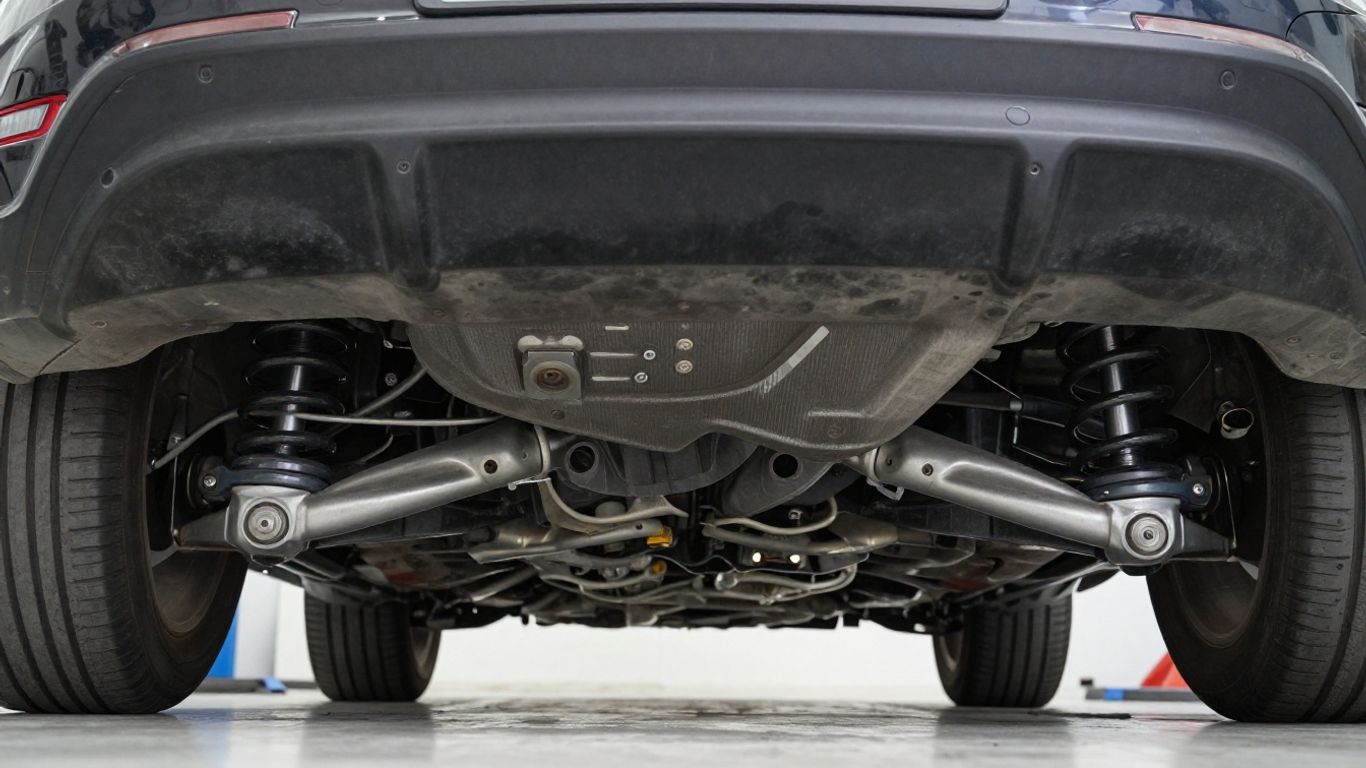
The suspension is easier to understand when each part is considered by its job rather than by appearance alone. Springs hold the vehicle at a usable height, dampers manage movement, and arms and joints locate the wheel. Stabilizer components reduce side-to-side body motion, while several vehicle types use different spring designs altogether. The following image shows the general relationship between common suspension hardware without implying that every vehicle uses every part.
Shocks, struts, and coil springs
A shock absorber controls spring movement but does not normally support the vehicle’s static weight by itself. A strut combines damping with a structural role and may also provide a mounting point for the steering knuckle. Coil springs support the vehicle and determine much of its ride height, although worn springs can sag or break. Replacing a damper should include a look at the spring seat, mount, boot, and nearby hardware rather than treating the unit as isolated.
Control arms, ball joints, and bushings
Control arms connect the wheel assembly to the vehicle structure while allowing the wheel to move up and down. Ball joints provide a pivot for steering and suspension movement, and bushings cushion the connection while limiting unwanted motion. Cracked rubber, separated bushings, corrosion, or measurable joint play can all affect alignment and steering feel. Since these parts often work as an assembly, the inspection should check their attachment points and fasteners as well as the replaceable joint.
Sway bars, links, and stabilizer components
A sway bar, also called an anti-roll bar, links suspension movement from one side of an axle to the other. It helps reduce body roll during cornering, while end links and bushings allow the bar to move without excessive noise. A failed link may produce a clunk over small bumps even though the main spring and damper remain serviceable. These components do not carry out the same job as shocks, so replacing one should be based on the actual symptom and inspection result.
Leaf springs, torsion bars, and air suspension parts
Leaf springs are common on vehicles designed to carry substantial loads, especially at the rear. Torsion bars use a twisting metal element to provide spring force, and air suspension uses air springs, valves, lines, and controls to support the vehicle. Each design has different failure points: a leaf pack may crack or shift, a torsion system may lose correct adjustment, and an air system may leak or fail to maintain height. For trucks, a guide to heavy-duty suspension parts can provide useful general context, but the vehicle’s specified capacity remains the deciding factor.
Identifying the main steering parts
Steering parts form a chain between the driver’s hands and the road wheels. Some vehicles use rack-and-pinion steering, while others use a steering gearbox with a center link and related arms. Hydraulic power steering adds a pump, hoses, and fluid, whereas other vehicles use different assist arrangements. Knowing which layout is present makes it easier to trace looseness, stiffness, fluid loss, or an intermittent steering complaint.
Tie rods, drag links, and steering linkages
Tie rods connect steering gear movement to the steering knuckles and allow adjustment of toe alignment. Larger vehicles may use drag links, pitman arms, idler arms, and center links to transmit steering input across the front axle. Their joints must move smoothly but should not have excessive play. A damaged dust boot can allow contamination into a joint, so a part that appears intact from a distance may still need closer examination.
Steering racks, gearboxes, and center links
A rack-and-pinion unit converts steering-wheel rotation into side-to-side movement that reaches the tie rods. A steering gearbox performs a comparable conversion through internal gears and typically works with additional linkage. Center links help distribute movement on steering systems designed around a solid front axle or similar arrangement. Before replacing a rack or gearbox, check for loose external connections, mounting movement, and alignment-related symptoms so an expensive diagnosis is not based on a simple joint fault.
Power steering pumps, hoses, and fluid systems
Hydraulic power steering systems use a pump to circulate fluid through hoses and the steering gear. Low fluid, a leaking hose, a damaged seal, or a worn pump can cause noise and heavier steering. Fluid condition and the correct specification matter, since contamination can affect internal components. Any leak should be located before simply topping up the reservoir; otherwise the visible symptom may temporarily disappear while the underlying problem continues.
Steering columns, shafts, and universal joints
The steering column supports the wheel and may include bearings, collapsible sections, and other safety-related features. Intermediate shafts and universal joints transfer rotation around changes in angle between the column and steering gear. Wear in these pieces can feel like a notch, clunk, or delay near the steering wheel. Because column and shaft work can involve safety equipment and precise assembly, follow the service procedure rather than improvising around the steering wheel or airbag area.
Recognizing signs of worn suspension and steering parts
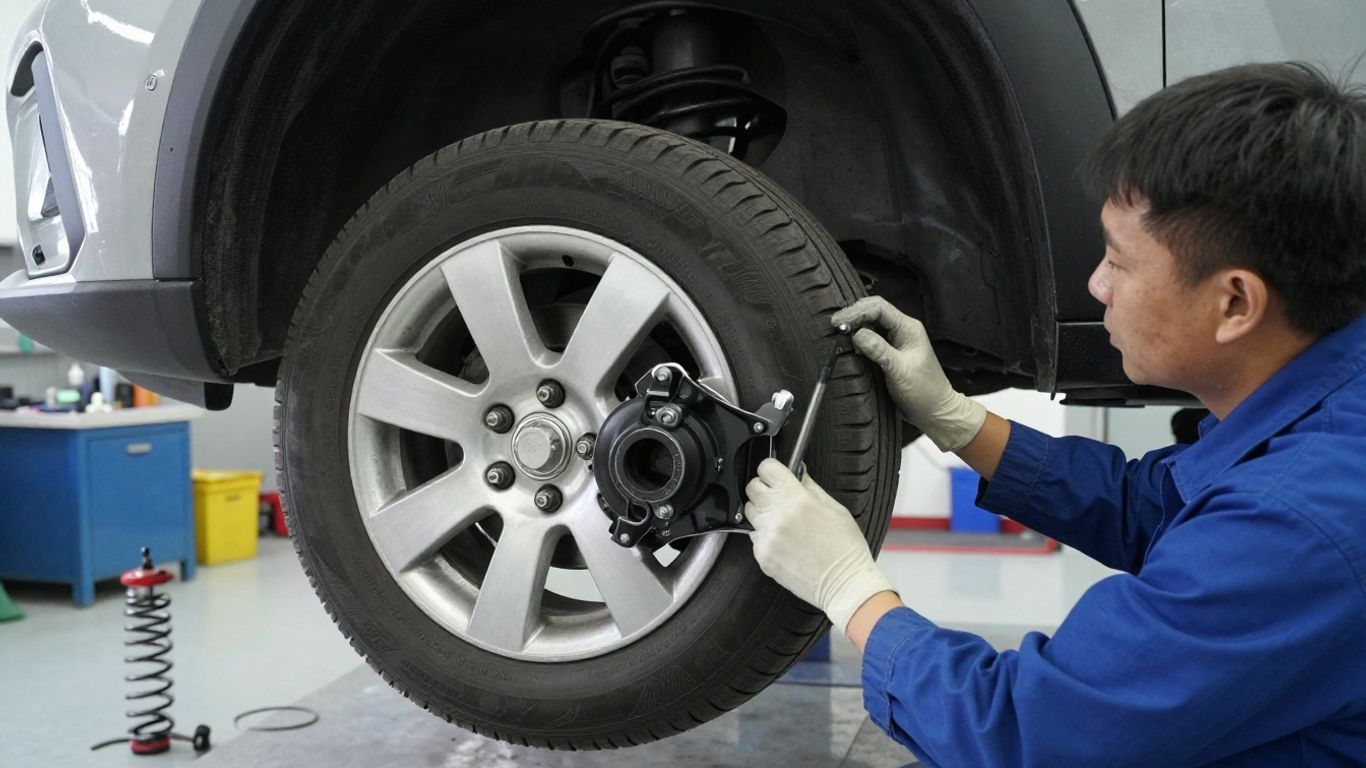
Symptoms are clues, not final diagnoses. The same pulling or vibration may come from a tire, wheel, brake, alignment condition, or worn suspension or steering part. Note when the symptom occurs—during braking, cornering, acceleration, or bumps—and whether it changes with speed. Prompt attention is warranted when steering becomes difficult, a wheel moves abnormally, or a component appears broken.
Uneven tire wear and vehicle pulling
Wear on one edge of a tire may reflect incorrect alignment, insufficient inflation, bent hardware, or looseness in a joint. Pulling can also result from tire construction, road crown, unequal pressure, or a brake that is not releasing properly. Compare tire pressures first, then inspect tread patterns and suspension movement. A proper alignment should follow correction of any worn part, because adjusting angles around a loose component will not provide a lasting result.
Steering wheel vibration, looseness, or drifting
Vibration at a particular road speed often begins with wheel balance, tire damage, or a bent wheel, but worn joints and poor alignment can contribute. A loose steering wheel may indicate play in the linkage, shaft, gear, or suspension pivots. Drifting requires the driver to make constant corrections and can become more obvious on uneven pavement. Do not assume the steering gear is defective until the entire path from the wheel to the tires has been checked.
Clunking, squeaking, and knocking sounds
A clunk over a bump may come from a stabilizer link, bushing, ball joint, loose mount, or damper hardware. Squeaks can arise from dry or deteriorated bushings, while a knock that changes during turning may point toward a steering joint or spring seat. Sound location is deceptive because noise travels through the body and subframe. A road test followed by a lift inspection, using safe support points, is often needed to reproduce and isolate the complaint.
Excessive bouncing, body roll, or poor ride comfort
If the vehicle continues to bounce after a bump, the dampers may no longer be controlling spring movement effectively. Excessive body roll can involve stabilizer components, spring condition, tire pressure, or a combination of issues. A harsh ride may instead reflect damaged mounts, incorrect parts, overinflated tires, or a spring that is not seated correctly. Compare the vehicle’s behavior on both sides and consider its normal load before deciding which component has failed.
For a quick first pass, record these observations:
- The road speed and surface where the symptom appears.
- Whether braking, acceleration, or cornering changes it.
- Which corner or axle seems to produce the noise.
- Any recent tire, wheel, alignment, or suspension work.
That short record gives a technician a clearer starting point and reduces the temptation to diagnose from a single sound.
Choosing the right replacement parts
The correct replacement is more than a part that looks similar. It must fit the vehicle, work with the existing system, and suit the way the vehicle is driven. Start with reliable identification information, then compare construction, warranty, and intended duty. For General Motors applications, GM Genuine Parts and ACDelco Aftermarket are documented steering and suspension product lines; the appropriate choice still depends on the exact vehicle and repair need.
Matching parts to the vehicle’s year, make, and model
Use the vehicle identification number when possible, along with year, make, model, engine, drivetrain, body style, and production details. Trim level and factory options can change spring rates, ride height, brake clearance, and mounting dimensions. Cross-check the catalog description against the old part and the manufacturer’s fitment notes. Never rely on a photograph alone, especially for left- and right-side parts or vehicles offered with multiple suspension packages.
Comparing OEM, aftermarket, and performance components
OEM parts are designed around the original vehicle specification, while aftermarket parts may offer different materials, warranties, or price points. Performance components can change handling, ride stiffness, ride height, or load behavior, so they are not automatically an improvement for every driver. MOOG describes its steering and suspension parts as engineered by listening to customer concerns and reverse engineering OE components, with attention to installation and service life. Treat those documented attributes as product information, not as a guarantee of a particular result on every vehicle.
Checking fitment, load ratings, and material quality
Check dimensions, thread sizes, connector locations, bushing materials, grease fittings, and included hardware. On a truck or utility vehicle, verify axle ratings and load requirements instead of choosing solely by advertised strength. Examine machined surfaces, boots, seals, welds, and corrosion protection before installation. A part with the right name but the wrong load rating or mounting detail can create noise, premature wear, or an unsafe condition.
Choosing parts for daily driving, towing, or off-road use
A daily driver usually benefits from preserving predictable ride quality and factory-like geometry. Towing can require attention to spring capacity, damping, cooling, and the effect of tongue weight on steering and braking. Off-road use may demand additional clearance or durability, but changes can alter alignment, driveline angles, and steering effort. Decide what the vehicle must do regularly, not what it might do once, and choose a coordinated set of parts rather than mixing incompatible changes.
Planning a suspension and steering repair
A repair plan should answer three questions: what failed, what else may have been affected, and what adjustment is required afterward. Gather the symptom history, inspection findings, parts information, and likely labor before ordering. This approach helps avoid both under-repair and an unnecessary collection of new components. It also leaves room for seized fasteners, corrosion, or damaged mounting points that become visible only during disassembly.
Deciding between individual parts and complete kits
Replacing one failed joint can make sense when surrounding parts are in good condition and the labor is straightforward. A complete kit may be more practical when several related bushings, links, or mounts show similar age and access requires substantial disassembly. Kits should not be selected solely because they contain more pieces; included parts must match the vehicle and the actual inspection. Compare the warranty, hardware, and quality of every item in the kit with the individual alternatives.
Inspecting related components before installation
Before installing a new part, inspect tires, wheels, brake hoses, wheel bearings, mounts, fasteners, and nearby wiring. Check for bent arms, cracked brackets, leaking dampers, damaged dust boots, and corrosion that may prevent secure assembly. If one joint is worn, look at the joint on the opposite side and the components that share its load. A short inspection before ordering can turn a second repair visit into one planned job.
Understanding alignment requirements after repairs
Many suspension and steering repairs change toe, camber, caster, or steering-wheel position. Tie rods directly affect toe, while control arms, ball joints, struts, springs, and subframe work can alter several angles. Drive only as necessary and cautiously after the repair, then obtain an alignment using equipment appropriate for the vehicle. The final report should be reviewed for abnormal readings rather than accepting a printout that merely shows numbers.
An alignment cannot correct a bent component or remove play from a joint. It is the finishing adjustment after mechanical condition has been restored, not a substitute for restoring that condition.
Estimating labor, tools, and total replacement costs
A realistic estimate includes parts, labor, alignment, shop supplies, replacement fasteners, fluid, taxes, and possible corrosion-related delays. Home repairs may require a torque wrench, spring-handling equipment, a ball-joint press, pullers, secure lifting equipment, and the correct service information. Coil springs can store dangerous energy, and steering work may involve airbag or safety-related components. When the required tools or procedure exceed your experience, the safest cost decision is professional work rather than improvised shortcuts.
Maintaining suspension and steering parts for longer life
Maintenance cannot prevent every failure, but it can reveal wear before a small issue affects tires or control. Inspections are especially useful after pothole impacts, curb strikes, floodwater, heavy towing, or off-road travel. Keep records of alignments, tire rotations, repairs, and symptoms. Consistent care also makes a new noise easier to distinguish from normal vehicle behavior.
Following regular inspection intervals
Inspect suspension and steering components during scheduled service and whenever the vehicle develops a new handling or noise complaint. Look at boots, bushings, springs, mounts, dampers, linkage joints, and fluid lines. A visual check should be paired with appropriate movement and leak checks; many worn parts do not reveal their condition from appearance alone. Follow the vehicle manufacturer’s maintenance schedule for lubrication, fluid, and inspection requirements.
Protecting components from corrosion and contamination
Road salt, mud, water, and oil can damage metal, rubber, and protective boots. Rinse heavy contamination from the underside when practical, but do not direct high-pressure water into seals or electrical connectors at close range. Repair leaking fluids and replace torn boots before dirt reaches a joint. Corrosion on a spring, bracket, brake line, or fastener deserves attention because it may affect both serviceability and structural strength.
Maintaining proper tire pressure and wheel alignment
Correct tire pressure supports even contact, predictable steering, and controlled suspension movement. Check it when the tires are cold and use the vehicle’s specified pressure rather than the maximum printed on the tire sidewall. Rotate tires according to the vehicle’s schedule and investigate recurring edge wear instead of repeatedly replacing tires. Maintain alignment after impacts or suspension work, particularly when the steering wheel no longer sits straight on a level road.
Knowing when professional inspection is necessary
Seek professional help when steering feels loose, heavy, or intermittently stuck; when a wheel is visibly misaligned; or when a spring, linkage, or mounting point appears broken. A shop is also the better choice for suspected wheel-bearing play, air-suspension faults, spring removal, or repairs involving airbags and specialized calibration. Describe the symptom and its conditions rather than requesting one specific part. For broader service decisions, even a professional installation checklist illustrates the value of confirming preparation, workmanship, and post-service care before the work begins.
Conclusion
A sound approach to Suspension & Steering Parts combines system knowledge, careful symptom tracking, accurate fitment, and a proper post-repair alignment. Inspect related components instead of treating each symptom in isolation, and choose parts for the vehicle’s real duty and safety requirements. When the job involves stored spring energy, steering safety equipment, or uncertain diagnosis, professional inspection is the sensible next step.
Frequently Asked Questions
What is the difference between suspension and steering parts?
Suspension parts support the vehicle, absorb road impacts, and control wheel movement. Steering parts transmit driver input and change the direction of the road wheels, although some joints and mounting points serve both systems.
How do I know whether a noise comes from the suspension or steering?
Notice when the noise occurs and whether bumps, braking, acceleration, or turning affect it. A physical inspection is usually needed because sounds can travel through the chassis and may come from tires, brakes, mounts, or linkage joints.
Can worn suspension parts cause uneven tire wear?
Yes. Worn joints, damaged dampers, sagging springs, and altered alignment can change how the tire contacts the road. Incorrect tire pressure, wheel damage, and braking problems can cause similar patterns, so the complete condition should be checked.
Do suspension repairs always require a wheel alignment?
Not every minor repair changes alignment, but many jobs involving struts, control arms, ball joints, springs, tie rods, or steering gear can affect wheel angles. Confirm the requirement for the specific repair and measure alignment afterward when appropriate.
Should I replace suspension parts in pairs?
Replacing parts in pairs is often considered when components share similar age and workload, especially dampers or springs on the same axle. The decision should follow the inspection, vehicle design, manufacturer guidance, and condition of the opposite side.
Are performance suspension parts suitable for everyday driving?
They may be suitable, but changes in ride height, spring rate, damping, or geometry can affect comfort, alignment, tire wear, and handling. Choose parts based on the vehicle’s regular use and confirm that the complete combination is compatible.
When should I stop driving and arrange an inspection?
Stop driving and arrange prompt inspection if steering is suddenly loose or difficult, a wheel sits at an unusual angle, a spring is broken, fluid is rapidly leaking, or a loud mechanical knock is accompanied by unstable handling. These symptoms can indicate a safety-critical fault.