

Key Takeaways
Recycled Haval sway bar links can be a sensible repair when compatibility and condition are confirmed carefully. The safest purchase is supported by clear part details, honest inspection, and a realistic view of remaining service life.
- Match the link to the exact Haval model, year, position, and trim.
- Inspect joints, bushings, boots, rods, and corrosion before buying.
- Compare the part price with labor, shipping, and possible follow-up repairs.
- Use the correct tightening procedure and test the vehicle after installation.
- Replace a pair when wear is similar or the opposite link is also deteriorated.
Understanding recycled Haval sway bar links
A sway bar link is a small suspension component, but it has a direct role in how the stabilizer bar works. When the link becomes loose, bent, or damaged, the vehicle may develop noise and less settled cornering. Recycled Haval sway bar links are removed from donor vehicles and offered for reuse, so their history and condition deserve attention.
What sway bar links do in the suspension system
The link connects the sway bar to the suspension assembly, allowing the bar to help manage differences in wheel movement from side to side. It must articulate as the suspension travels, which is why its joints and bushings need to remain tight and flexible. A link does not usually correct every handling problem, but it can create one when its connection develops play.
Why owners consider recycled replacement parts
Used parts appeal to owners who want a practical repair without automatically paying for a new component. A recycled link may also be useful when a particular original-equipment part is difficult to source quickly. The trade-off is that the part has already accumulated age and use, so the lower purchase price should never replace a condition check.
Common signs of a worn or damaged link
A repeated clunk over small bumps is a familiar warning, especially when it comes from one corner of the vehicle. Other clues can include looseness found during inspection, a torn boot, visible corrosion, or a change in how the vehicle feels through uneven corners. Because similar symptoms can come from control-arm bushings, struts, or other fasteners, diagnosis should cover the surrounding suspension as well.
Differences between recycled, rebuilt, and new links
A recycled link is generally sold in the condition in which it was removed, subject to the seller’s inspection policy. A rebuilt link may have selected wear items replaced, while a new link has not previously been installed on a vehicle. The labels alone do not establish quality; ask what was tested, what was replaced, and what protection applies if the part proves unsuitable.
Confirming compatibility before you buy
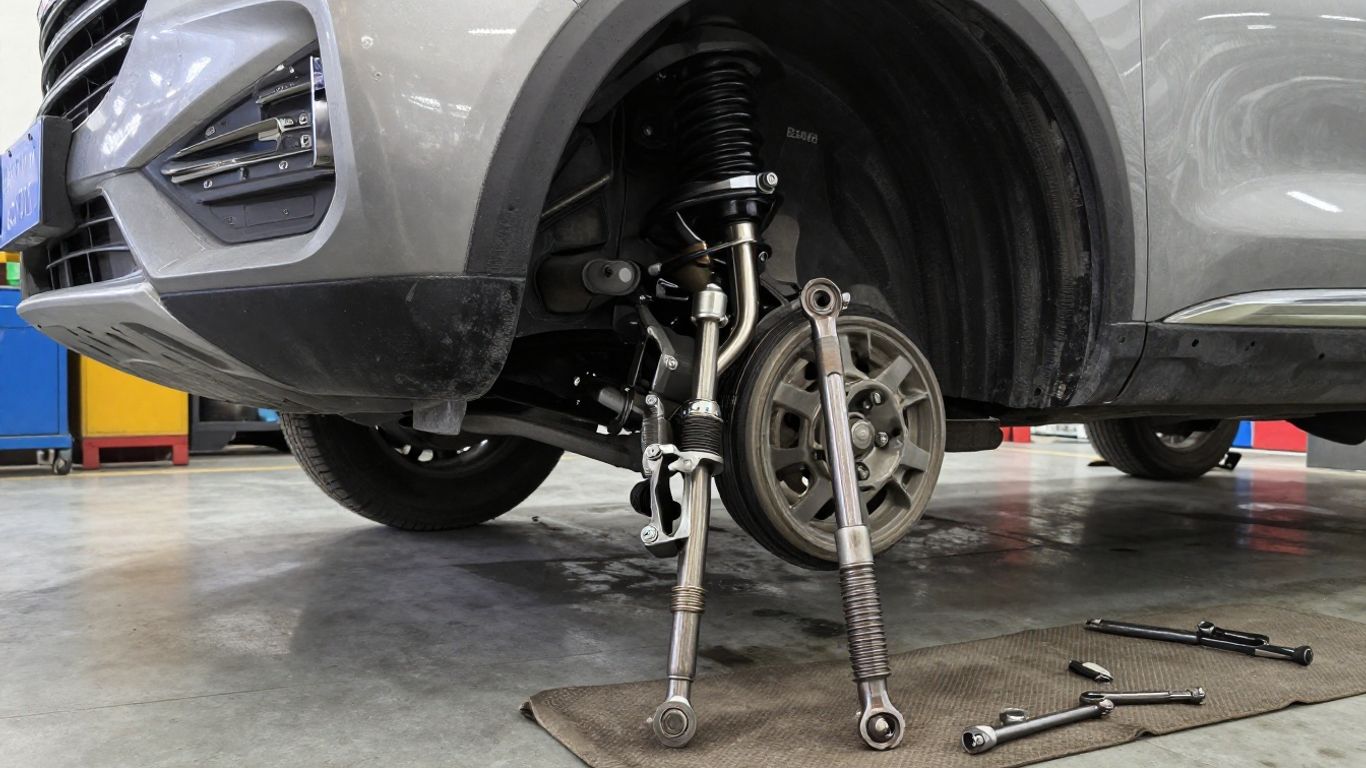
Correct fitment begins before payment, not when the box arrives. Haval models can have different suspension layouts, link lengths, connectors, or mounting hardware across years and variants. Take the vehicle identification details from the car and compare them with the seller’s listing rather than relying on a broad model name.
Matching the Haval model and production year
Start with the exact model and production year, then check whether the listing identifies a generation or production range. A listing for a Haval Jolion, for example, should not be treated as proof of fitment for another Haval model. If the seller has donor-vehicle information, compare the donor year and specification with your vehicle before discussing price.
Checking front and rear link differences
Front and rear links may differ in length, shape, mounting angle, or hardware. Even on the same vehicle, left and right parts can require separate confirmation. Ask for the precise position—front or rear, left or right—and compare it with the part currently fitted.
Using part numbers and vehicle specifications
A matching part number is one of the strongest checks, but it should still be read alongside the vehicle specification. Photograph or record the number on the old link if it is visible, and provide the seller with model, year, engine, body style, and VIN details when requested. If no number is available, measurements and clear photographs can help narrow the choice, though they should not replace a proper fitment confirmation.
Accounting for regional and trim-level variations
Regional production and trim differences can affect suspension equipment and replacement details. Features such as engine choice, wheel size, or a higher equipment grade may coincide with different components, but assumptions are risky. Confirm the market, trim, and donor information in writing, especially when buying remotely.
Inspecting the condition of a used sway bar link
A clean photograph is useful, but it cannot reveal every form of wear. Ideally, inspect the link in person or request close images of both joints, the rod, boots, and mounting faces. Condition matters more than appearance when deciding whether a recycled part is a reasonable repair.
Checking the ball joints and bushings
Move each joint through its intended range and look for looseness, rough movement, or a dry, notchy feel. Bushings should not be split, crushed, or permanently distorted around the mounting hardware. Do not mistake normal articulation for excessive play; if you are unsure, compare the used part with the old link or have a technician assess it.
Looking for bent rods, cracks, and corrosion
Sight along the rod for a bend and inspect welded or narrowed areas for cracking. Surface rust may be cosmetic, while deep pitting around a joint or mounting point can weaken the component. Threads should be intact, and nuts should engage cleanly without damaged or stretched hardware.
Evaluating protective boots and grease coverage
The boot keeps contaminants away from the joint, so tears, pinholes, or a boot pulled away from its seat are reasons to pause. Look for signs that grease has escaped and dirt has entered. A seller who cannot show the boot condition clearly should be treated more cautiously than one who provides detailed images.
Identifying signs of previous impact damage
A collision or hard impact can leave a link bent even when the joint still moves. Compare both ends for unusual marks, flattened surfaces, fresh paint, or deformation around the mounting points. If the donor vehicle suffered suspension damage in that corner, another link may be a safer choice.
Finding a reliable source for recycled parts
The seller is part of the decision because a used component’s description, testing, and return process vary widely. Look for a business that can identify the donor vehicle and answer specific questions about the part. A listing for Haval Wreckers Brisbane, for instance, describes used components sourced from 2022 Haval H6 vehicles, which is the kind of donor detail buyers can use when checking relevance.
Comparing wreckers, recyclers, and online marketplaces
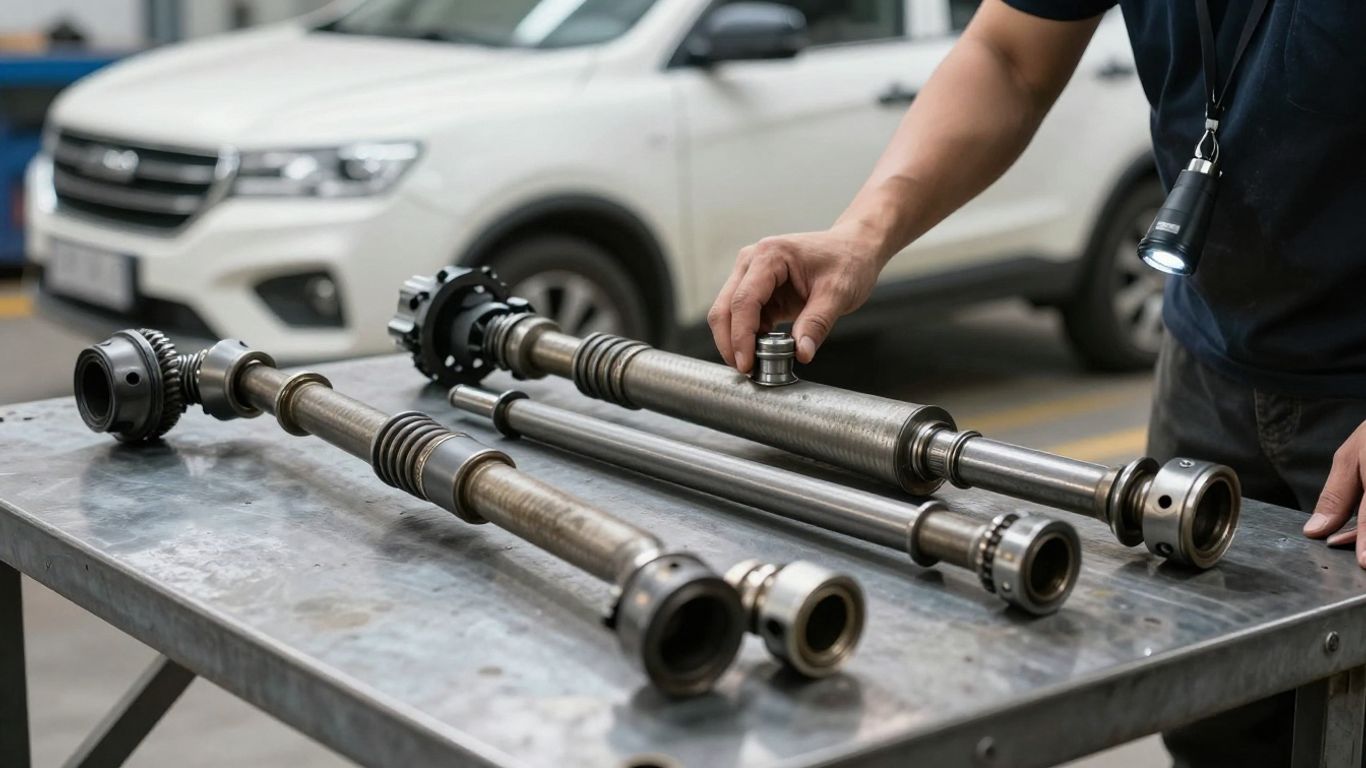
Wreckers and recyclers may provide direct donor information and photographs, while online marketplaces can make it easier to compare inventory from several sellers. Neither channel guarantees a good part. Treat the platform as a way to gather evidence, then judge the individual listing, communication, and terms.
Reviewing photos, descriptions, and donor-vehicle details
Good photos should show the whole rod, both joints, boots, threads, and any identifying marks. Descriptions are more useful when they state the donor model, year, mileage where available, position, and known damage. A used 2021 Haval Jolion stabilizer-bar listing can be examined through its used Jolion sway bar link details, including the stated position and donor mileage, but those details still need to be matched to the buyer’s vehicle.
Asking about testing and quality-control procedures
Ask whether the link was visually inspected, checked for joint play, and examined for bent metal or damaged threads. Also ask whether the photographs show the actual part rather than a representative image. Answers should be specific enough for you to understand what was checked and what was not.
A clear testing explanation does not make an old part new, but it reduces uncertainty. Keep written answers with the order details in case the delivered component differs from the listing.
Understanding warranties, returns, and shipping requirements
Before ordering, check the length and scope of any warranty, the return window, and who pays return freight. Confirm whether the part must remain uninstalled for a return and whether damaged packaging affects eligibility. A listing’s price may also exclude shipping, so request the delivered total rather than comparing item prices alone.
Deciding whether a recycled link offers good value
Value is more than the lowest advertised price. The calculation should include fitment confidence, condition, shipping, installation, and the possibility of repeating the job if the link fails early. A used part is most persuasive when it is materially less expensive and supported by enough information to justify the risk.
Comparing used, rebuilt, and aftermarket prices
Compare like with like: the same position, equivalent hardware, and a similar warranty. Rebuilt and new aftermarket options may cost more but can offer clearer service expectations. For context, a listing for a Haval Jolion stabilizer bar states a specific price, return period, and warranty; those terms are more useful for comparison than the price alone.
Estimating installation and replacement costs
Labor can outweigh the difference between two part prices, particularly if fasteners are seized or access is restricted. Add possible alignment checks, replacement nuts, delivery, and disposal to the estimate. If a shop will install the part, ask whether it will accept customer-supplied used suspension components before buying.
Weighing mileage, age, and remaining service life
Mileage on the donor vehicle is a helpful clue, not a guarantee of remaining life. Time, road salt, water exposure, and impact history can matter just as much. A lower-mileage link with a torn boot may be a worse choice than an older-looking part with intact joints and careful inspection.
Recognizing when a new part is the safer choice
Choose new when the used link has uncertain fitment, visible joint play, damaged boots, deep corrosion, or a small price difference from a dependable new option. New is also easier to justify when suspension work is difficult to access or when a failure would create a serious inconvenience. The right decision is the one that leaves a reasonable margin for safety and reliability.
Installing and testing the replacement link
Suspension work should be approached with the same care as any safety-related repair. Use the service information for the vehicle, support it securely, and do not rely on a jack alone. If the mounting arrangement or torque specification is unclear, professional installation is the sensible route.
Preparing the vehicle and required tools
Gather a floor jack, properly rated stands, wheel chocks, sockets, a torque wrench, penetrating fluid if appropriate, and eye protection. Park on a firm, level surface and compare the replacement link with the old one before removing anything. Confirm its length, joint orientation, threads, and supplied hardware.
Removing the old sway bar link safely
Chock the wheels, raise the vehicle at approved points, and support it before removing the wheel or reaching into the suspension. Clean exposed threads and hold the joint stud as designed if it spins while the nut is removed. Never force a heavily seized fastener in a way that could damage the knuckle, sway bar, or nearby brake parts.
Installing hardware with correct tightening procedures
Fit the link in the same orientation as the original and use the specified nuts, washers, and spacers. Tighten the hardware according to the vehicle’s service instructions, using a torque wrench rather than estimating by feel. Some suspension fasteners must be tightened at a specified ride height, so check that detail before final tightening.
Checking for noise, handling changes, and proper fit
Reinstall the wheel, lower the vehicle safely, and verify that the link is not touching the wheel, brake line, or other suspension component. A cautious road test over varied but familiar surfaces can reveal clunks, pulling, or a loose sensation. Stop and recheck the installation if noise remains or handling changes unexpectedly; the link may not be the only fault.
Maintaining the suspension after replacement
A replacement link should be treated as part of an ongoing suspension check, not as an isolated cure. Road impacts, moisture, and worn neighboring components can affect the new installation. A few minutes of inspection during routine servicing can reveal problems before they become noisy or expensive.
Inspecting sway bar links during routine servicing
Look for torn boots, missing hardware, corrosion, and marks where the link may be contacting another component. With the vehicle safely supported, a technician can check for looseness using the appropriate method. Avoid levering aggressively against parts that are not designed for that load.
Monitoring recurring clunks and uneven handling
A clunk that returns after replacement may indicate a loose fastener, a worn bushing, or a different suspension fault. Uneven handling, vibration, and tire wear also deserve attention rather than being attributed automatically to the link. Note when the symptom occurs—over bumps, while turning, or under braking—to make diagnosis more efficient.
Checking related bushings and suspension components
Inspect sway bar bushings, control arms, strut mounts, ball joints, and tie-rod ends when one suspension component is worn. Replacing only the noisiest part can leave another source of movement untouched. A complete check is especially worthwhile when the donor link was installed after an impact or when the vehicle has high mileage.
Knowing when to replace links in pairs
Pair replacement can make sense when both links have similar age, mileage, corrosion, or visible wear. It may also reduce the chance of chasing a new noise from the opposite side shortly after the first repair. Follow the technician’s assessment and the condition of each part rather than applying a pair rule blindly.
Conclusion
Recycled Haval sway bar links can provide a practical repair when the exact fitment is confirmed, the used component is inspected honestly, and the total cost remains worthwhile. Take time to compare donor details, warranty terms, installation needs, and the condition of related suspension parts; that measured process is more valuable than simply choosing the cheapest listing.
Frequently Asked Questions
Are recycled Haval sway bar links safe to use?
They can be suitable when correctly matched, carefully inspected, and free from excessive play, cracks, severe corrosion, or boot damage. A qualified inspection is advisable when condition is uncertain.
How do I know which sway bar link fits my vehicle?
Match the model, production year, trim, market, suspension position, and part number where possible. VIN-based confirmation from a knowledgeable seller or technician is preferable to relying on appearance alone.
Should front and rear sway bar links be purchased separately?
Usually, front and rear links should be treated as different fitment questions because their dimensions and mounting arrangements may vary. Confirm the exact axle and side before ordering.
What should I inspect on a used sway bar link?
Check the joints for play, the bushings for splitting, the boots for tears, the rod for bends or cracks, and the metal for deep corrosion or impact marks. Also verify that the threads and mounting hardware are usable.
Is a rebuilt link better than a recycled link?
Not automatically. A rebuilt link may have selected components replaced, but the quality depends on the work performed and the warranty offered. Ask what was changed and how the part was tested.
Can I install a sway bar link myself?
A capable home mechanic with secure lifting equipment and the correct service information may be able to do so. Suspension work requires safe support and correct torque procedures, so professional installation is appropriate when either is uncertain.
Should sway bar links be replaced in pairs?
Replacing both can be sensible when they have similar wear or age, but it is not always mandatory. Compare the condition of both sides and consider the labor involved before deciding.