
Key Takeaways
A second hand steering part can offer useful savings, but only when fitment and condition are verified carefully.
- Match the tie rod end to the exact Haval model, year, side, and steering configuration.
- Compare part numbers and VIN information before paying.
- Reject parts with play, damaged threads, bent studs, torn boots, or serious corrosion.
- Include installation, alignment, shipping, and return costs in the real price.
- Have the finished repair checked professionally before regular driving.
Understanding Haval tie rod ends and their role
Tie rod ends are small steering components with a major effect on how a vehicle responds. They transmit movement from the steering rack through the linkage to the steering knuckle, allowing the front wheels to change direction. When shopping for second hand Haval tie rod ends, it helps to understand what you are buying rather than judging the part by appearance alone.
What tie rod ends do in the steering system
A tie rod end forms a moving connection between the steering linkage and the steering knuckle. Its ball-and-socket joint allows the suspension to move while still carrying steering input. That joint must remain controlled and secure; looseness can create vague response, noise, and changes in wheel position.
The component is also part of the adjustment that establishes toe alignment. Even a replacement that appears identical can need careful measurement and alignment after installation. A tie rod symptoms guide can help connect common signs, such as uneven tire wear or a vibrating steering wheel, with the underlying steering issue.
Inner and outer tie rod ends explained
The inner tie rod generally attaches closer to the steering rack, while the outer end attaches to the steering knuckle. Depending on the vehicle, the two pieces may be sold separately or as part of a larger steering linkage. Their threads, lengths, bends, and attachment methods are not automatically interchangeable.
Before ordering, identify whether the listing is for an inner joint, an outer end, an axial joint, or a complete assembly. A part described as a steering rack end may look similar to an outer tie rod but serve a different position. That distinction matters more than a broad description such as “fits Haval.”
How worn components affect handling and alignment
Wear in the joint can allow the wheel to move slightly without a matching steering input. Drivers may notice wandering, delayed response, knocking over rough surfaces, or a steering wheel that no longer sits straight. Tire edges can also wear unevenly when toe changes repeatedly during driving.
These symptoms do not prove that the tie rod end is the only faulty part. Wheel bearings, ball joints, bushings, and alignment settings can produce similar sensations. Treat the symptoms as a reason for inspection, not as permission to replace a visually similar used component without diagnosis.
Why vehicle-specific compatibility matters
Haval models can use different steering parts across production years, trims, engines, and markets. The correct part may vary by side or by the steering rack fitted to the vehicle. Exact fitment beats visual similarity when a component affects directional control.
Check the original part, the vehicle records, and the seller’s application details together. For example, an Haval H2 steering assembly listing may be relevant only when the vehicle and assembly details match; the model name alone is not enough.
Confirming compatibility before you buy
Fitment should be established before price becomes the deciding factor. Start with the vehicle identification number and the part currently installed, then compare those details with the seller’s information. A few minutes spent confirming the application can prevent return freight, lost labor time, and an unsafe compromise.
Matching the exact Haval model and production year
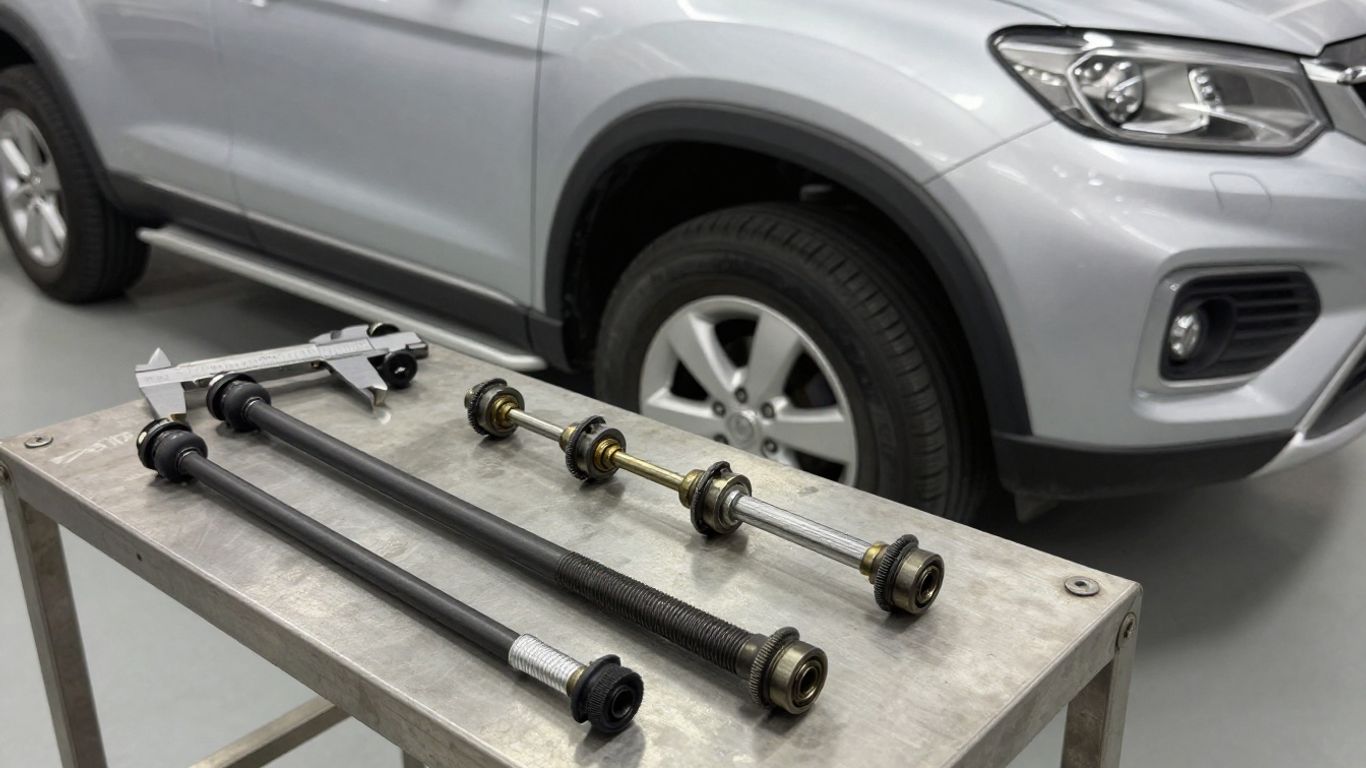
Write down the full model designation, production year, body style, engine, and market where the vehicle was sold. Two vehicles with similar names may use different steering racks or different thread sizes. If the seller provides only a general model range, ask for confirmation against the specific year and configuration.
Do not assume that a part from a newer or older vehicle is suitable because the suspension layout looks unchanged. Production updates can alter dimensions, mounting details, or the steering gear itself. The safest answer is one supported by the VIN, an original part number, or both.
Checking front, rear, left, and right-side applications
Tie rod ends are normally associated with steering at the front, but listings can use confusing application labels. Confirm the axle, side, and whether the part is left-hand, right-hand, or symmetrical. Also ask whether the advertised item is one piece or a pair.
A seller should be able to explain exactly where the component fits. Before sending payment, confirm these points:
- Inner or outer position on the steering linkage.
- Left, right, or universal side application.
- Single part, pair, or complete linkage assembly.
- Original equipment number and any superseded number.
That short exchange creates a written record of what was promised. It also exposes vague listings before they become an expensive mistake.
Comparing part numbers and steering rack specifications
Part numbers are useful, but they should not be treated as the only evidence. Compare thread diameter and pitch, overall length, stud dimensions, taper, bends, and the style of the rack connection where relevant. The replacement should match the steering system, not merely share a model name.
Some listings identify original-quality outer tie rods by specific numbers, such as the Haval Jolion outer tie rods page. Such a reference can be a useful starting point, but the number still needs to be checked against the vehicle and the part removed from it.
Using VIN and vehicle records to reduce fitment errors
A 17-character VIN gives a parts professional a stronger basis for checking application than a casual description. Service invoices, previous alignment reports, and photographs of the removed component can add useful confirmation. Send clear pictures that show the stud, threads, joint, and any stamped markings.
Keep the seller’s reply with the order details. If the item arrives and differs from the confirmed specification, that record may support a return. More importantly, it discourages guesswork when the vehicle is already disassembled.
Inspecting second hand tie rod ends
A used tie rod end has an unknown service history, so inspection is central to the purchase. Clean metal and fresh-looking paint do not establish how the joint was treated or how much load it has carried. Whenever possible, inspect the part in person or request sharp photographs from several angles.
Signs of excessive wear, corrosion, or impact damage
Look for rust that has penetrated the joint or threaded area, dents near the housing, flattened edges, and bends that do not match the original shape. A part recovered from a collision may have hidden deformation even if its boot looks intact. Surface dirt is usually manageable; deep pitting and impact marks are not.
Ask how the part was stored. Outdoor storage, flood exposure, and prolonged contact with water can damage internal surfaces. Any mismatch between the seller’s description and the photographs should pause the transaction until clarified.
Checking the ball joint, stud, and threaded section
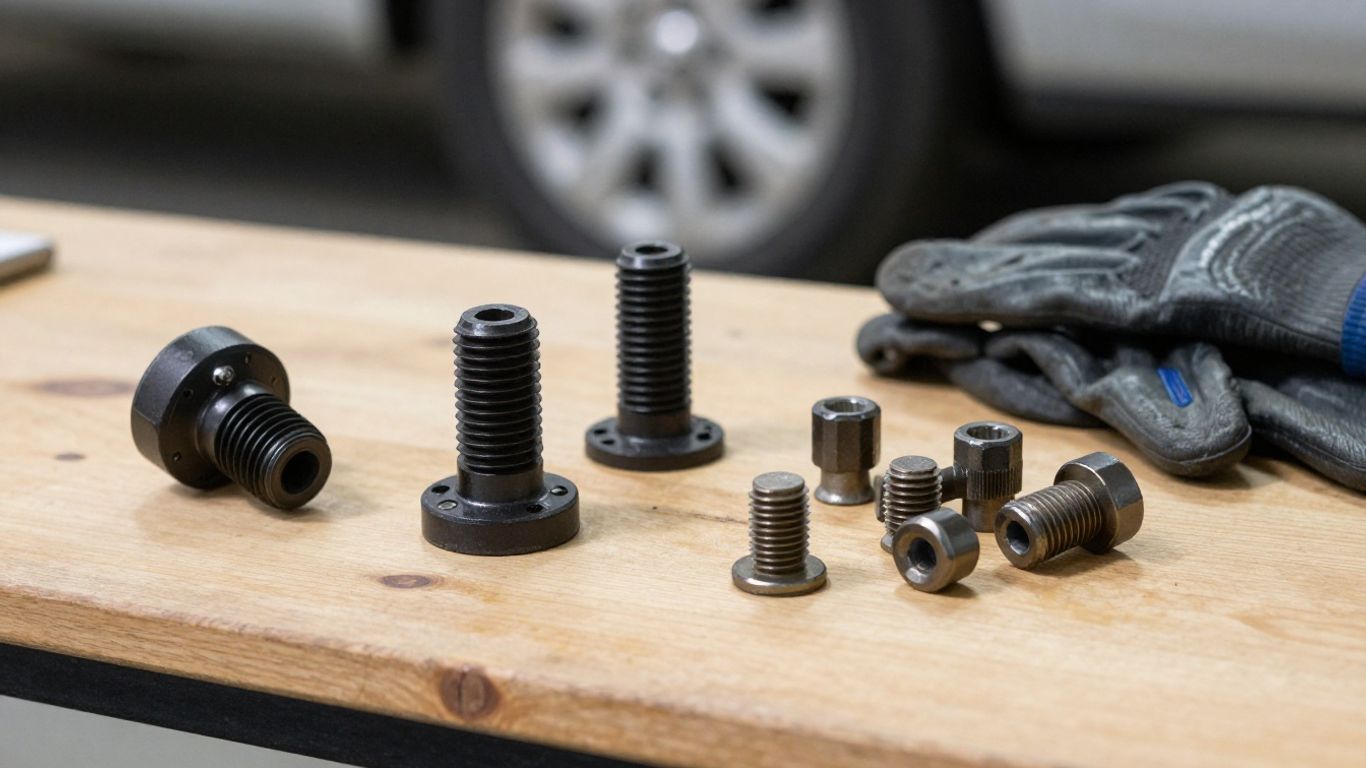
The ball stud should move through its intended range without obvious looseness, rough spots, or a clunk. It should not feel freely sloppy in the housing. Inspect the tapered stud for scoring and check that the threads are complete rather than flattened, stretched, or crossed.
Do not force a nut onto questionable threads to test them. Compare the thread length and diameter with the original part, and make sure the locking feature can engage correctly. If the joint has measurable play, a qualified technician should assess it before installation.
Evaluating boots, seals, and grease condition
The boot protects the joint from water and abrasive dust. Look for splits, pinholes, loose clamps, hardened rubber, and grease escaping around the edges. A torn boot may mean the joint has already operated without proper protection, even if it feels acceptable by hand.
A dry or contaminated joint deserves caution. Replacement boots are sometimes available, but changing the boot does not restore a worn ball-and-socket surface. The condition inside the joint matters more than a clean exterior.
Knowing when a used part should be rejected
Reject a part when its history cannot be explained and its condition cannot be verified. Steering hardware is not an area for optimistic guessing, especially when the cost of another repair includes labor and a fresh alignment.
A used component should normally be refused when it has:
- Noticeable joint play, binding, or a knocking sensation.
- Bent metal, deep corrosion, damaged tapers, or incomplete threads.
- A torn, hardened, missing, or oil-soaked protective boot.
- Unclear application details or a part number that does not match.
The lower purchase price does not compensate for a part that must be removed again. When evidence is incomplete, keep searching rather than letting urgency make the decision.
Weighing used parts against new alternatives
Used parts can make sense for an older vehicle, a short-term repair, or a hard-to-source configuration. They are not automatically the best value. Compare the complete cost and the likely remaining service life with a new original, refurbished, or aftermarket option.
Comparing purchase price with expected service life
A low listing price is only the first figure. Add delivery, taxes, inspection time, installation, and alignment. Then consider how long the used part may last, which is difficult to predict without a documented history and careful inspection.
A new part generally offers more predictable condition, but price and quality still vary. A second hand component can be reasonable when the seller is transparent and the part is demonstrably sound. The decision should reflect risk, not just the amount shown in the listing.
Assessing refurbished and aftermarket options
Refurbished parts may involve cleaning, replacement of selected wear items, and testing, but the exact process differs by supplier. Ask what was replaced, what was measured, and whether the part carries a written warranty. “Reconditioned” without supporting detail is not a meaningful quality guarantee.
Aftermarket parts also require careful comparison. Check the manufacturer, specifications, warranty, and application data rather than assuming every new part is equivalent. For a steering component, traceability and correct dimensions are more useful than attractive packaging.
Considering labor, alignment, and replacement costs
Tie rod replacement often changes toe, even when the technician counts exposed threads or measures the old position before removal. A wheel alignment should therefore be part of the budget. If a used part fails shortly after fitting, the second installation and second alignment can erase the original saving.
A tie rod replacement service may be useful when you want a qualified mechanic to handle the repair and the alignment-related checks. Whether you use a workshop or a trusted technician, ask for the full estimated cost before ordering the part.
Identifying situations where new parts are safer
A new, reputable part is often the more sensible choice when the vehicle is used for frequent highway travel, carries heavy loads, or has a history of steering damage. It is also preferable when the used item has uncertain mileage or when no return option exists.
The same applies when the old part failed because of collision damage rather than ordinary wear. Related components may have been stressed as well, so a complete inspection is more valuable than replacing one questionable item in isolation.
Buying from a reliable second hand parts seller
Seller quality affects the purchase almost as much as part condition. A reliable seller answers specific questions, supplies useful photographs, and describes limitations honestly. Be wary of listings that rely on stock images, broad compatibility claims, or pressure to pay before fitment is checked.
Questions to ask about vehicle history and mileage
Ask which vehicle the part came from, its approximate mileage, why it was dismantled, and whether the donor vehicle was involved in a collision. Find out if the component was removed from a running vehicle or simply recovered from damaged stock. The answers may not guarantee condition, but they make the risk easier to judge.
Also ask whether the part has been cleaned, painted, repaired, or stored outdoors. A seller who cannot answer basic history questions may not be able to support a later claim about fitment or condition.
Verifying photos, measurements, and part numbers
Request photographs of both sides, the boot, stud, threaded section, and any markings. Ask for measurements taken with a ruler or caliper, including overall length and thread dimensions. Generic catalogue photos should not be accepted as proof that the actual part matches your vehicle.
Compare those details with your original component before purchase. If a measurement is missing, ask for it directly instead of relying on a visual resemblance. This is especially useful when several Haval applications share similar-looking steering hardware.
Reviewing return policies and fitment guarantees
Read the return policy before paying, including the time limit, restocking fee, and responsibility for shipping. Clarify whether the part may be returned after professional inspection or test fitting, and whether the seller requires the original packaging. Never assume a fitment guarantee covers an order made without supplying a VIN.
A useful policy states what happens if the part arrives damaged, differs from its description, or fails the agreed fitment check. Keep messages, photographs, and the invoice together until the repair has been completed and validated.
Checking seller reputation and shipping protection
Look for consistent reviews that discuss accurate descriptions, careful packaging, and how problems were resolved. A high sales count alone does not prove that a steering part is suitable. Shipping protection is also relevant because a bent stud or cracked housing can result from poor packing even when the original part was sound.
If the seller offers inspection photographs before dispatch, save them. On arrival, photograph the parcel and the part before installation. That simple record can help distinguish transit damage from a pre-existing defect.
Installing and validating the replacement
Installation is the final point where a seemingly good purchase can still go wrong. Steering work should be carried out by someone with the correct tools and service information. If the joint, taper, or thread does not fit smoothly, stop and investigate rather than modifying the component.
Preparing the steering system for installation
Raise and support the vehicle safely, then compare the replacement with the removed part before undoing the old connection completely. Check the stud taper, thread, length, and rack-side attachment. Clean mating surfaces without removing material that the joint needs for a secure fit.
Count exposed threads or measure the old setting only as a temporary reference. These methods can help position the replacement, but they do not replace a proper alignment. Inspect the opposite side and nearby steering joints while access is available.
Replacing related hardware and damaged boots
Use new locking hardware when the service instructions call for it, and replace any split boot or damaged clamp. Do not reuse a deformed nut, damaged cotter pin, or compromised fastener simply because it still threads on. Small hardware can be essential to retaining the joint.
If the replacement part arrived with a questionable boot, resolve that issue before installation. Grease, seals, and clamps should suit the component, and a boot should not be stretched, twisted, or left exposed to a moving edge.
Checking torque specifications and thread engagement
Use the vehicle’s service information for tightening torque and the correct locking method. Confirm that the nut has full engagement on undamaged threads and that the stud is seated properly in its tapered hole. Do not substitute impact-gun force for a specified torque procedure.
After tightening, check that the steering moves freely from lock to lock without binding. Refit wheels and related components correctly, then inspect for interference. The steering should not be considered ready merely because the fasteners feel tight.
Getting a professional wheel alignment and safety inspection
Have the vehicle aligned after the repair, preferably by a workshop that can inspect the steering and suspension at the same time. The technician should check toe, steering-wheel position, tire condition, joint play, and fastener security. A short road test should follow only after the static inspection is satisfactory.
For a video walkthrough, search for a reputable demonstration that matches the vehicle’s steering layout and includes torque and alignment guidance. After the first drive, recheck for noises, wandering, uneven steering effort, or a change in wheel-center position; any of these signs calls for another inspection.
Conclusion
Buying second hand Haval tie rod ends can be worthwhile when the exact application is confirmed, the joint is inspected honestly, and the full installation cost is understood. Because steering parts affect alignment and control, a documented fitment check and professional final inspection are more valuable than a small upfront saving.
Frequently Asked Questions
Are second hand tie rod ends safe to use?
They can be safe when the correct part is verified and the joint, stud, threads, boot, and housing pass a careful inspection. A qualified technician should make the final condition assessment.
How do I know whether a tie rod end fits my vehicle?
Match the VIN, model year, steering configuration, side, position, dimensions, and part number. Use the original component and vehicle records as additional references.
Should I replace inner and outer tie rod ends together?
Not always. Replace the component that is worn or damaged, but inspect both inner and outer joints because wear in one may indicate age or stress elsewhere in the linkage.
Does replacing a tie rod end require an alignment?
Usually, yes. Removing or changing the joint can alter toe, so a professional wheel alignment is recommended after installation.
What are the main signs of a worn tie rod end?
Common signs include loose or vague steering, knocking, vibration, wandering, an off-center steering wheel, and uneven tire wear. Other suspension faults can cause similar symptoms.
Can a damaged tie rod boot be replaced separately?
Sometimes, but a new boot cannot repair a joint that has already developed play, corrosion, or contaminated internal surfaces. Inspect the joint before deciding.
What should I do if a used steering part arrives damaged?
Do not install it. Photograph the packaging and part, compare it with the listing, and contact the seller promptly under the stated return or damage policy.