

Key Takeaways
Buying used Haval brake rotors can reduce the repair bill, but only when compatibility, thickness, condition, and seller history are checked carefully.
- Match the rotor to the exact model, year, trim, axle, and brake package.
- Measure thickness against the vehicle’s published minimum specification.
- Reject rotors with cracks, deep grooves, severe corrosion, or unexplained heat damage.
- Confirm the seller’s measurements, source vehicle, return terms, and buyer protection.
- Treat braking safety as more important than a small upfront saving.
Understand Haval brake rotor compatibility
A rotor can look correct and still be unsuitable for a particular vehicle. Haval models may use different disc dimensions, offsets, hub designs, and front or rear brake packages, so visual similarity is not enough. Start with the vehicle identification number and the manufacturer’s parts information. That simple check prevents many expensive mistakes.
Match the rotor to the exact Haval model
Begin with the exact model name rather than a broad description such as “Haval SUV.” Record the model, engine, drivetrain, production market, and axle position, then compare those details with the donor vehicle. The seller should be able to explain where the rotor came from, not merely say that it “fits Haval.”
If you are sourcing several components at once, a supplier offering used, genuine, and aftermarket parts can make the search quicker, provided each item is still verified against the vehicle details. The same discipline applies when reviewing a Haval repair booking option: the vehicle information must be correct before any quote or part decision is meaningful.
Check the model year and trim level
Model-year changes can affect braking hardware even when the body shape remains similar. Trim level, engine output, wheel size, and electronic braking equipment may also alter the rotor specification. Ask for the casting or part number where available, and compare it with a reliable catalogue or workshop manual rather than relying on a marketplace title.
A seller’s phrase such as “removed from a Jolion” is only a starting point. It does not establish that the rotor suits your year or trim. Keep screenshots of the listing and the measurements supplied so discrepancies are easier to resolve later.
Confirm front and rear rotor specifications
Front and rear rotors are not interchangeable simply because they share a similar diameter. Check outside diameter, overall height, disc thickness, centre bore, bolt pattern, venting, and whether the disc is solid or ventilated. Confirm the axle in writing before paying.
A small specification table can help organise the comparison before purchase:
| Check | Seller should provide | Buyer should verify |
|---|---|---|
| Axle | Front or rear position | Matches the intended axle |
| Dimensions | Diameter, thickness, and height | Compare with service data |
| Mounting | Centre bore and bolt pattern | Matches the hub |
| Condition | Photos and measured wear | No hidden damage |
The table is useful because a listing may answer one question while leaving another unresolved. Do not treat a “fits” label as a substitute for the full specification.
Decide whether used brake rotors are worth buying
The attraction of used rotors is straightforward: a sound part may cost less and may be available sooner than a new one. The compromise is uncertainty about prior heat cycles, mileage, storage, and remaining thickness. A good decision compares the complete installed cost, not just the listing price. Include inspection, cleaning, shipping, labour, and the possibility that the rotors will need replacement after removal.
Compare used, new, and aftermarket options
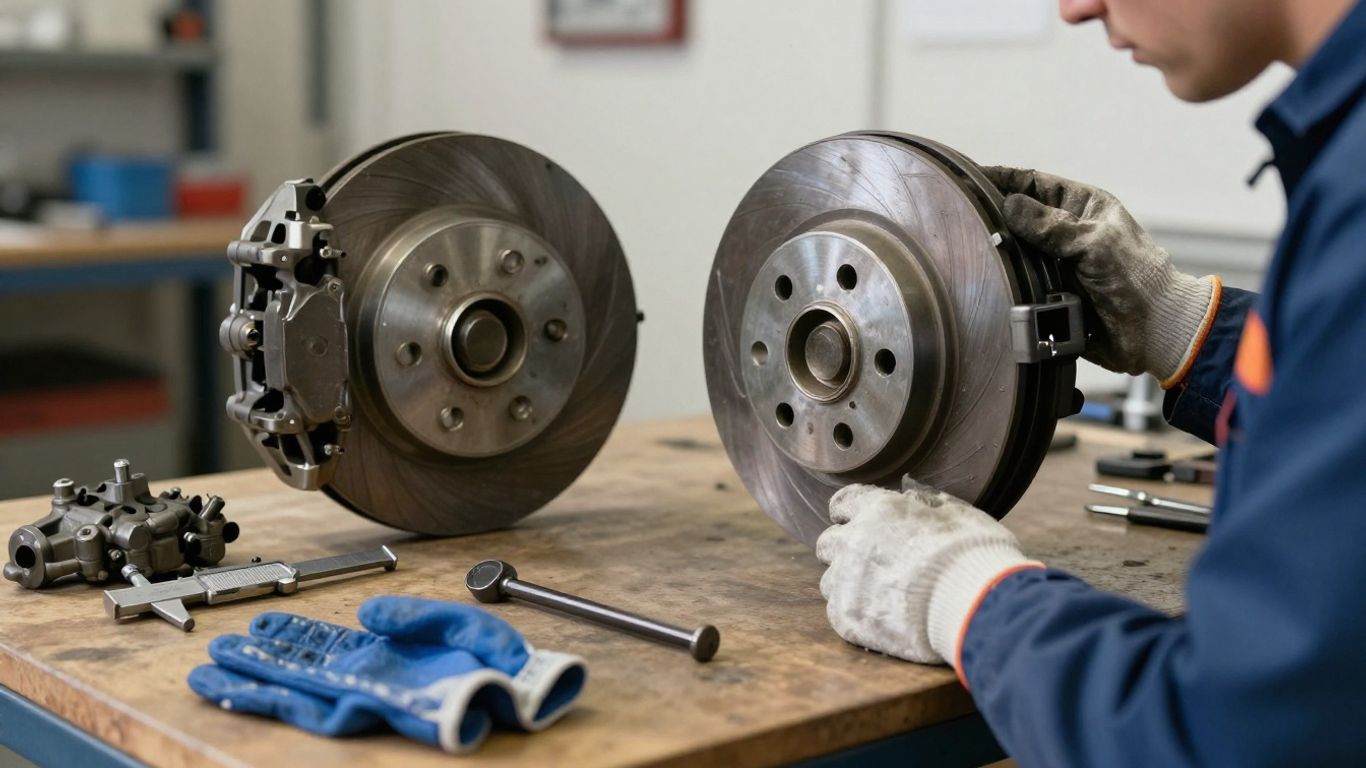
A used rotor makes most sense when its measurements are documented and its price leaves room for professional inspection. New genuine parts offer a clearer baseline, while reputable aftermarket parts may provide another route when the specification and certification are suitable. The right choice depends on condition, availability, and the consequences of a failed purchase.
A national car parts network can help compare used, genuine, and aftermarket availability across Melbourne, Sydney, Brisbane, and elsewhere, but the final fitment check still belongs to the buyer or qualified technician. For a rear axle job, you can also review a rear rotor replacement quote as a reference for the broader cost of parts and labour.
Consider rotor age, mileage, and storage conditions
Age alone does not condemn a rotor, but it gives context to its condition. Ask how many kilometres the donor vehicle had travelled, whether the rotors were removed from a working car, and how long they were stored. Outdoor exposure, moisture, and loose storage can create corrosion on the braking surface and the mounting face.
Surface rust may be removable, yet pitting that reaches into the braking area is a different problem. Photos taken in strong light, from both sides, are more useful than a seller’s general assurance that the parts are “good.”
Identify situations where new rotors are safer
New rotors are usually the more sensible choice when the used parts are close to minimum thickness, have an unknown history, or cost nearly as much after shipping and inspection. They are also preferable when the vehicle is used heavily, carries frequent passengers, or will be driven in demanding conditions. If there is any doubt about a crack or serious heat damage, do not gamble on the cheaper part.
For practical removal and installation context, this brake rotor replacement guide can help you understand the work involved before comparing a used part with a new one. It should not replace the vehicle’s service information or a technician’s inspection.
Inspect used Haval brake rotors before purchase
Inspection should happen before money changes hands whenever possible. A clean photograph can hide a lip, a groove, or corrosion on the reverse face, so ask for measurements and images of both sides. If an in-person inspection is not possible, make the return conditions part of the purchase decision. Used Haval brake rotors are only a bargain when their condition is knowable.
Measure disc thickness against the minimum specification
Use a micrometer or a suitable brake-disc measuring tool to check thickness at several points away from the unworn outer lip. Compare the readings with the manufacturer’s minimum discard thickness for that exact rotor. One reading is not enough because uneven wear can leave one section apparently acceptable while another is below specification.
Ask the seller to photograph the measuring tool and its reading, but treat that image as evidence to assess, not proof that overrides your own inspection. If the minimum specification cannot be established, the safe decision is to pass or have the part assessed professionally before installation.
Check for scoring, cracks, grooves, and heat damage
Inspect the braking faces, edges, and ventilation channels for cracks, deep scoring, heavy grooves, blue or purple heat marks, and flaking material. A pronounced ridge around the outer edge may indicate substantial wear. Look for impact damage too, especially if the rotor was transported loose with other heavy parts.
The braking surface should not show defects that could prevent the pads from bedding evenly. Avoid a rotor when damage is difficult to distinguish from a photograph; uncertainty is not a condition grade.
Examine the hub surface and mounting holes
Turn the rotor over and inspect the hat section, centre bore, bolt holes, and contact face. Rust or dirt on the hub face can hold the rotor off-centre, while elongated or damaged holes can affect secure mounting. The mating surface should be flat and free from burrs.
A rotor that passes the friction-surface inspection can still be unusable because of damage around the hub. Ask for a close-up of each hole and the rear face, not only a wide image of the disc.
Evaluate rotor wear and remaining service life
Remaining service life is more than the number stamped on a listing. It depends on thickness, surface condition, runout, corrosion, and whether the rotor can be installed squarely. Some defects are visible; others need a dial indicator or workshop measurement. A cautious evaluation gives you a better estimate than mileage alone.
Look for rust, corrosion, and uneven wear
Light surface rust on an unused braking area may clear after normal braking, but deep pitting can reduce the effective contact area. Compare the inner and outer tracks for uneven wear, and inspect the vane openings for rust scale or blocked passages. Corrosion on the hat may be cosmetic, while corrosion on a mating face is directly relevant to fitment.
Uneven wear can also point to a related brake problem, such as a sticking caliper or restricted slide. That possibility matters because installing a replacement rotor without addressing the cause may quickly damage the replacement part.
Assess disc runout and lateral wobble
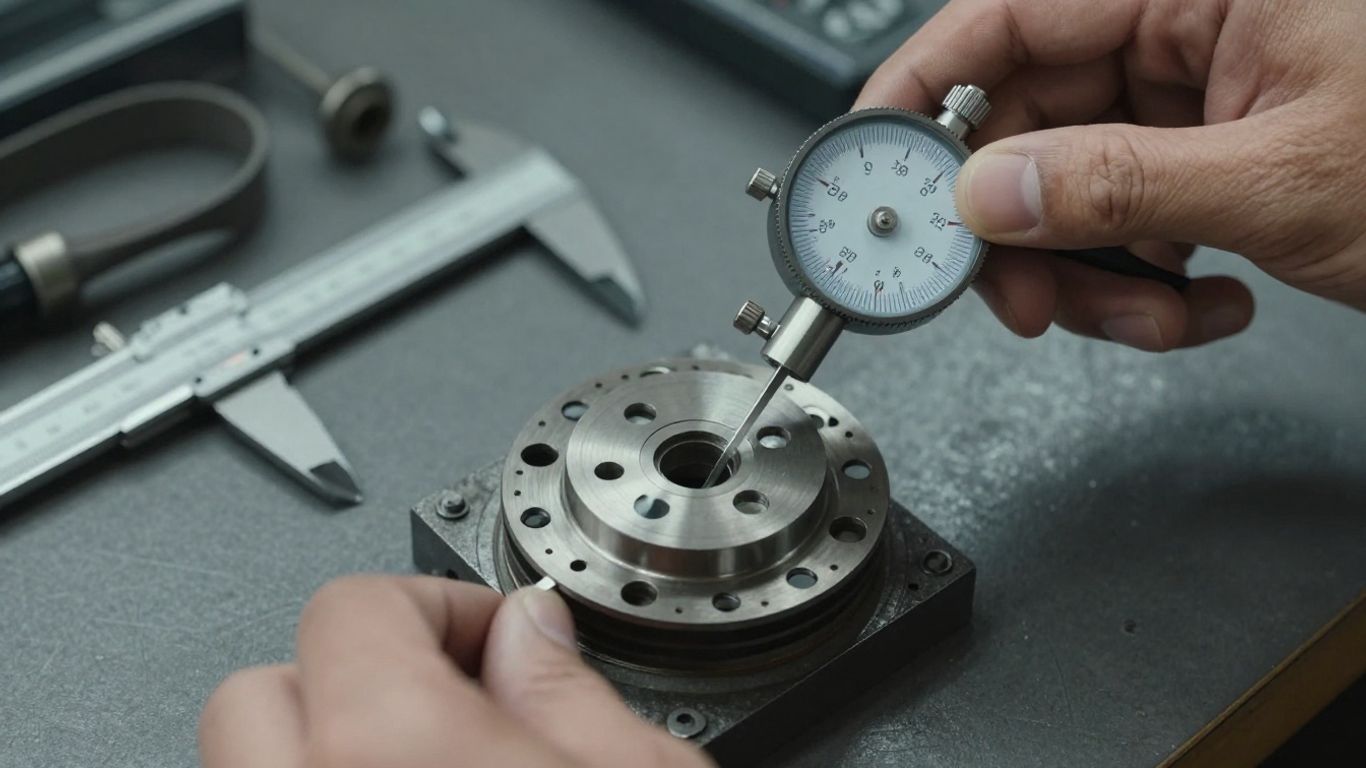
Runout is the amount the disc moves sideways as it rotates. Excessive runout can produce pedal pulsation, steering shake, or uneven pad contact. A technician can check it with a dial indicator after the rotor is mounted on a clean hub, because measuring the loose part alone may not reveal a hub-related issue.
If a used rotor has no measurement history, allow for this inspection in the budget. A rotor that looks flat on a bench may not run true once installed, especially when rust or debris sits between the hub and disc.
Understand resurfacing limitations
Machining can sometimes remove minor surface irregularities, but it also reduces thickness. The finished measurement must remain above the specified minimum, and not every crack, deep pit, or heat-related defect can be corrected safely. Resurfacing is not a way to turn a badly worn rotor into a reliable one.
If machining is being considered, ask the workshop to measure first and explain the expected final thickness. The cost of machining, cleaning, and fitting may also erase the saving over a suitable new rotor.
Verify the seller and vehicle history
Seller quality matters because condition claims are difficult to verify after a part has been shipped. A careful seller should answer specific questions without pressure and should understand that brake components require accurate fitment information. Keep all messages, photographs, measurements, and payment records. They may be useful if the item differs from the description.
Request clear photos and detailed measurements
Ask for photographs of both friction faces, the edge, hub face, bolt holes, and any markings. Request diameter and thickness measurements, plus the exact minimum specification used for comparison. A photograph taken from a distance is not enough to assess fine cracks or pitting.
It is reasonable to ask for a fresh photo with the current date or a requested angle. If the seller avoids measurements or sends images copied from a catalogue, treat that as a warning rather than a minor inconvenience.
Confirm the rotors came from a compatible Haval
The donor vehicle should be identified by model, year, trim, axle, and, ideally, a part number or vehicle identification record. Ask whether the rotor was removed from the front or rear and whether it was replaced because of an accident, wear, vibration, or another fault. A rotor from a damaged vehicle deserves extra scrutiny around the hub and mounting holes.
When checking the broader vehicle history, community discussions such as Haval Jolion brake wear may help you recognise questions to ask, but forum experiences are not a substitute for the specification for your own vehicle.
Review return policies and buyer protection
Read the return policy before ordering, including who pays return freight and whether used brake components are excluded. Confirm what happens if the measurements differ from the listing or the rotor fails a professional inspection. Pay through a method that provides a clear record and some buyer protection.
Avoid sellers who demand a rushed payment, refuse written details, or describe a safety-critical part as “sold as seen” without meaningful photographs. A clear parts quote is a useful general principle here: the item, condition, and costs should be described rather than left vague.
Install used Haval brake rotors correctly
Correct installation cannot rescue a rotor that was wrongly specified or badly worn, but poor installation can ruin a sound one. Work on a secure, supported vehicle and use the service procedure for the exact model. If you are not equipped to measure runout or torque fasteners accurately, use a qualified brake technician.
Clean the hub and rotor mating surfaces
Remove rust, scale, paint flakes, and dirt from the hub face without changing its shape. Clean the rotor’s mating surface as well, then wipe away any protective oil from the braking faces with an appropriate brake cleaner. The rotor must sit flush; even a small particle behind it can create apparent runout.
Do not apply lubricant to the friction surfaces. Check that the wheel and hub contact areas are clean too, because wheel fitment and fastener seating influence the assembly.
Replace or inspect related brake components
Inspect pads, caliper slides, piston movement, hoses, dust shields, wheel bearings, and fasteners while the rotor is accessible. Pads that are heavily grooved or contaminated may not bed correctly against a replacement disc. A sticking caliper can create uneven heating and repeat the original wear pattern.
For aftermarket pad information, a page describing Haval-compatible brake pads may help frame the questions to ask about specification and certification. It should not be treated as automatic approval for every vehicle or rotor combination.
Follow proper torque and bedding-in procedures
Use the vehicle’s specified torque values for caliper, bracket, and wheel fasteners, following the correct tightening sequence. Do not guess or rely on maximum force. After installation, check pedal feel, confirm there are no leaks, and follow a controlled bedding-in procedure suitable for the pads and discs.
Keep braking moderate during the initial checks and allow the components to cool between repeated stops. If the pedal pulses, the vehicle pulls, or the wheel becomes unusually hot, stop driving and have the system inspected.
Know when to replace used brake rotors
A used rotor is not a permanent commitment. Its condition should be reassessed whenever the brakes are serviced and whenever symptoms appear. Replacement is the sensible outcome when the disc reaches its discard thickness, develops a serious defect, or no longer runs acceptably true. Saving money matters, but predictable braking matters more.
Recognize braking symptoms that require attention
Pay attention to vibration through the pedal or steering wheel, grinding, persistent squealing, pulling to one side, reduced stopping confidence, or a burning smell from one wheel. These symptoms may involve pads, calipers, tyres, bearings, or hydraulics rather than the rotor alone, so diagnosis is needed.
Do not continue testing a suspected brake fault at road speed. Have the vehicle safely assessed, particularly if the pedal feels soft or stopping distance has changed.
Recheck rotor condition during brake service
At each brake service, inspect the disc faces, measure thickness, and look for a new lip, heat marks, cracks, or corrosion. Check that pad contact is even across the disc. Keeping the measurements in a service record makes gradual wear easier to follow.
A rotor may pass one inspection and later become unsuitable after months of corrosion or uneven braking. Regular checks are especially useful when the part’s previous mileage and storage history are unknown.
Balance cost savings with braking safety
The cheapest listing is not necessarily the lowest-cost choice once transport, machining, labour, and failed fitment are included. A documented used rotor from a trustworthy parts supplier may be reasonable; an unmeasured rotor with no return option is a poor risk. When the numbers are close, choose the option with clearer specifications and stronger recourse.
A supplier that connects customers with quality used, genuine, and aftermarket parts can make comparison more convenient, but it should never replace the inspection process. Brake components deserve a conservative decision, even when the rest of the repair budget is tight.
Conclusion
Used Haval brake rotors can be a practical way to control repair costs when the exact fitment is confirmed, the disc is measured, the condition is visible, and installation is carried out correctly. If the seller cannot provide reliable details or the rotor is close to its limit, buying new is usually the calmer and safer choice.
Frequently Asked Questions
Are used brake rotors safe to buy?
They can be safe when they are compatible, above the minimum thickness, free from serious damage, and professionally inspected before installation. Unknown condition should be treated as a reason to pass.
How thick should a used brake rotor be?
It must be thicker than the vehicle’s specified minimum discard thickness, measured at several points. The correct value varies by vehicle, axle, and rotor design, so do not rely on a generic number.
Can surface rust be removed from a brake rotor?
Light surface rust may clear from the braking track during normal use, but deep pitting, flaking, or corrosion on the mating face can make the rotor unsuitable. Inspection determines the difference.
Should used rotors be resurfaced before installation?
Only if a qualified technician confirms that machining will leave the disc above its minimum thickness and that the defects are suitable for correction. Resurfacing cannot safely repair every type of damage.
Do front and rear rotors interchange?
Usually not. Front and rear rotors can differ in diameter, thickness, height, venting, mounting, and braking-system design. Confirm the axle and full specification before purchase.
What photos should a seller provide?
Request clear images of both braking faces, the edge, hub surface, centre bore, bolt holes, and any markings. Ask for current thickness measurements taken away from the outer lip.
When should a used rotor be rejected?
Reject it when it is cracked, deeply grooved, badly pitted, heat-damaged, below the minimum thickness, visibly distorted, incorrectly specified, or sold without enough information to verify its condition.