

Key Takeaways
A suitable replacement starts with accurate identification, not the lowest advertised price. Check the vehicle details, inspect the pump carefully, and plan the installation around the cooling system.
- Match the pump to the exact model, year, engine, and part number.
- Treat mileage and service history as important evidence, not decoration.
- Inspect the housing, impeller, shaft, seals, and mounting points before buying.
- Compare the pump with the thermostat and radiator when diagnosing symptoms.
- Confirm testing, packaging, warranty, and return terms before payment.
Understand Haval water pump compatibility
Water pumps can look similar while differing in connectors, mounting holes, pulley arrangements, or flow requirements. A listing that says only “Haval water pump” is not enough to establish fitment. Start with the vehicle identification number and the information on the old part, then have the seller confirm the match. This careful approach also helps when browsing a broader Haval spare parts directory, where model and part details determine the useful results.
Match the pump to the Haval model and year
Record the model, production year, body style, drivetrain, and market before searching. Facelifts and mid-year changes can introduce different cooling components even when the badge remains the same. Ask for confirmation based on the VIN rather than relying on a stock photograph or a broad model description.
Confirm the engine type and displacement
Engine family and displacement are often more decisive than the vehicle badge. Note the fuel type, engine code, transmission if requested by the seller, and whether the pump serves the main engine circuit or an auxiliary circuit. A listing for an electric intercooler pump, for example, should not be treated as a direct substitute for a mechanical engine water pump.
Compare OEM, aftermarket, and used part numbers
Compare the number stamped or molded on the original component with the seller’s number, catalog references, and any superseded number. “Compatible” can mean a direct interchange, an aftermarket equivalent, or a part requiring additional hardware, so ask what relationship the number describes. Keep screenshots of the listing and the seller’s written fitment confirmation.
Check compatibility for mechanical and electric pumps
Mechanical pumps are commonly tied to a belt or chain-driven engine arrangement, while electric pumps use wiring, connectors, and control requirements. Their physical appearance alone is not a reliable guide. A specialist listing for an auto electrical water pump may help you compare terminology, but the vehicle’s circuit and the original connector still need to agree.
Know when a used water pump is worth buying
A used pump can make sense when the part is difficult to source, the vehicle has modest remaining value, or a tested component is substantially cheaper than a new one. The decision is less attractive when labor is high or access to the pump is difficult. Think about the total repair cost, not merely the price on the listing.
Evaluate age, mileage, and service history
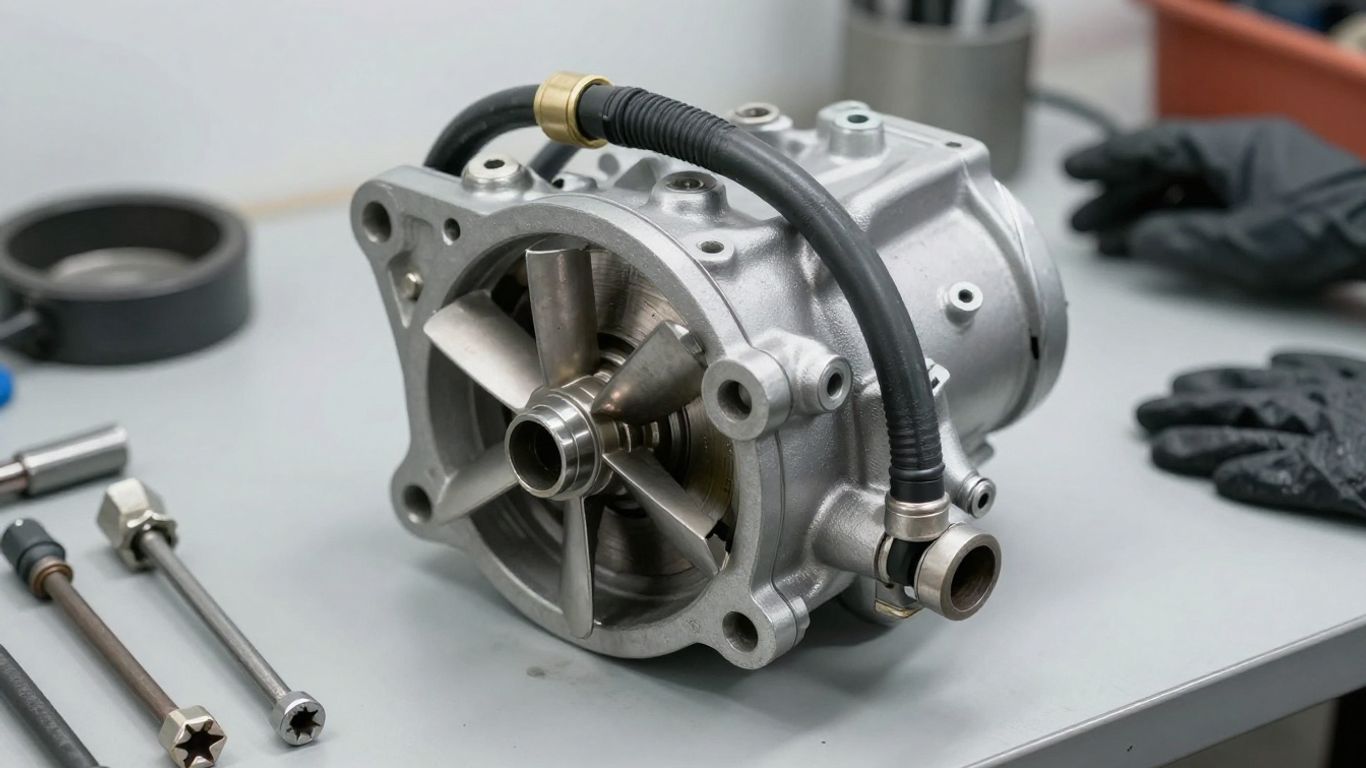
Mileage provides context, but it does not reveal how the vehicle was maintained or stored. Ask whether the donor vehicle overheated, whether coolant contamination was present, and why the pump was removed. A clean service record and a dry, undamaged component are useful evidence, although neither guarantees future life.
Compare used, refurbished, and new replacement costs
Put the purchase price beside shipping, seals, coolant, labor, and the possibility of doing the job twice. A refurbished pump may include new wear components, while a used unit may simply be cleaned and resold. For perspective, a used 2022 Haval H6 pump listing illustrates why mileage, pump type, warranty, and return period should be assessed together rather than comparing price alone.
A simple comparison keeps the decision grounded:
| Option | Main advantage | Main concern | Best fit |
|---|---|---|---|
| Used | Lowest initial price | Unknown remaining life | Accessible repair with good inspection evidence |
| Refurbished | Worn parts may be renewed | Quality depends on the rebuilder | Hard-to-source pump with documented work |
| New aftermarket | Usually easier to source | Fit and quality vary by supplier | Repair where reliability matters more than salvage value |
| New original-equipment replacement | Strongest traceability | Highest purchase price | Labor-intensive installation or long-term ownership |
The table is only a starting point. If the pump is buried behind other components, paying more for a known-new part can be cheaper overall than repeating the labor.
Identify situations where a used pump is a poor choice
Avoid a used unit when the housing is cracked, the shaft has play, the impeller is damaged, or the seller cannot identify the donor vehicle. Be especially cautious after an overheating event, because heat and contaminated coolant may have affected parts that look acceptable externally. If the pump is central to an expensive timing-drive service, its uncertain history deserves extra weight.
Consider warranty coverage and return policies
Read the warranty exclusions before ordering. Clarify whether coverage applies to the part only, whether installation by a qualified technician is required, and what evidence is needed for a claim. A short return window is useful only if you can inspect the pump promptly, so plan the inspection around the delivery date.
Inspect a used Haval water pump before purchase
Inspection cannot turn an unknown part into a new one, but it can eliminate many poor choices. Ask for clear images from several angles, including the mounting face and connector. If the seller will not show the relevant surfaces, assume the missing view may contain the problem.
Check the housing for cracks, corrosion, and impact damage
Look for fractures around bolt holes, chipped edges, deep corrosion, and marks suggesting the pump was dropped. Examine the mating face for distortion or old gasket material that could prevent a proper seal. Light staining is not automatically fatal, but flaking metal and severe pitting deserve a clear explanation.
Examine the impeller, shaft, and bearing movement
The impeller should not show broken blades, excessive erosion, or contact marks from rubbing against the housing. Rotate the shaft only as the design allows and feel for roughness, tight spots, or sideways movement. A small amount of resistance may be normal, but looseness or grinding is a reason to reject the part.
Inspect seals, gaskets, connectors, and mounting points
Check that sealing surfaces are intact and that no connector is cracked, bent, oil-soaked, or missing its locking tab. Used gaskets are generally not a reason to reuse them; plan on fitting the correct new seal during installation. Mounting holes should be clean and undamaged, with no evidence that bolts were forced into alignment.
Request photos, test results, and removal details from the seller
Ask when the pump was removed, what mileage was on the donor vehicle, and whether it was tested before removal. Request a photograph of the part number, connector, impeller area, and mounting face. A seller who can answer specific questions is easier to work with than one who offers only a generic “working” description.
Recognize symptoms of a failing Haval water pump
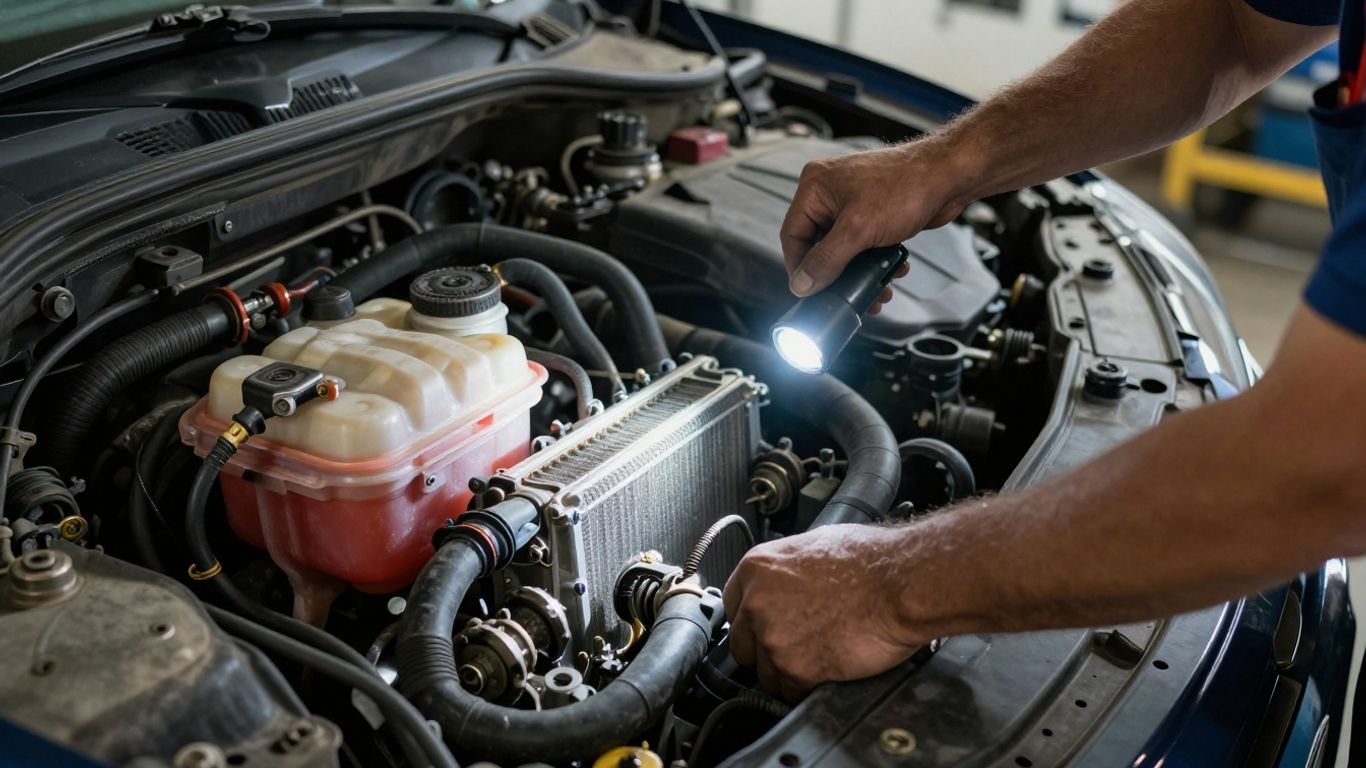
Cooling-system symptoms overlap, so one sign rarely proves that the pump is at fault. Check the coolant level only when the engine is cold and avoid opening a pressurized system. Record when the symptom appears—at idle, in traffic, under load, or after shutdown—because that pattern helps narrow the diagnosis.
Identify coolant leaks and low coolant levels
A leak may appear as a puddle, dried residue, or dampness near the pump and its seal. Low coolant can also result from a hose, radiator, expansion tank, or heater circuit problem. Repeatedly topping up without finding the source is not a repair; it can allow air into the system and make diagnosis less reliable.
Watch for overheating and unstable temperature readings
A rising temperature gauge, warning light, steam, or coolant pushed from the expansion tank requires prompt attention. Temperature that fluctuates sharply may point to trapped air, poor circulation, a thermostat issue, or a failing pump. Stop driving if overheating is severe, since continued operation can turn a cooling fault into engine damage.
Listen for bearing noise, grinding, or whining
A growl, scrape, or high-pitched whine that changes with engine speed can indicate bearing or drive problems. Listen only from a safe position, keeping hands, clothing, and tools away from belts and fans. Noise alone is not conclusive, but it is useful when paired with leakage, shaft play, or temperature symptoms.
Distinguish water pump problems from thermostat or radiator faults
A thermostat that sticks can produce overheating with no pump leak, while a restricted radiator can reduce cooling under load. Air pockets, a damaged belt, a blocked hose, or a faulty sensor can create similar readings. Use pressure testing, circulation checks, scan data where appropriate, and a cooling-system inspection rather than replacing parts by guesswork. General water pump fault discussions can provide additional questions to raise with a technician, but they should not replace vehicle-specific diagnosis.
Buy used Haval water pumps from reliable sources
Source quality affects the information you receive as much as the component itself. Salvage yards and specialist dismantlers may know the donor vehicle, while marketplaces can offer more choice but uneven descriptions. Keep the buying process methodical, much as you would when comparing research and validation methods for a separate project: define what evidence you need before judging the offer.
Compare salvage yards, specialist dismantlers, and online marketplaces
A dismantler with inventory records may provide donor mileage and removal notes. An online marketplace may make price comparison easier, but it often requires more questions and closer reading. Treat a polished listing as a starting point, not proof of condition; the useful seller is the one who answers fitment and testing questions directly.
Verify the seller’s listing and vehicle donor information
Check the stock number, donor model, year, engine code, mileage, and photographs against one another. Be wary when the title describes one pump type but the comments describe another. You can also use a practical gadget selection guide as a reminder that product descriptions need to be compared by specifications rather than appearance, though automotive fitment remains the deciding issue here.
Ask about testing, mileage, and included hardware
Ask whether the pump was bench-tested, inspected for leaks, or removed from a running vehicle. Confirm whether bolts, brackets, seals, wiring pigtails, or pulleys are included. Do not assume that “complete” means every installation item is present.
A short pre-payment checklist can prevent an expensive mismatch:
- Confirm the VIN, engine code, and part number.
- Ask for donor mileage and removal circumstances.
- Request close photos of all sealing and mounting surfaces.
- Get warranty and return terms in writing.
Once these answers are saved, compare offers on total cost and risk rather than headline price. That record is also useful if the delivered part differs from the listing.
Confirm shipping, packaging, and return conditions
A water pump should arrive protected from impact, with the connector and mounting face shielded from heavy items in the box. Confirm the shipping charge, estimated delivery time, inspection period, and procedure for reporting damage. Photograph the package before opening it if the box is crushed or wet.
Install and maintain a replacement water pump safely
Installation is a cooling-system repair, not just a component swap. Follow the vehicle’s service information for access, torque, belt routing, coolant type, and bleeding procedure. If the pump is difficult to reach, budget for careful preparation rather than rushing the final stages.
Prepare the cooling system and installation tools
Work on a fully cool engine and disconnect power when the procedure calls for it. Gather drain pans, approved coolant, replacement seals, torque tools, cleaning materials, and any belt or tensioner tools required by the design. Keep coolant away from pets and dispose of the old fluid through an appropriate recycling channel.
Replace related seals, gaskets, or drive components
Fit a new gasket or O-ring whenever the service procedure specifies one, and clean the mating surfaces without gouging them. Inspect the belt, tensioner, pulley, and nearby hoses while access is available. Do not apply sealant unless the service instructions call for it, since excess material can enter a cooling passage.
Refill and bleed the coolant system correctly
Use the specified coolant mixture and fill slowly to reduce trapped air. Open the designated bleed points or follow the prescribed heater and engine-running sequence, if applicable. Never remove a cap from a hot pressurized system; allow the engine to cool before making further checks.
Test for leaks, proper circulation, and normal operating temperature
Inspect the pump and nearby joints during the first warm-up, then monitor the temperature as the system reaches normal operation. Check the heater output, coolant level after cool-down, and belt behavior where relevant. A brief diagnostic video can be helpful for general process orientation:
After the test, let the engine cool fully and recheck the level and visible connections. Keep the receipt, part details, and installation notes with the vehicle records.
Conclusion
Choosing used Haval water pumps safely comes down to matching the exact application, examining evidence of condition, and allowing for the full installation cost. A careful seller, a realistic return policy, and disciplined cooling-system testing can make a used part a sensible repair rather than a costly gamble.
Frequently Asked Questions
Can a used water pump be reliable?
Yes, when its application, condition, donor history, and testing are documented. Reliability remains less certain than with a new component, so warranty and return terms matter.
How do I find the correct water pump?
Use the VIN, model year, engine code, displacement, pump type, and original part number. Ask the seller to confirm fitment in writing before purchase.
Should I replace the gasket with a used pump?
Usually, yes. A new, correct gasket or O-ring helps create the intended seal and is inexpensive compared with repeating the repair.
What does a failing water pump sound like?
Possible sounds include grinding, growling, scraping, or whining that changes with engine speed. Noise should be assessed alongside leaks, shaft movement, and temperature behavior.
Is overheating always caused by the water pump?
No. Thermostats, radiators, hoses, belts, trapped air, sensors, and coolant leaks can produce similar symptoms. Testing is preferable to replacing parts based on one symptom.
How long should I inspect a delivered used pump?
Inspect it as soon as it arrives, before installation if possible. Check the part number, housing, impeller, shaft, connector, sealing surfaces, and mounting points within the seller’s return window.
What should I do if the replacement pump leaks?
Stop the engine if the leak is significant, allow the system to cool, and locate the source safely. Photograph the issue, preserve the packaging, and contact the seller or installer according to the applicable warranty process.